
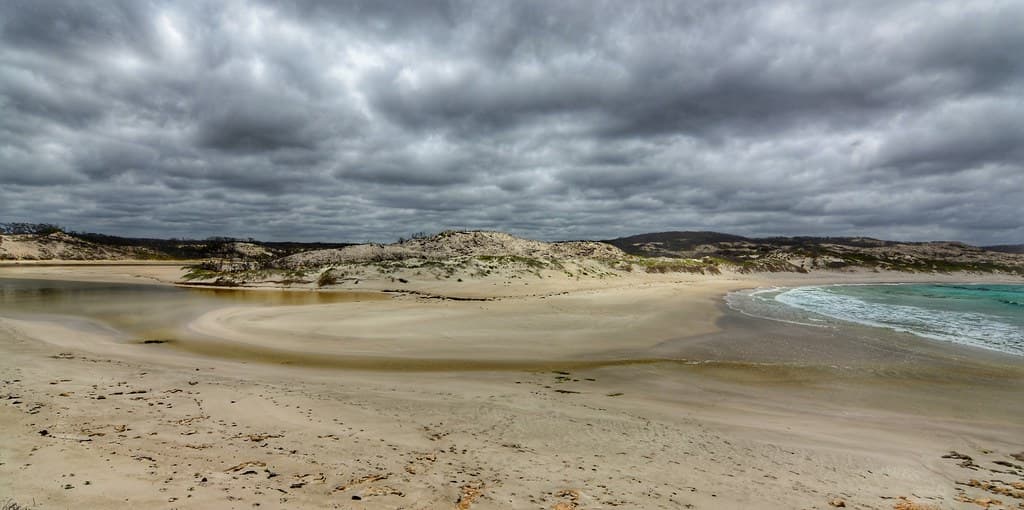
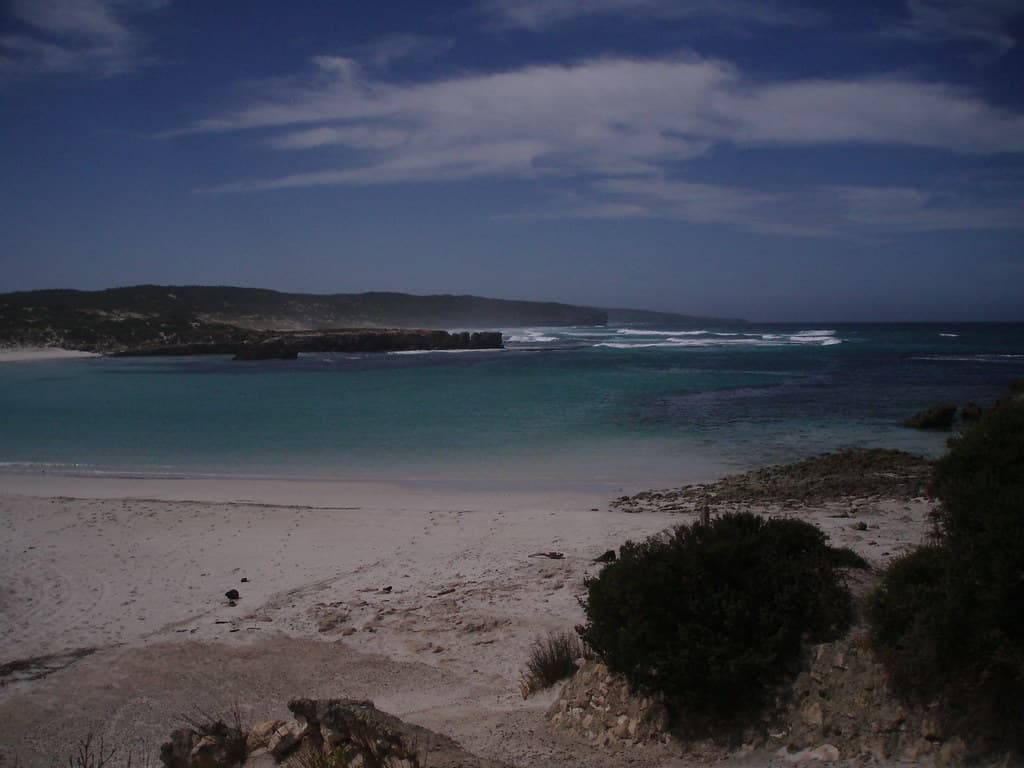
You step from coastal scrubland onto blonde sand that squeaks underfoot, the scent of salt bush mingling with kelp left by the previous tide. Hanson Bay curves in a gentle crescent, protected enough that wavelets—not breakers—lap the shore, their foam streaked with tannins from the upstream Harriet River. Families wade knee-deep while reef herons stalk the margins, and if you arrive before noon, you might spot echidnas shuffling through the dune grasses.
“One of Kangaroo Island's few swim-safe beaches where native marsupials forage along the strand at twilight.”
 Credit: Flickr
Hanson Bay Kangaroo Island SA
The water here holds a golden tint, especially after rain, as eucalyptus-filtered runoff meets the sea. You won't find snorkeling reefs or dramatic cliffs, but the clarity improves beyond the estuary plume, and the sandy bottom stays forgiving even fifty meters out. Long-distance walkers trace the tide line toward Vivonne Bay, collecting cuttlebone and moon snail shells, while children dig moats that fill with tiny translucent shrimp.
As afternoon light slants low, the western headland casts long shadows and tammar wallabies emerge to graze the salt-tolerant grasses. You might share the beach with a dozen others at most—Kangaroo Island's remoteness keeps crowds thin—and when the wind dies at dusk, the only sound is the rhythmic sigh of small swells and the occasional krawk of a white-bellied sea eagle overhead.


