
Counting the waves…
Counting the waves…
A refined fusion of water purity, environmental stability, and communal vibrancy for Talia Beach.
View MethodologyAnalyzed via live sensors and environmental data.
Wave height, wind, and atmospheric stability.
Live footfall and crowd balance metrics.
Community reviews and curated sentiment.
“You descend wooden stairs to find waves carving notches into bleached cliffs that look sculpted by a modernist architect. The shore alternates between smooth rock platforms and narrow crescents of sand, where surfers…”
Limited recent visitor reports — live OBI telemetry is your best guide for current conditions.
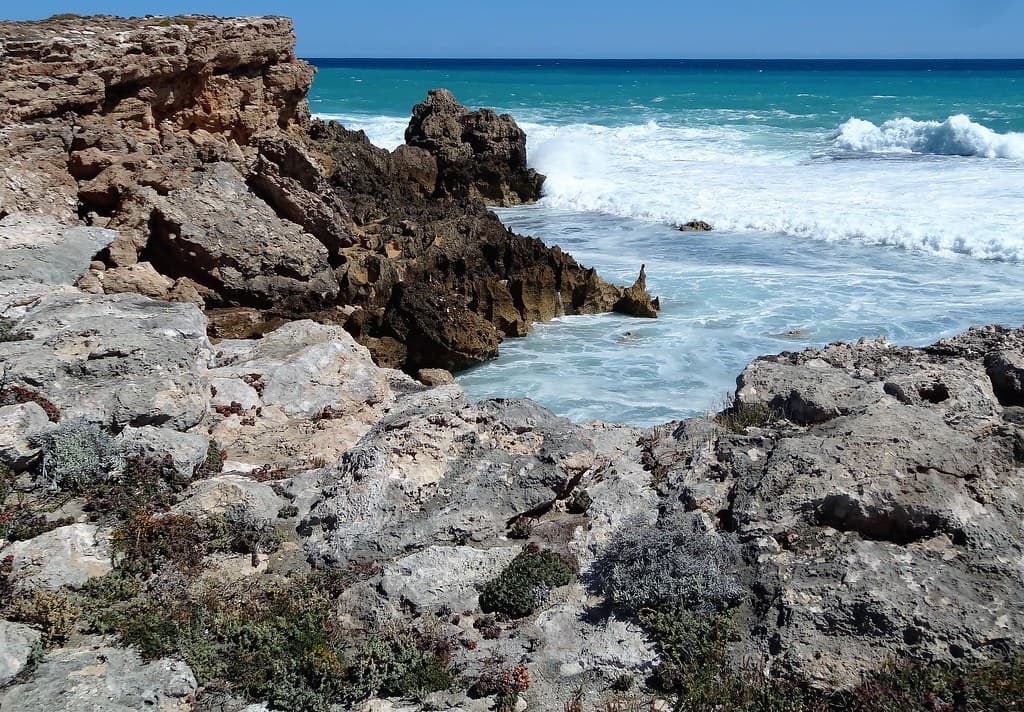
The wooden boardwalk creaks underfoot as you wind down through coastal scrub, salt hanging thick in the air. Then the view opens: layered limestone cliffs stretch along the shore in stacked terraces, their edges rounded by millennia of Southern Ocean swells. The rock glows bone-white against water that shifts from jade in the shallows to cobalt beyond the break.
Surfers dot the line-up where reef-bottom waves peel along the point, their wetsuits black against the foam. You pick your way across flat rock platforms still slick from the last high tide, pools trapped in eroded pockets reflecting the sky. Gulls wheel overhead, and the wind carries the briny tang of exposed kelp.
Right-hand point on south swells
Late afternoon light ignites limestone
Tide pools at low water
Where it is
Talia Beach
Port Lincoln, South Australia, Australia
-34.768000°, 135.630800°
Weather
Loading…
Swell
—
Temp
Warm · Restorative
UV Index
Moderate
Wind
—
Tidal State
Last known
Max Sunlight
—
Ideal Shade
—
Jan - Dec (Peak)
Mar - Nov (Off-season)
Historical data suggests peak visibility and stable sea temperatures occur during the prime visitation window.
Select a category to load nearby places.
Unlock restaurants, luxury stays and curated maritime experiences within 2km
Talia Beach is known for its dramatic surf conditions and rocky limestone formations, which make it more suitable for experienced surfers than casual swimmers. The beach faces the Southern Ocean, bringing powerful swells and unpredictable currents. There are no lifeguard patrols, so extra caution is essential. Swimmers should stay close to shore and be mindful of changing conditions. The rocky terrain and limestone cliffs also require careful navigation. If you're unsure about conditions, stick to wading or enjoy the spectacular scenery from the beach.
Talia Beach can be visited year-round, with each season offering different experiences. Summer (December-February) provides warmer weather ideal for beach activities, though the surf can be powerful. Autumn and spring offer mild temperatures and excellent conditions for surfing and photography, with dramatic wave action against the limestone cliffs. Winter brings cooler temperatures but spectacular storm-watching opportunities. Early morning and late afternoon provide the best lighting for capturing the stunning coastal scenery. Check local weather forecasts before visiting, as Southern Ocean conditions can change rapidly.
Talia Beach is located approximately 40 kilometers south of Port Lincoln on the Eyre Peninsula. From Port Lincoln, take Lincoln Highway south, then turn onto Flinders Highway and follow signs toward Talia. The final stretch involves unsealed roads, so a conventional vehicle with reasonable clearance is recommended. There is a small parking area near the beach access point. The drive takes about 40-50 minutes from Port Lincoln. Mobile reception may be limited in the area, so download maps beforehand and ensure your vehicle is in good condition.
Talia Beach is a remote, undeveloped location with no facilities, cafes, or shops directly at the beach. Visitors should bring all necessary supplies, including water, food, and sun protection. The nearest town with services is Port Lincoln, about 40 kilometers away, which offers supermarkets, restaurants, and various accommodation options from hotels to holiday rentals. There are no public toilets or shelter at the beach. For those wanting to stay closer, some properties in the surrounding rural area offer farm stays and holiday rentals, though advance booking is essential.
Talia Beach features spectacular white limestone cliffs sculpted by Southern Ocean waves over thousands of years, creating dramatic formations and caves. These ancient cliffs provide a striking contrast against the deep blue ocean, making the beach a photographer's paradise. The limestone formations include natural arches, deep crevices, and wave-cut platforms that are particularly impressive during high tide or storms. While beautiful, the cliffs can be unstable, so visitors should maintain a safe distance from edges and avoid climbing on fragile formations. The unique geology makes this one of South Australia's most visually distinctive coastal destinations.