
Adventure Bay stretches nearly three kilometres along Bruny Island's southeastern coast, a tawny arc bordered by stands of she-oak and coastal heath that whisper in the southerly wind. The beach faces east, catching morning light that turns the wet sand copper and illuminates the jagged silhouette of Fluted Cape on the southern horizon. Offshore, the water shifts from pale aqua near shore to navy where the continental shelf drops away, and pods of dolphins sometimes work the surf line in the half-light before breakfast.
“One of the few Tasmanian beaches where you can walk to an island at low tide while wallabies browse the shoreline campground at sunset.”
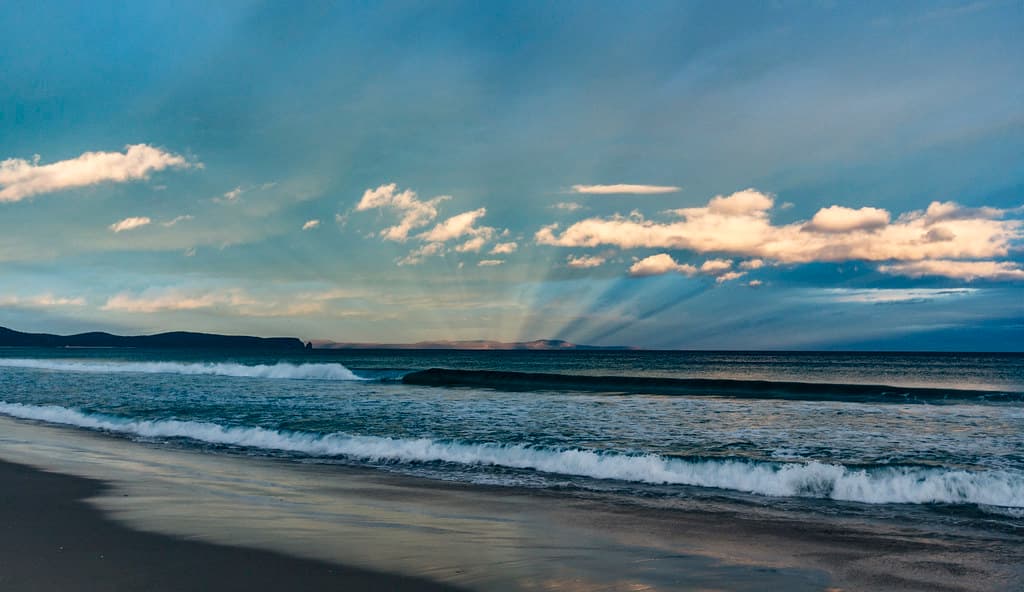 Credit: Flickr
Bruny Island, Tasmania
You'll share the sand with nesting hooded plovers in summer and beachcombers year-round who comb the tideline for blue-ringed argonaut shells and cuttlebone. The northern end curves toward Penguin Island—a low, scrub-covered hump you can walk to at low tide if you don't mind cold water to your knees. A general store and cafe anchor the township two blocks back from the foreshore, selling Bruny Island oysters and sourdough from wood-fired ovens.
Captain Cook anchored here in 1777, and a weathered monument still stands near the jetty. But the real history lies in the Nuenonne middens half-buried in the dunes, evidence of 35,000 years of habitation. At dusk, Bennett's wallabies emerge from the teatree scrub to graze the grassy foreshore, unbothered by the handful of campers pitching tents in the beachfront reserve.


