
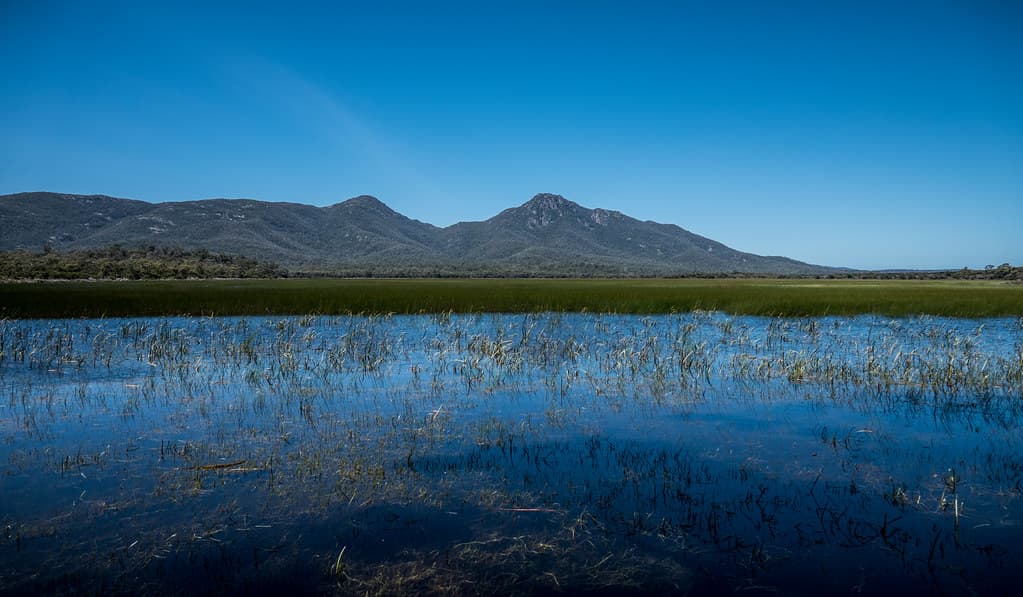
The Wineglass Bay Lookout Track doesn't apologize for its 600 stone steps. You'll grip the handrail as banksia and tea-tree give way to panoramic sky, then stop mid-breath when the bay appears below: a flawless crescent of flour-white sand cupped between russet headlands, the water gradating from pale aquamarine at the shore to deep sapphire at the mouth. The granite boulders of the Hazards glow peach in afternoon light, their reflection shimmering on the bay's glassy surface.
“The bay's curvature and granite embrace create a symmetry so precise it appears engineered, not carved by millennia of wave action.”
 Credit: Flickr
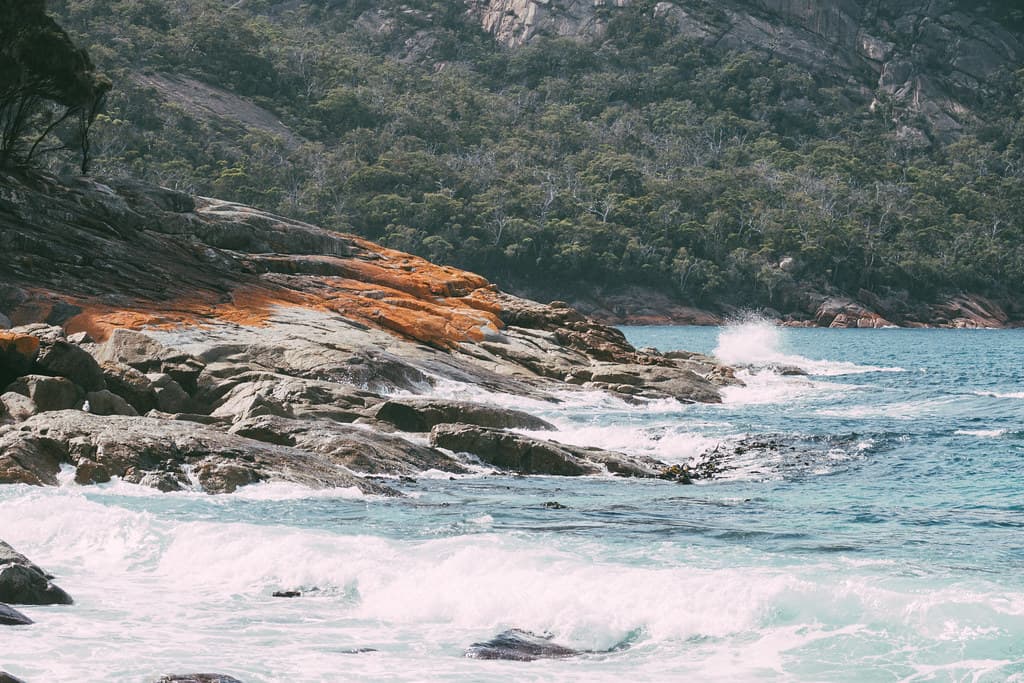
Waves, Wineglass Bay, Freycinet National Park, Tasmania
Most visitors turn back at the lookout, but the beach itself lies another 45 minutes down a steep descent through coastal scrub. You'll have company—eastern rosellas dart between she-oaks, and Bennett's wallabies graze the dunes at dawn—but far fewer humans. The sand squeaks underfoot, so pure it's nearly powdered quartz. Wade in and the cold hits immediately; this is the Tasman Sea, bracing even in January.
Stay until the tour groups retreat uphill. Late afternoon transforms the bay: the sand takes on a golden cast, oystercatchers work the tideline, and if you're patient on the northern rocks, you might spot a pod of dolphins threading the headland. Pack out everything you carry in—there are no bins, no facilities, no dilution of this landscape's stark beauty.


