
The trailhead at Coles Bay car park marks the beginning of a forty-minute thread through she-oak and banksia, the path softening from gravel to sand as you near the coast. When the canopy finally breaks, you step onto a beach where the only footprints are yours and those of the black currawongs that patrol the wrack line each morning.
“The Hazards' granite spires frame every swim, their silhouette unchanging for 400 million years.”
 Credit: Flickr
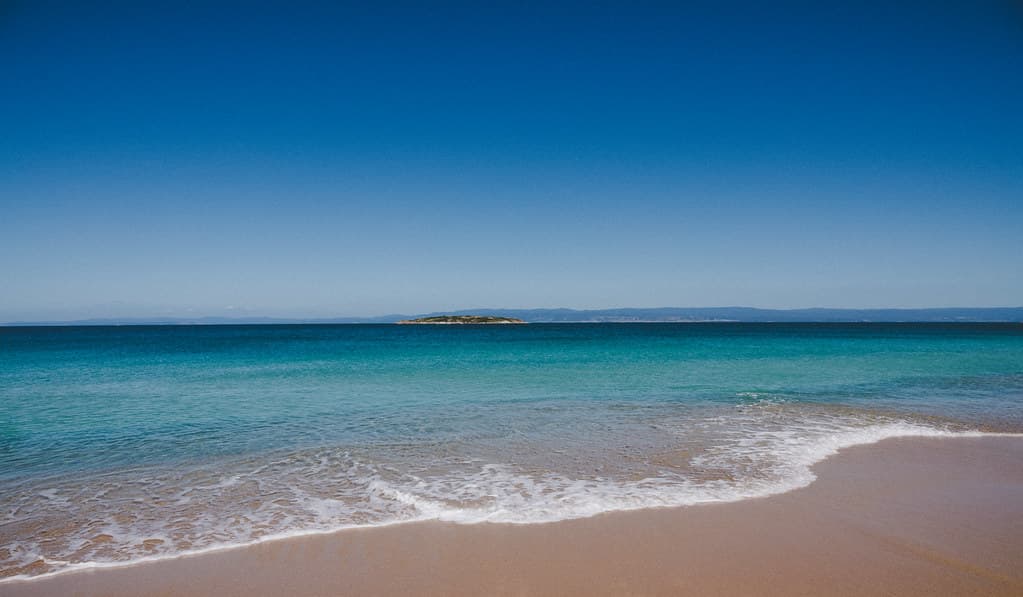
Refuge Island off Hazards Beach, Wineglass Bay-Hazards Beach circut track, Freycinet National Park, Tasmania
The sand here isn't tropical; it's cooler, a palette of ivory and shell fragments that squeaks when compressed. Wander toward the northern end and you'll find tide pools cupping anemones the color of burgundy wine. The water stays brisk even in January—fifteen degrees Celsius is typical—but families wade in regardless, children shrieking as wavelets slap their knees. Behind you, the Hazards loom in shades of rose and charcoal, their ridgelines serrated against a sky that shifts from pewter to cobalt depending on the hour.
Bring everything you need in your pack: there are no kiosks, no umbrellas for rent, no lifeguards scanning the surf. A composting toilet hides in the scrub near the trail junction, and that's the extent of infrastructure. You'll share the sand with wallabies that emerge near dusk, nosing through the coastal heath for shoots, utterly unbothered by your presence.


