
Beauty Point Beach sits at the lip of the Tamar Estuary, where the river's brackish flow slows to meet the sea. The sand is fine and beige, flecked with mussel shell, and the water seldom ripples—this northern nook is shielded from Bass Strait swells by the estuary's wide mouth. She-oaks fringe the high-tide mark, their needles carpeting the picnic tables beneath, and the air smells of salt and eucalypt resin carried down from the hills behind Beaconsfield.
“It's one of the few Tasmanian beaches where you can spot wild seahorses in water warm and calm enough for young children to swim unsupervised.”
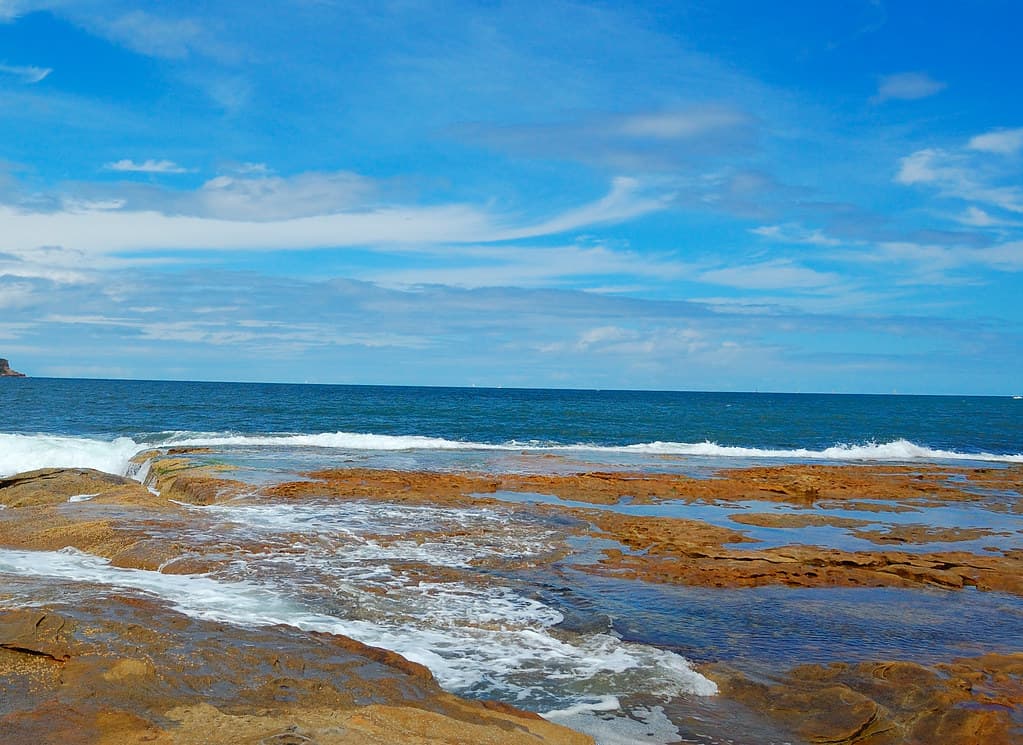 Credit: Flickr
Sea meets sky
Families colonize the shallows from mid-morning onward. The seabed slopes so gradually that children can walk out until the adults onshore become distant dots, the water still chest-high. Locals bring buckets and magnifying jars to hunt the potbellied seahorses that cling to kelp fronds—Hippocampus abdominalis, dusky gold and surprisingly large. In summer the estuary warms to eighteen degrees, tepid by Tasmanian standards but swimmable without a wetsuit if the sun holds.
Beyond the beach, platypus trails thread the Tamar Wetlands boardwalk, and the heritage wharf at Beauty Point proper hosts penguin-viewing tours after dusk. But most visitors return to the sand, spreading rugs in the shade while the tide creeps in and out on a schedule so gentle you'll barely notice it turn.


