
You step onto sand that fronts one of the Southern Hemisphere's most haunting heritage sites. Port Arthur Beach curves beneath the skeletal ruins of the penitentiary, where sandstone walls that once confined convicts now frame your view of the Tasman Sea. Gulls wheel overhead as waves break against foundations laid by prisoners in leg irons, the same surf they would have heard through cell windows.
“This is the only beach in Australia where UNESCO World Heritage convict ruins stand as your backdrop to the sea.”
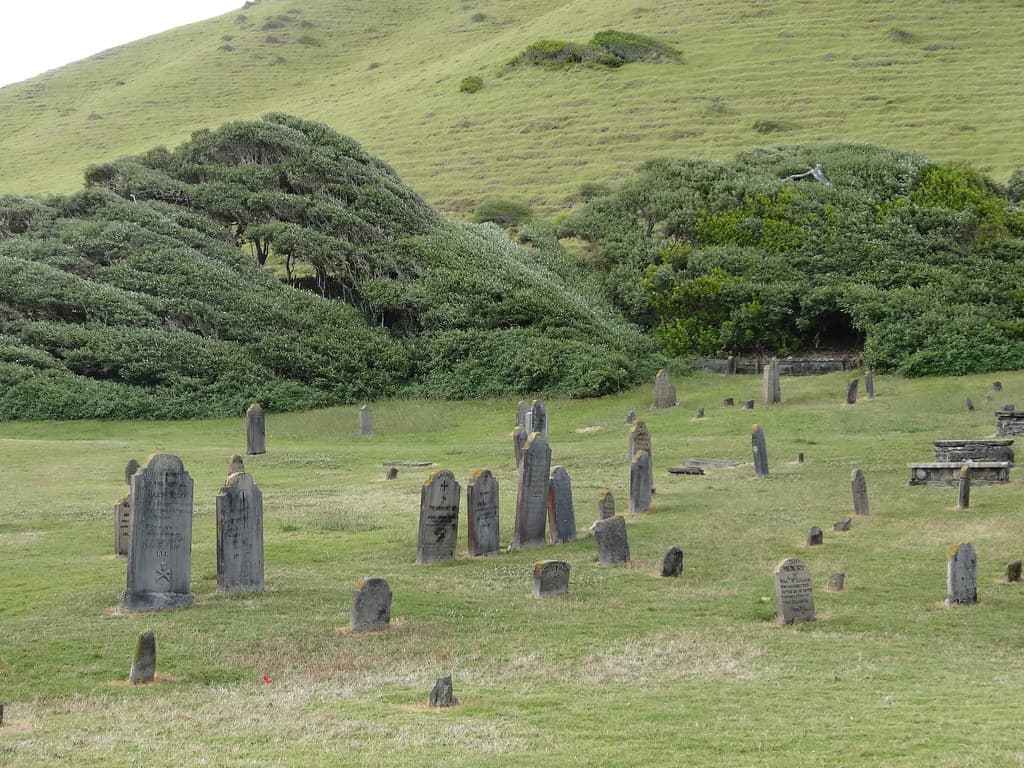 Credit: Flickr
Windswept trees at Norfolk Island cemetery. Many graves are of convicts abused until they died in prison in the 1830s and 1840s.
The beach itself stretches in a gentle arc, its sand a pale biscuit color mixed with fragments of kelp and shell. Behind you, the World Heritage-listed Port Arthur Historic Site sprawls across the peninsula—cell blocks, guard towers, and the eerie roofless shell of the church. Before you, the water runs deep green-blue, too cold for most swimmers but hypnotic in its constancy. Tide pools collect between rocks where convicts once quarried stone.
You'll find families picnicking on the grass above the sand while their children search for shells, seemingly unfazed by the weight of the place. As afternoon light slants across the bay, the ruins glow honey-gold against the darkening sea. This is where colonial Australia's hardest history meets its most beautiful coastline—a beach that refuses to let you forget, even as it invites you to simply sit and watch the horizon.


