
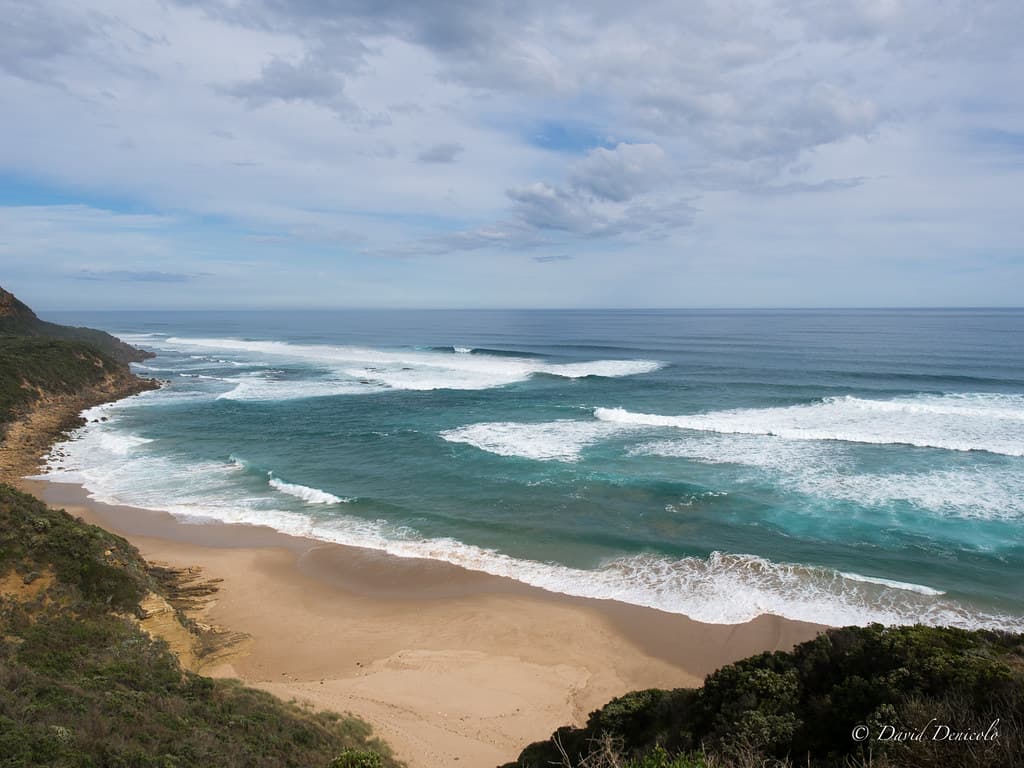
The Great Ocean Road sweeps you past Apollo Bay and into a different climate altogether. Cape Otway Beach sits beneath cliffs cloaked in temperate rainforest, where tree ferns drip onto walking trails and the air tastes of salt and eucalyptus resin. You'll spot koalas dozing in the manna gums that lean toward the lighthouse—this is one of the densest populations on the coast—and if you're quiet near the rock pools at low tide, eastern grey kangaroos sometimes browse the grassy dunes behind you.
“One of the few beaches in Australia where you can watch whales breach offshore while koalas grunt in the trees directly overhead.”
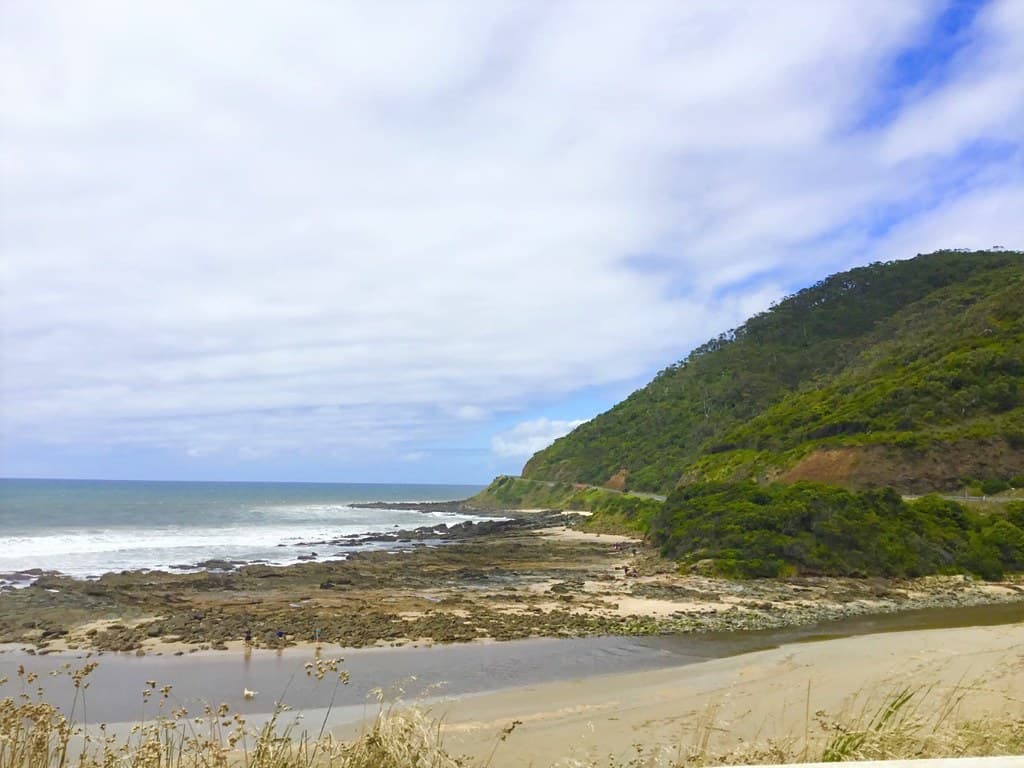 Credit: Flickr
Great Ocean Road between Lorne and Apollo Bay.
The beach itself is a ribbon of tawny sand interrupted by dark rock shelves that jut into the swell. Waves hit hard here, unimpeded by reef or island, and the water stays cold even in January. Families spread out near the creek mouth where the sand is softer; photographers scramble over the platforms at golden hour when the lighthouse catches the last rays. You'll want boots if you're exploring the intertidal zone—the basalt is sharp and slick with algae.
Cape Otway Lighthouse, Australia's oldest surviving lighthouse, perches on the headland above. The beam has guided ships since 1848, and the keeper's cottages now house exhibitions on shipwrecks and migratory whales. In winter, southern right whales cruise close enough to shore that you can watch their backs arch from the clifftop viewing platforms, no boat required.


