
Altona Beach curves gently along Port Phillip Bay, a twenty-minute train ride from Melbourne's CBD that delivers you straight onto the sand. The water here refuses drama—no rips, no dumping waves—just a slow, gradual deepening that makes parents exhale with relief as toddlers wade shin-deep for what feels like half a kilometer. At low tide, the bay retreats to reveal a glassy expanse of wet sand rippled like corduroy, where dogs and children charge after receding wavelets.
“A working beach that reflects Melbourne's multicultural west without pretense, where the train literally stops at the sand.”
 Credit: Flickr
Sea change
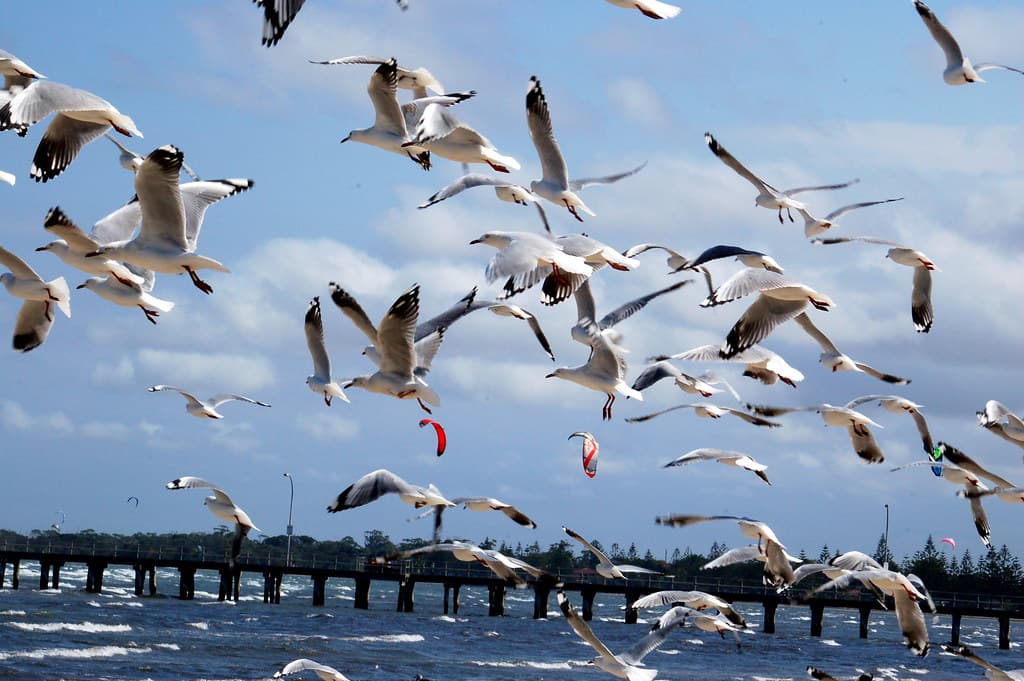
The beach itself wears its working-class roots proudly. Norfolk pines march along the Esplanade, their canopies shading wooden picnic tables scarred by decades of family barbecues. The 1888 pier stretches into the bay, its weathered pylons hosting fishermen who cast for whiting and snapper while seagulls wheel overhead, eyeing unguarded bait buckets. On weekends, the foreshore hums with the polyglot chatter of Melbourne's western suburbs—Somali families grilling marinated meat, Vietnamese grandmothers in wide-brimmed hats collecting pipis, Greek retirees playing backgammon in the shade.
You'll find no resort veneer here, just an honest urban beach that does its job well. The saltwater pool at the western end fills with each tide, offering lap swimmers a kelp-free alternative. Come late afternoon, the western sun turns the bay into hammered bronze, and you'll understand why locals guard this stretch so fiercely—it asks nothing of you except that you show up.


