

Sandringham Beach unfolds in a quiet arc where Hampton meets Black Rock, its shoreline punctuated by a parade of 93 weathered bathing boxes that lean slightly seaward, their Victorian-era charm undiminished by modern Melbourne sprawling just twelve kilometers north. The sand here feels coarser underfoot than ocean beaches, shell fragments and tiny pebbles mixing with buff-colored grains that warm quickly under summer sun. Norfolk Island pines throw long shadows across picnic tables where magpies strut, bold and unbothered, while the scent of sunscreen mingles with salt air and the occasional waft of fish and chips from the yacht club.
“One of Port Phillip Bay's largest collections of heritage bathing boxes still stands sentinel along nearly a kilometer of shoreline.”
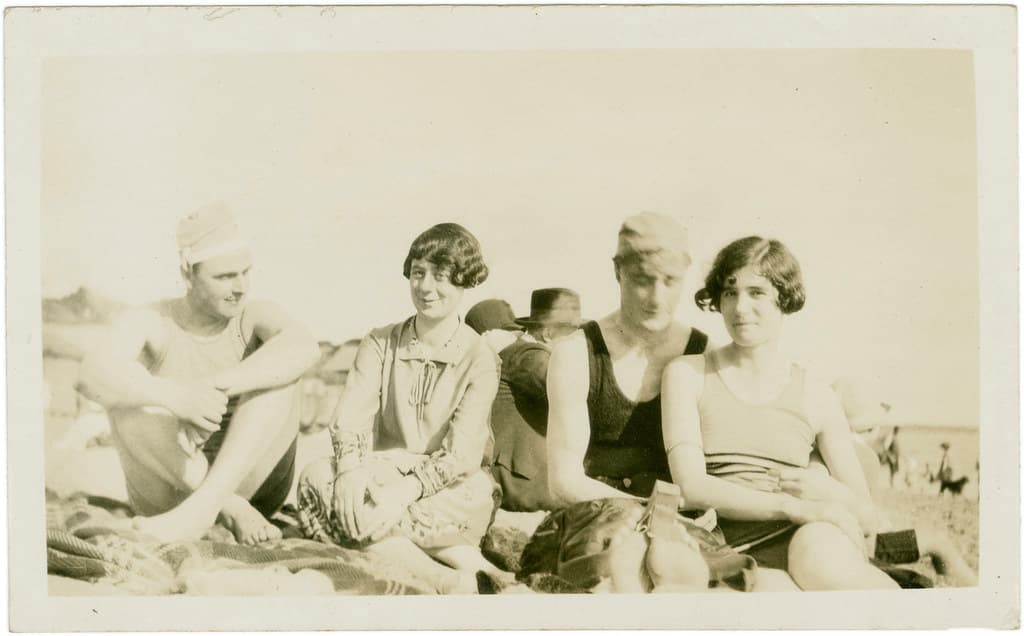 Credit: Flickr
Sandringham beach 1927 Image_0002
Port Phillip Bay's protected waters mean the surf never rises above gentle ripples—this is a beach for wading, not wave-riding. You'll watch toddlers splash confidently in ankle-deep shallows that extend twenty meters from shore, while standup paddleboarders glide past moored sailboats, their hulls creaking against anchor chains. The Red Bluff sandstone cliffs rise rust-colored to the south, striped with mineral deposits and carved by centuries of tide.
The Sandringham foreshore path winds past the heritage-listed Royal Brighton Yacht Club, where Saturday regattas dot the horizon with white sails like scattered handkerchiefs. Cyclists pedal the beachfront trail linking half a dozen bayside suburbs, stopping at the timber jetty where anglers pull up whiting and flathead, their catch buckets clanking against weathered pylons. This isn't Melbourne's flashiest beach, but its unhurried rhythm draws returning visitors who value calm water over breaking waves.


