
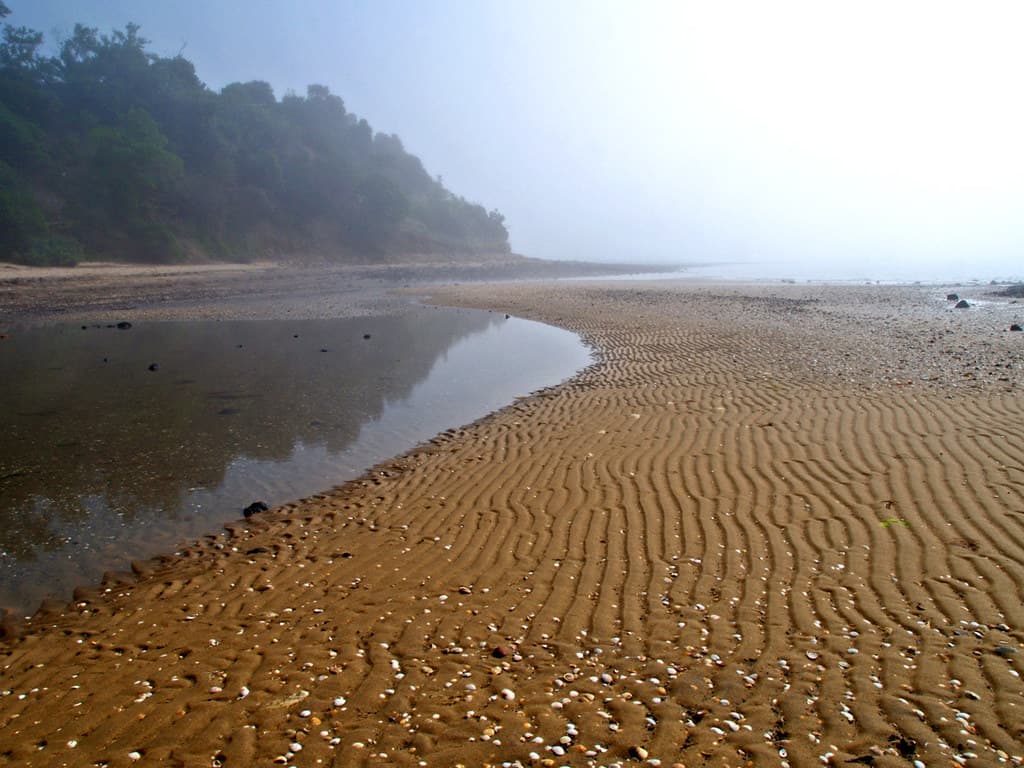
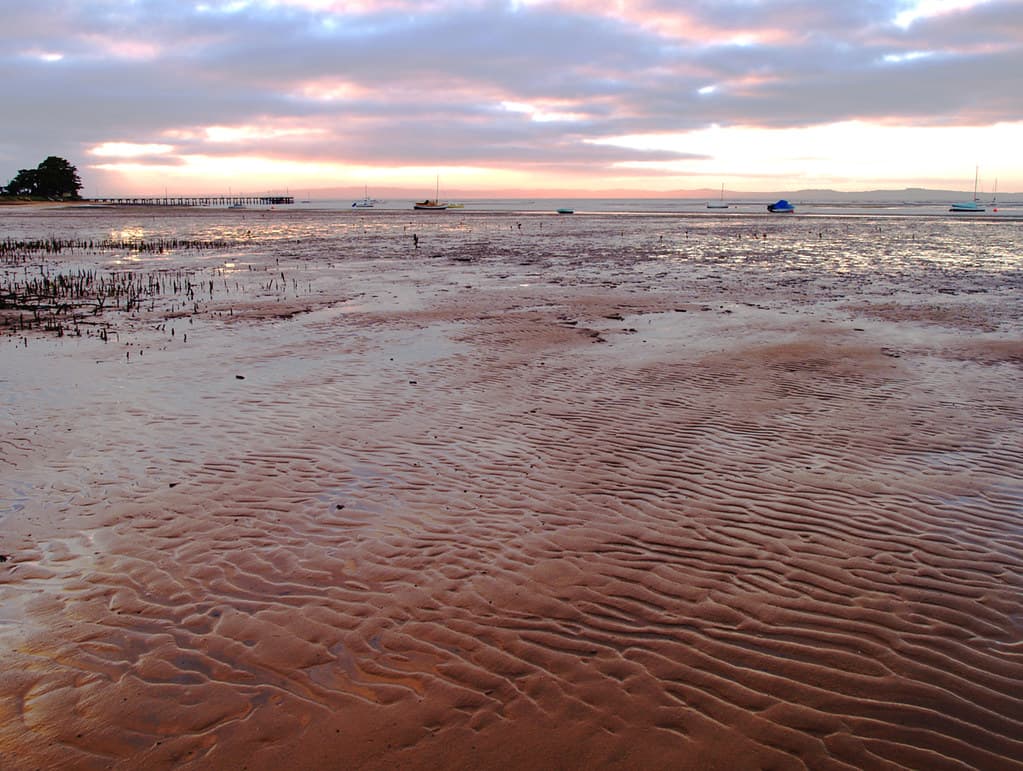
Rhyll sits on the inland side of Phillip Island, facing the mainland across Western Port Bay rather than the open Bass Strait swells that draw surfers to the southern coast. The beach curves gently along Conservation Hill, where paperbark and mangrove fringe the high-tide line and wading birds probe the exposed mudflats at low water. A weathered timber jetty extends into the shallows, its pylons wrapped in green weed and barnacle crust.
“The bay-facing geography creates a tidal beach where warm shallows and mangrove ecology replace the ocean swells found elsewhere on Phillip Island.”
 Credit: Flickr
Tide's Out
The water here stays calm even when southerlies batter the ocean beaches—protected by the bay's configuration and the bulk of French Island across the channel. You'll wade out thirty meters and still be knee-deep, the sandy bottom giving way to patches of seagrass that shelter pipefish and juvenile flathead. Late afternoon brings the best light, when the sun sinks toward the You Yangs on the distant mainland and turns the water to hammered bronze.
A gravel walking trail follows the shoreline through the Rhyll Inlet wetlands, where black swans drift among the reeds and interpretive signs explain the estuary's ecology. The carpark holds perhaps twenty vehicles, and on weekdays you may have the entire stretch to yourselves. Pack a thermos and a blanket; the dunes offer windbreaks, and the soundtrack is shore birds rather than beach radios.


