

San Remo Beach sits on the quieter, western shoulder of Phillip Island, where the bridge from the mainland delivers most visitors straight past toward penguin parades and motor circuits. You turn off before all that, following a narrow road through farmland until the bitumen yields to gravel and the scent of saltbush replaces exhaust. The beach itself is a generous curve, backed by low dunes and wind-pruned vegetation that offers just enough shelter for a towel and a thermos.
“It offers sweeping coastal panoramas without the parade of tour buses that dominate Phillip Island's southern shore.”
 Credit: Flickr
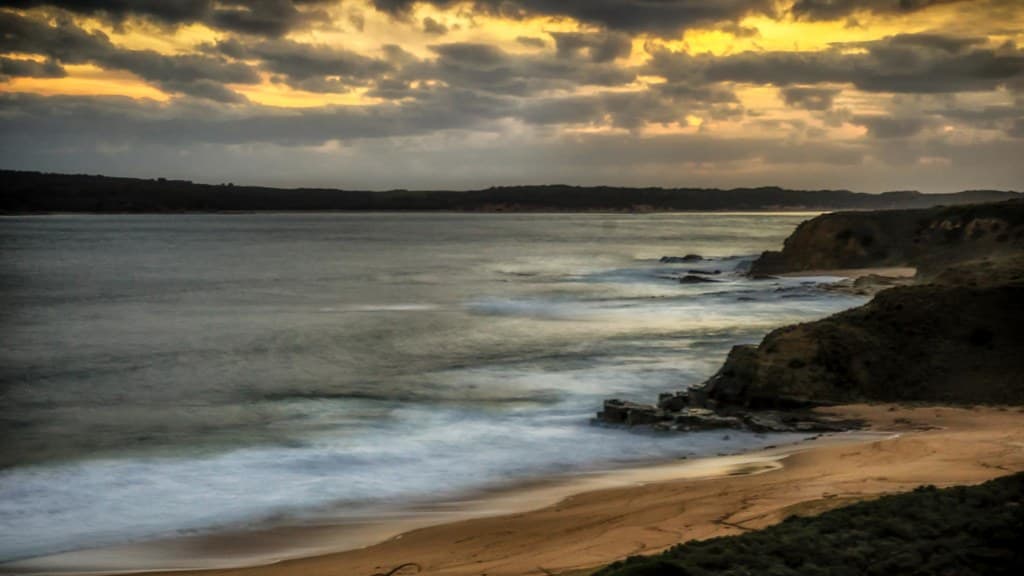
San Remo Phillip Island Sunset-2
The water here is Bass Strait honest—cool, muscular, flecked with kelp—and the sand slopes gently enough that toddlers wade in gumboots while their parents scan the headlands for dolphins. On clear afternoons, the view extends northeast toward the You Yangs, a blue smudge on the mainland, while to the south the coastline crumples into a series of rocky points that glow amber in the late sun. There are no kiosks, no rental umbrellas, no lifeguard towers—just a single rubbish bin and a faded sign reminding you to take your litter home.
What keeps San Remo Beach off the Instagram algorithms is precisely what makes it valuable: it asks nothing of you except that you bring what you need and leave only footprints. The locals know this. They arrive with eskies, folding chairs, and dog leads, claiming the same patches of sand they've favored for decades, content to let the famous beaches keep their crowds.


