
The stairs switchback down through wind-sculpted rock, delivering you onto a slim crescent of sand wedged between cliffs that glow amber in morning light. Above, the gorge opens to a sliver of sky; ahead, the Southern Ocean funnels through a narrow throat, its swells transforming into churning whitewash as they meet the shallows. You hear the water before you see it—a constant rumble that reverberates off stone.
“A functioning geological theatre where ocean swells perform against towering limestone walls, on the exact beach where shipwreck survivors once crawled ashore.”
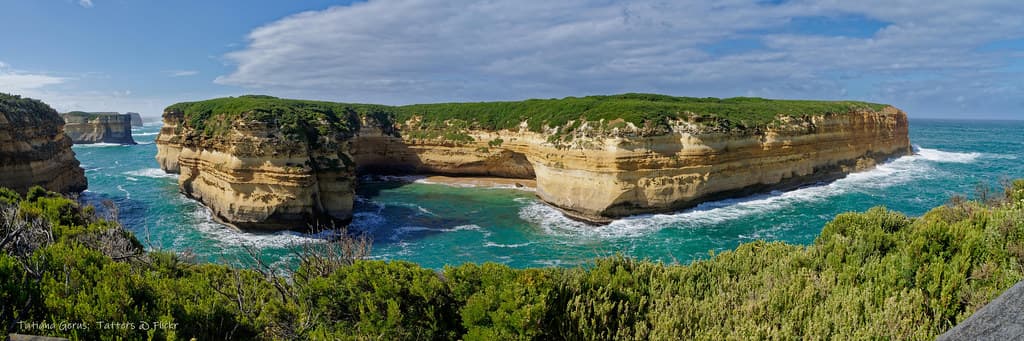 Credit: Flickr
Mutton Bird Island
The beach itself stretches barely a hundred metres, bookended by cave openings and rock stacks that stand like sentries. At low tide, you can wade through the shallows toward Mutton Bird Island, though the cold reminds you this is no tropical dip. Rockpools collect in the limestone platforms, filled with anemones and tiny fish. The cliffs wear centuries of erosion in their striations, each layer a different shade of ochre and grey.
This isn't a place for laying out towels and settling in for hours. The gorge demands movement—exploring its alcoves, photographing the light as it shifts across the cliffs, reading the interpretive signs that recount the night Eva Carmichael and Tom Pearce washed ashore. You stay until the wind picks up or the tide turns, then climb back out, salt-sprayed and slightly breathless.


