
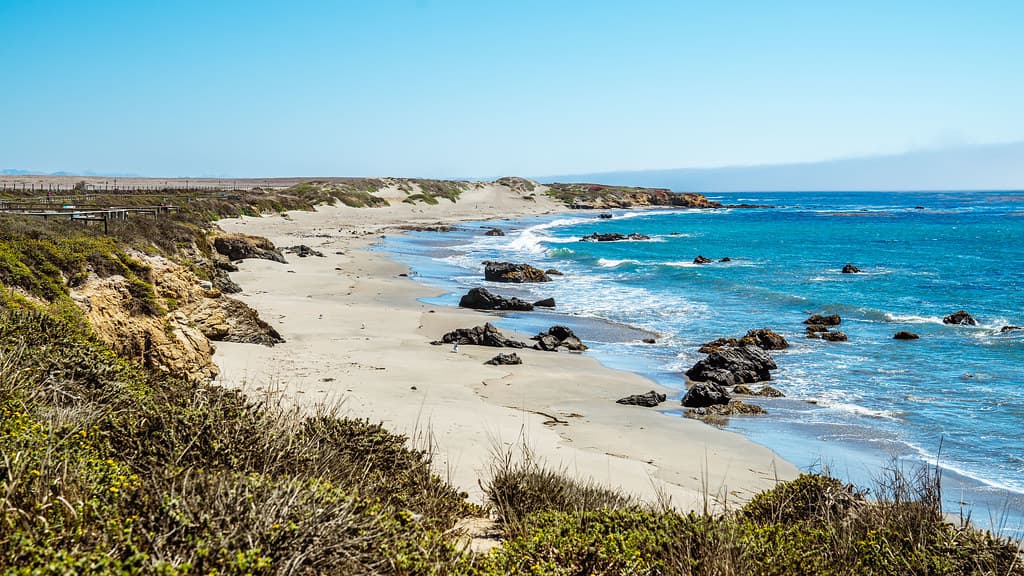
The boulders arrive first—immense, elephant-gray domes and jagged slabs that crowd the shoreline like a herd frozen mid-approach to the sea. You'll duck between them, hands brushing lichen-patched surfaces, until the cove opens: a crescent of bone-white sand where the Indian Ocean pools in shades of jade and sapphire. The rocks create natural breakwaters, calming the swell into gentle lapping waves that barely reach your knees twenty meters out.
“Ancient Precambrian granite formations create sheltered swimming pools within arm's reach of the open Southern Ocean.”
 Credit: Flickr
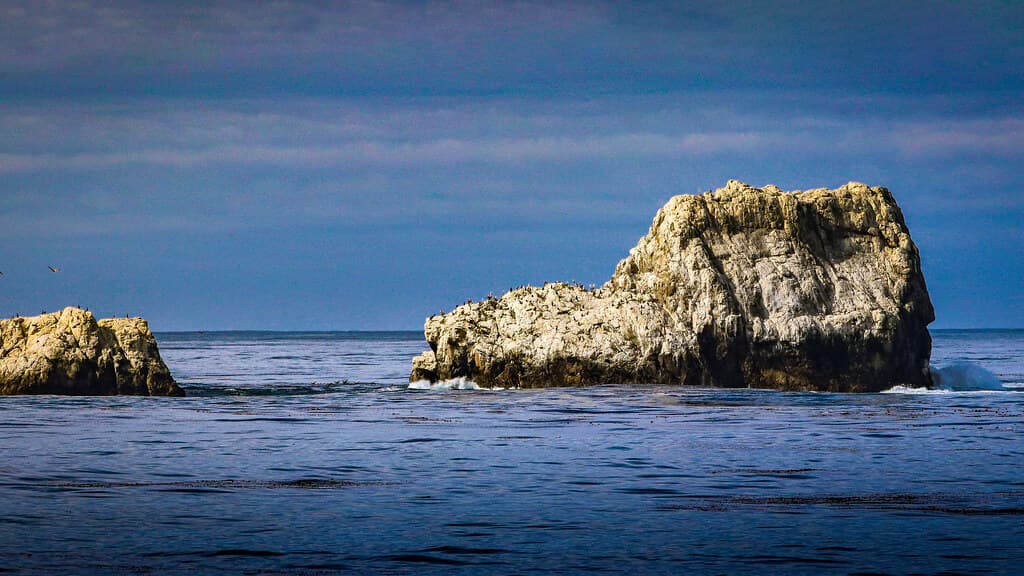
Rocks of the coast at Elephant Seals Vista Point
Mid-morning, the sun angles through the gaps, casting slow-moving shadows across sand rippled by yesterday's tide. Families claim boulders as windbreaks; couples wade to the far edge where deeper water glows cobalt against the granite. The stone holds heat, offering warm perches for drying off between swims, and the formation funnels breezes into pockets of stillness even on gusty afternoons.
A timber boardwalk threads through coastal heath to deliver you here, but the real arrival happens when you round that first massive boulder and see the whole tableau—rock, water, sky—composed like a postcard you'll try and fail to capture on your phone. Pack a picnic, claim your stone, and plan for hours. The tide changes the geometry but never the magic.


