
Frenchman Bay Beach sits in a granite embrace just east of Albany, where ancient rock formations have spent millennia sculpting one of Western Australia's most forgiving coastal pockets. The sand stretches pale and fine between two weathered headlands, and the water graduates from ankle-deep aquamarine to deeper sapphire so gradually that toddlers and grandparents share the same swimming zone without worry.
“The granite headlands create a natural nursery pool where the Southern Ocean loses its temper before reaching shore.”
 Credit: Flickr
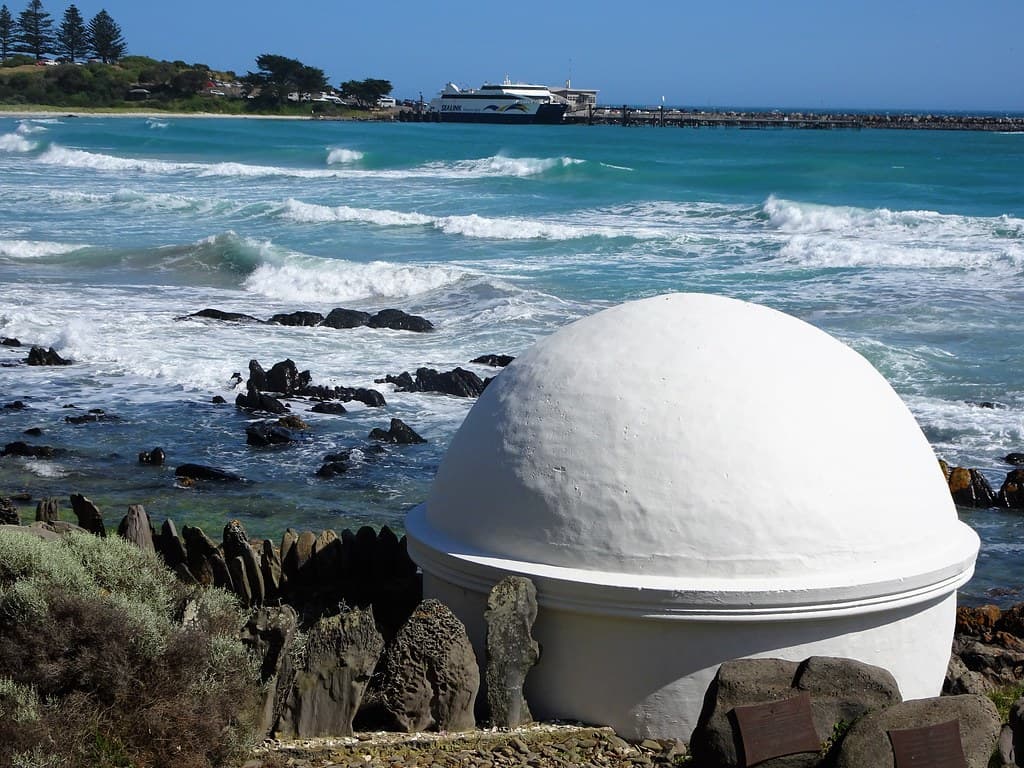
Penneshaw on Kangaroo Island. Sealink ferry terminal and French Mans Rock Dome. Dome built in 1906. Rock engraved by French sailor in 1802.
You'll notice the absence of rips and dumping waves immediately—the bay's natural architecture filters the Southern Ocean's power into gentle swells that barely crest before sliding up the beach. Banksia and coastal scrub fringe the upper shore, releasing their honey scent on warm afternoons, while the granite boulders at either end wear collars of orange lichen and provide perches for cormorants drying their wings. Families claim patches of sand beneath beach umbrellas, esky lids propped open, while paddleboarders trace lazy figure-eights in water so clear you can count the shadows of small fish darting over the sandy bottom.
The beach works year-round because Albany's climate softens the extremes: summer brings warmth without Melbourne's scorch, winter delivers rain but rarely the bone-chill of southern states. Early mornings see dog-walkers and lap-swimmers; by mid-afternoon, the shallows fill with boogie boards and inflatable unicorns, the granite headlands glowing amber as the sun tracks westward toward the continent's edge.


