
Middleton Beach curves along Albany's eastern flank, cradled between Flinders Peninsula and the weathered stone of Emu Point. The water here behaves differently than the wild Southern Ocean just minutes west—King George Sound acts as a natural breakwater, transforming the shoreline into a shallow lagoon where toddlers wade alongside retirees doing their morning laps. The sand compacts beneath your feet with that telltale firmness of high-silica grains, brilliant white against the teal shallows.
“One of the few year-round swimming beaches on Australia's tempestuous southern coastline, protected by natural granite amphitheater.”
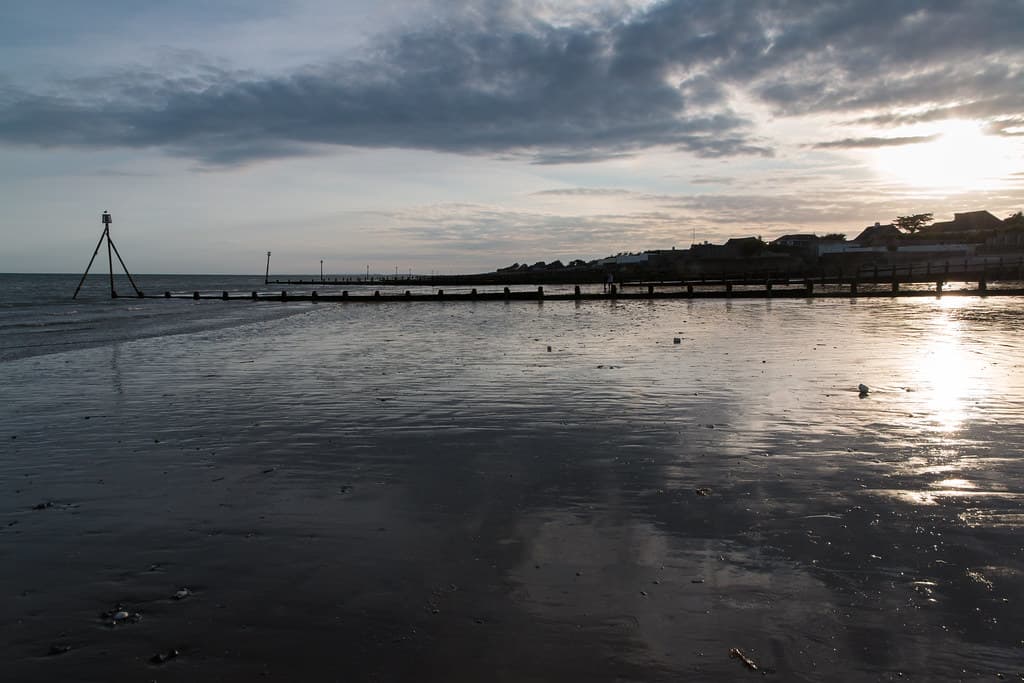 Credit: Flickr
Dusk at Middleton on sea
You'll find remnants of Albany's whaling past in the Federation-era bathhouse that still anchors the eastern end, now repurposed as a café where flat whites are poured within sight of the jetty. Norfolk pines line the Esplanade, casting late-afternoon shadows across picnic tables where local fishermen clean their catch. The beach plateau drops off gradually—you can walk fifty meters out and still touch bottom—making it a peculiar outlier on a coast famous for dramatic surf.
Come January or July, the scene barely shifts: same pelicans perched on the boat-launch pylons, same dog-walkers tracing the tideline at dawn. The granite boulders at either end trap warmth even when the southerlies blow, and the water temperature hovers in a swimmable band thanks to the Leeuwin Current nudging warm fingers this far south. It's a beach that asks nothing of you but shows up reliably, every single day.


