
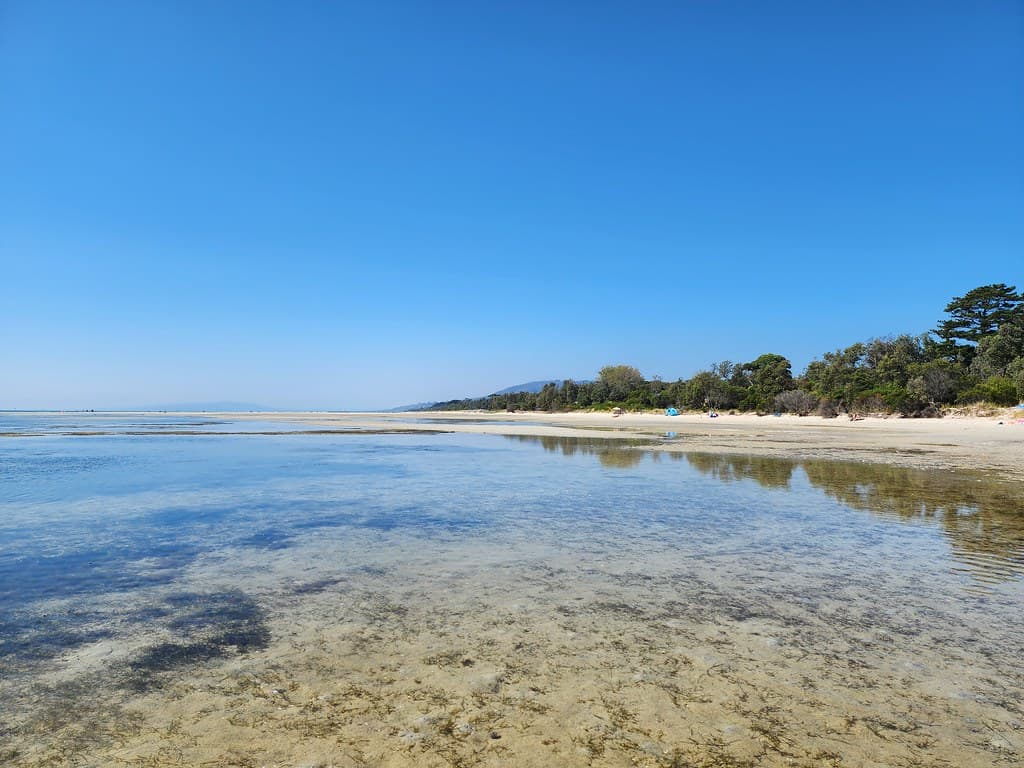
The car park sits fifteen metres from the tideline, separated only by a low dune threaded with spinifex and pigface succulents. You step onto sand the colour of ground quartz, fine enough to squeak underfoot, and walk straight into water that stays shallow for thirty metres out. Children wade waist-deep while parents spread picnic blankets beneath Norfolk pines that lean eastward, sculpted by decades of onshore wind.
“One of the few South West beaches where you can park beside the sand and wade safely with toddlers in water that stays turquoise-shallow for half a football field.”
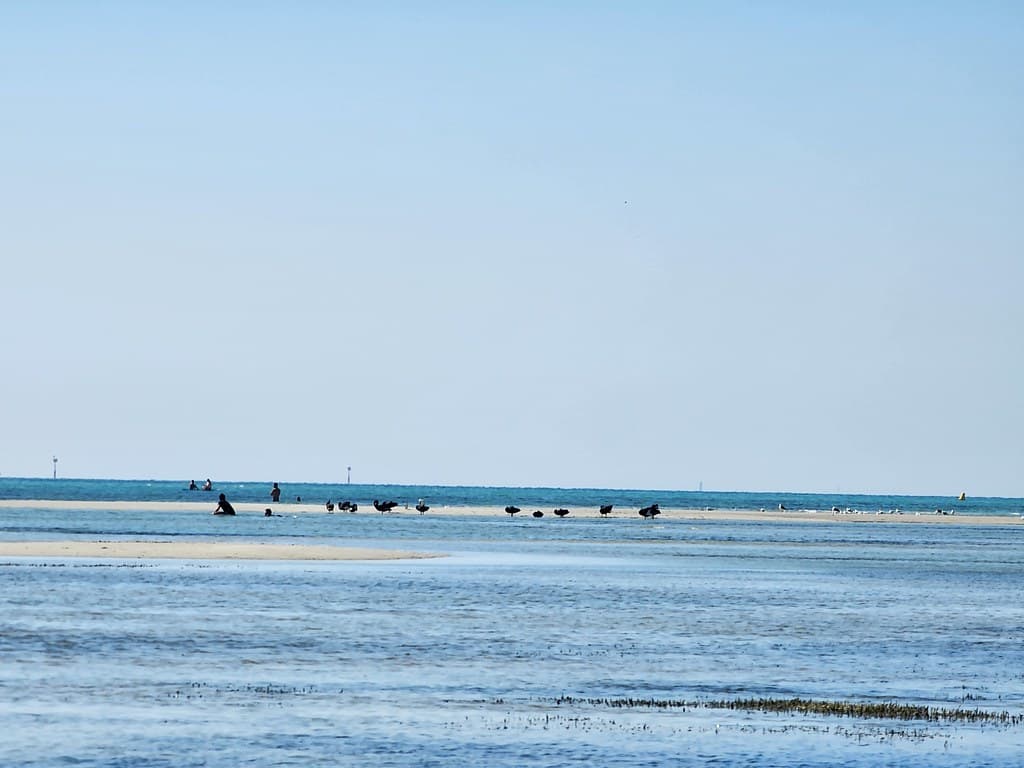 Credit: Flickr
Pelicans on a sand bank at low tide at Capel Sound Beach
Mid-morning light catches the water at an angle that turns it electric blue against the white seafloor. Gulls circle above families tossing frisbees. A kayaker paddles south toward Peppermint Grove Beach, disappearing behind a low headland of dark rock. The smell of sausages on portable barbecues drifts across the foreshore by noon, mixing with coconut sunscreen and that faint briny tang that clings to your skin hours after you leave.
There are no cafés, no surf schools, no jet-ski hire kiosks. What you find instead: a tap for rinsing sandy feet, toilets that haven't been renovated since 1987, and enough space along the kilometre-long strand that your nearest neighbour is always twenty metres away. By late afternoon, when the sea breeze kicks in and the shadows lengthen, you'll understand why locals guard this place quietly—not through secrecy, but through the simple act of returning, weekend after weekend, esky in hand.


