
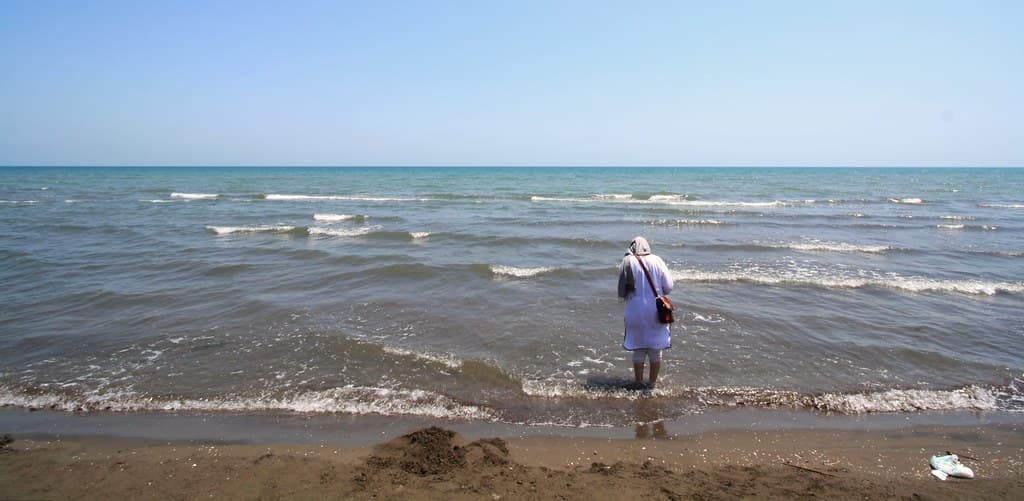
The sand here appears lighter than beaches to the south, almost silvery when wet, marked by occasional patches of smooth stones the size of hen's eggs. You'll notice the gradient immediately—shallow for thirty meters, then a sudden drop where cooler water wells up from deeper zones. Local children favor this depth for diving practice, though you're more likely to have the entire shoreline to yourself outside summer weekends.
“The only beach where Caucasus foothills provide a backdrop to swimming, creating microclimates that cool afternoon heat.”
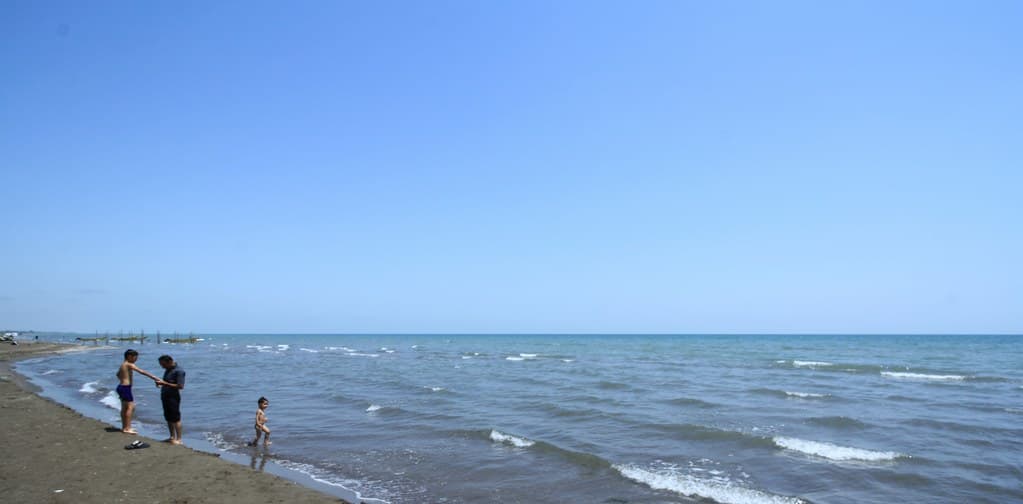 Credit: Flickr
The Caspian Sea
To the west, the land rises in gentle swells toward the Greater Caucasus, the mountains appearing as blue-gray shadows on clear mornings. That topography channels winds down to the coast, creating afternoon breezes that temper the Caspian heat and keep the air moving across your skin. Fishing families from Gilan village maintain several wooden piers that extend into the water on concrete pilings, their planks weathered silver and groaning underfoot.
The beach runs for nearly a kilometer before curving out of sight around a low promontory crowned with Russian olive trees. Walking that distance, you'll pass driftwood arranged by winter storms, tangles of fishing line, plastic bottles bearing Cyrillic labels—detritus that speaks to the Caspian's function as highway between five nations. Yet the overall impression remains one of emptiness, of a coastline that has resisted development not through preservation policy but through simple neglect, a forgetting that has paradoxically saved it.


