

Geography creates sanctuary here. The bay's curved arms absorb the worst of the wave energy, allowing gentler swells to roll in while the wind that scours nearby beaches passes overhead. The sand underfoot feels finer than the exposed stretches, less worked by constant wave action, and slopes gradually into water that stays swimmable even when conditions beyond the points turn rough.
“A naturally protected bay that offers swimmable calm while neighboring beaches receive the full force of trade winds and swells.”
 Credit: Pexels
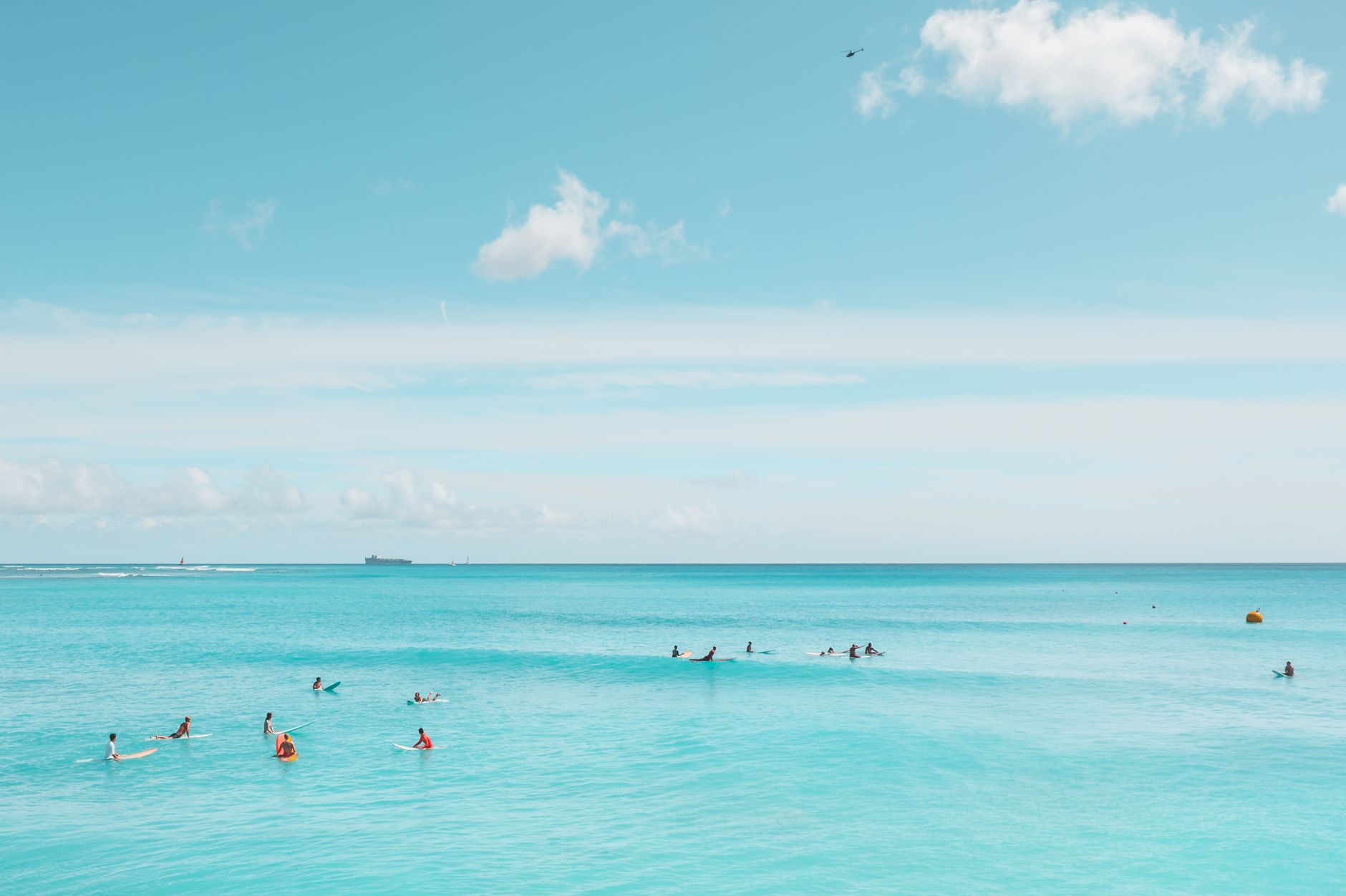
A scenic view of surfers enjoying a sunny day on the turquoise waters of a tropical beach.
Rocks anchor both ends of the bay, dark volcanic formations softened by algae and crusted with barnacles at the waterline. Tide pools form in the depressions, holding trapped seawater where small fish dart and anemones wave their tentacles. The bay itself measures only a few hundred meters across, an intimate scale that makes it feel discovered rather than touristed. A handful of locals know the spot; visitors who stumble upon it tend to return.
The water clarity improves inside the bay, protected from the sediment churned up by surf on the exposed beaches. You can see your feet on the sandy bottom even in waist-deep water, and occasional reef fish cruise the edges where rock meets sand. Shade comes from scattered almond trees at the beach's inland edge, their broad leaves rattling in the reduced wind. It's a beach that functions as refuge, a calm counterpoint to the Atlantic drama playing out just beyond the headlands.


