

The drive alone prepares you for isolation—thirty kilometers of washboard road through terrain so barren it resembles Mars, then suddenly the ocean appears below, cobalt against rust. You descend switchbacks to reach sand that feels coarse under your feet, each grain a tiny fragment of granite and basalt worn smooth by relentless Pacific swells. The beach curves gently, protected somewhat by headlands that jut into the water like ancient sentinels.
“The collision of the driest desert on earth with the Pacific creates a shoreline ecosystem found nowhere else on the planet.”
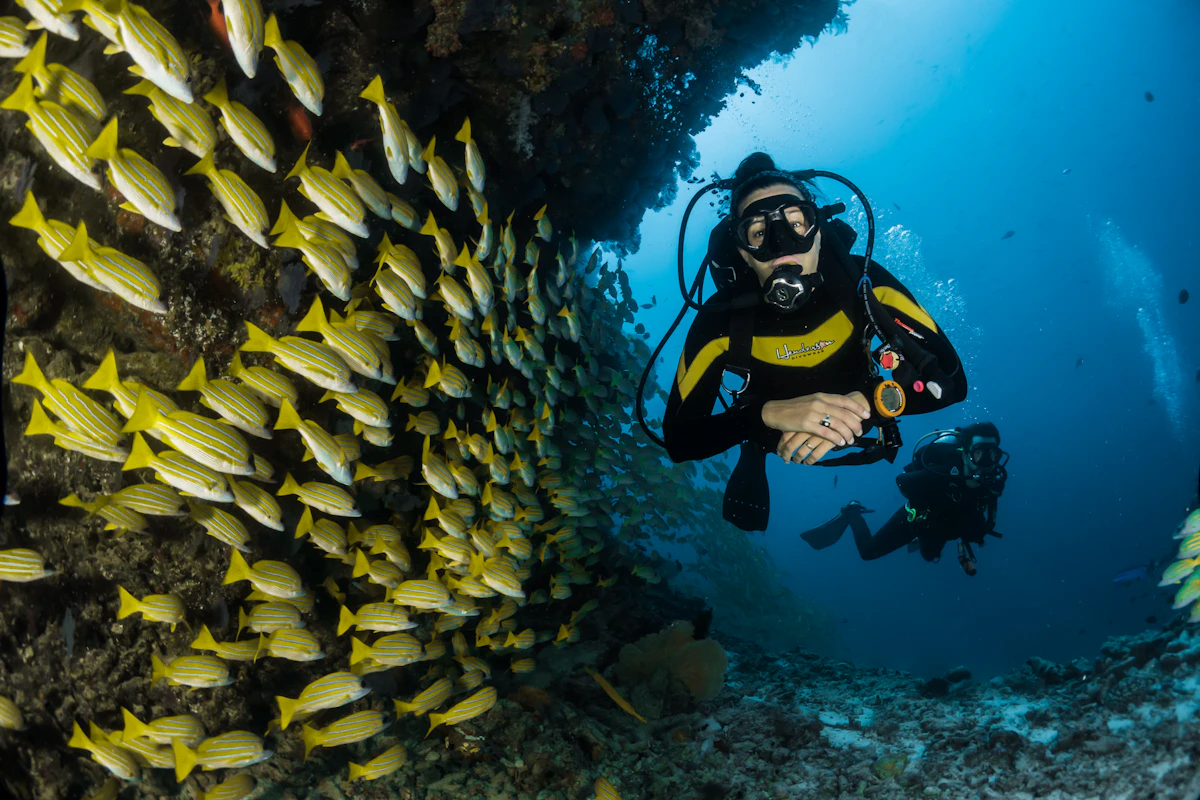 Credit: Unsplash
Palm trees framing a sunset shore
Sea lions own the offshore rocks, their barking echoing off the cliffs that rise behind you in layers of oxidized copper and iron. You'll spot Humboldt penguins if you watch the waterline carefully, their black-and-white forms darting through kelp beds. The desert comes right to the edge here—no gradual transition, just sand meeting scrubland where guanaco tracks press into the earth.
Wind arrives most afternoons, steady and cool despite the desert sun. You'll find driftwood scattered above the high-tide line, bleached white and worn smooth, and occasionally fragments of fishing nets tangled with kelp. The nearest humans are hours away. At night, if you camp, the stars multiply until the Milky Way casts shadows, and you fall asleep to sea lions and surf.


