
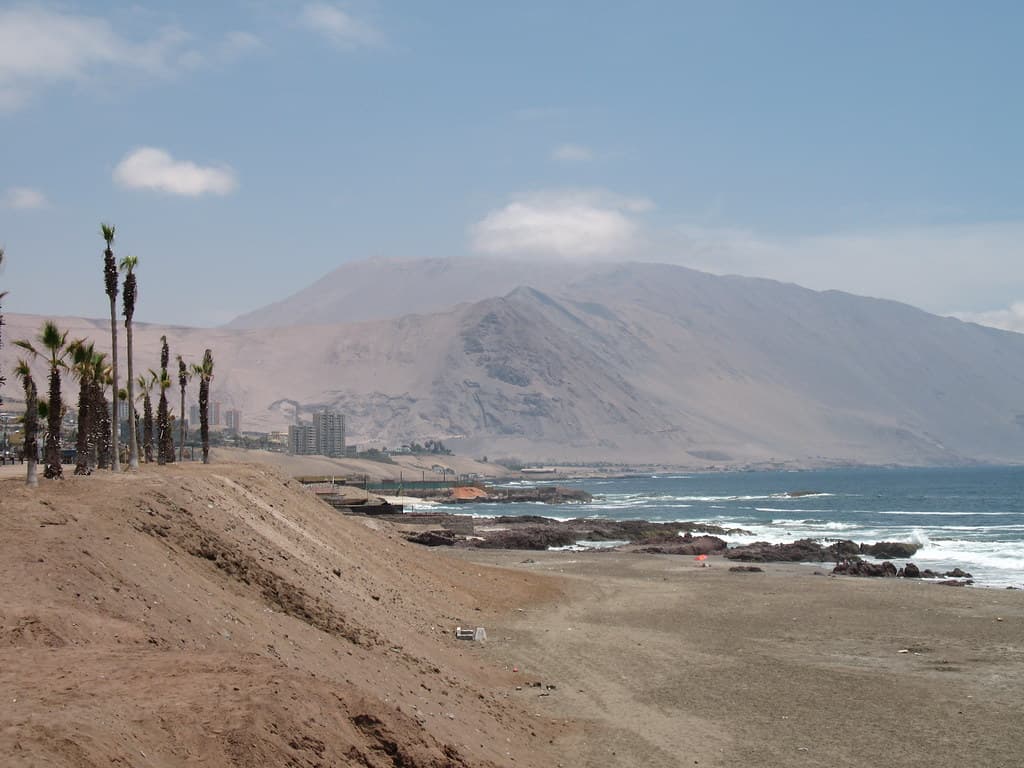
The road to Huayquique deteriorates the farther you drive from the city, pavement giving way to washboard dirt that rattles your suspension. The beach reveals itself suddenly when you crest a small rise—a crescent of sand wedged between rock outcrops, with waves peeling across a cobblestone point. Parking happens wherever you find flat ground; someone has spray-painted "PLAYA" on a boulder, the only indication this place has a name.
“The exposed point captures swells from multiple directions, working on days when Iquique's other beaches go quiet and glassy.”
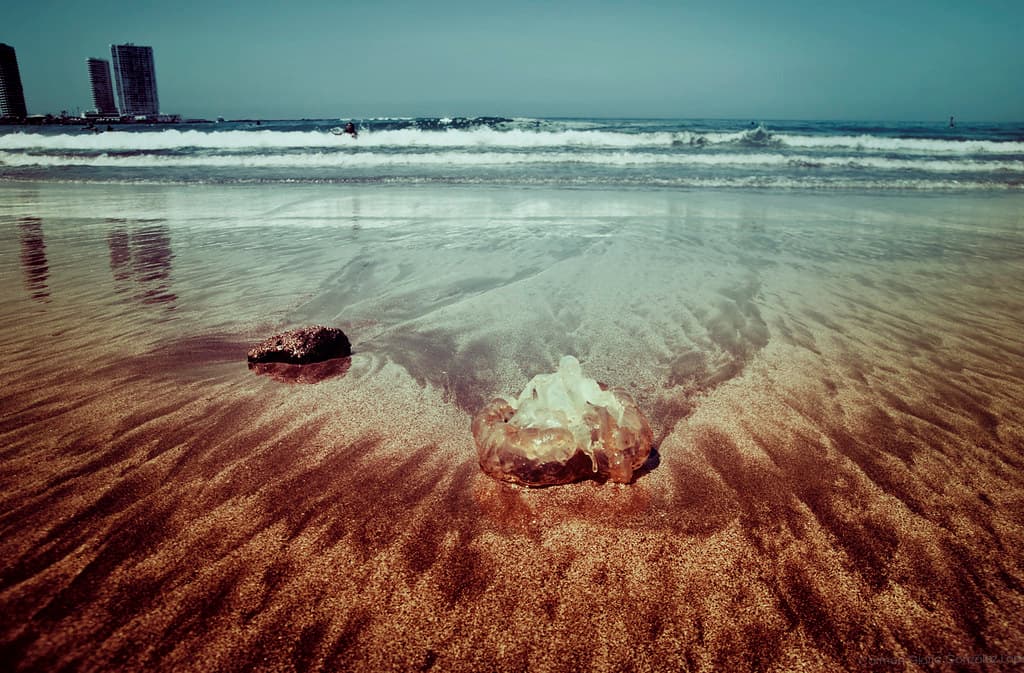 Credit: Flickr
Playa Huayquique — photo by Difusa
The beach itself runs maybe two hundred meters, divided by tide into distinct zones. At low water, rock platforms emerge, covered in barnacles and mussels that crack under your shoes. At high tide, the sand disappears almost entirely, and waves push against the cliff base. The water carries that deep Pacific blue that indicates serious depth close to shore. Kelp forests sway just offshore, their fronds breaking the surface on calm days.
Surfers who make the drive do so for the point on the northern end, where swells wrap and peel with mechanical precision on the right conditions. Between sets, you'll float in water so clear you can watch your feet dangle above the rocky bottom three meters down. Sea lions sometimes cruise through, investigating the strange creatures in wetsuits. The only sounds are waves, wind, and occasionally a truck grinding along the access road.


