

The coast here fractures into a maze of charcoal-grey stone, each boulder worn into improbable shapes by millennia of wave action. You navigate Huanhai Beach less by walking than by route-finding, stepping from one flat surface to the next while water sloshes through the gaps below. The rock formations cluster and separate in organic patterns, creating private alcoves barely large enough for two people—natural architecture that changes character with every tide. Barnacles encrust the lower surfaces, their sharp edges testament to how recently the sea covered where you now stand.
“Huanhai's volcanic rock formations create a constantly transforming tidal zone where the beach experience shifts from exploration to retreat as the sea reclaims its territory twice daily.”
 Credit: Pexels
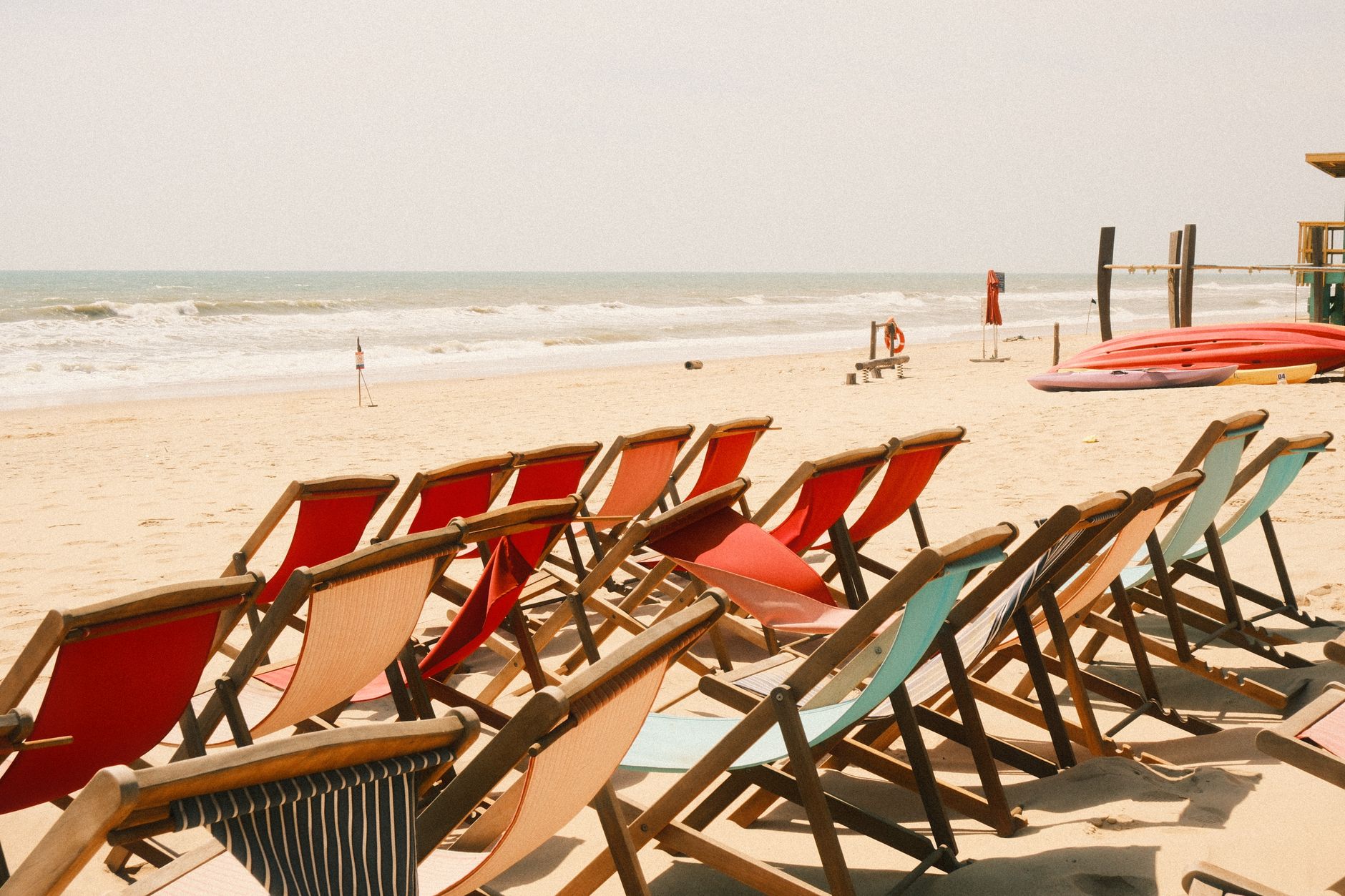
Rows of colorful beach chairs on a sandy shore in Phan Thiet, Vietnam, under bright sun.
This is a beach for low tide exploration. As the water retreats, it leaves behind temporary ecosystems: pools crowded with periwinkles, anemones pulsing in the shallows, hermit crabs conducting their eternal housing search. The smell is pure littoral zone—brine, decomposing kelp, sun-heated stone. Shorebirds work the exposed areas methodically, probing for anything the receding tide revealed. You'll find driftwood wedged between rocks at impossible angles, plastic flotsam serving as unwelcome reminders of the ocean's indiscriminate collecting habits.
The absence of sand means the absence of typical beach crowds. Families with small children head elsewhere; sunbathers need flat, soft surfaces you won't find here. What remains is space for those who prefer their coastline unrefined. Settle into a sun-warmed hollow in the rocks, feel the stone's heat radiating into your back, and watch the tide begin its slow return. The waves don't crash here—they infiltrate, filling the spaces between boulders with patient, inexorable rising water that will reclaim this entire landscape in another few hours.


