

Xiaoyangkou's fame rests on its sand—genuinely white, imported and supplemented over the years to maintain its reputation as Jiangsu's premier beach destination. You slip off your sandals and feel the fine grains, sun-heated and soft, nothing like the muddy shores that characterize much of this coastline. The beach stretches long and wide, backed by a concrete promenade where vendors sell inflatable tubes, corn on the cob, and cold beer from coolers packed with ice. A lifeguard tower rises every hundred meters, red flags snapping in the sea breeze.
“Jiangsu's most famous beach where imported white sand meets Yellow Sea jade and generations of Chinese families have learned what summer tastes like.”
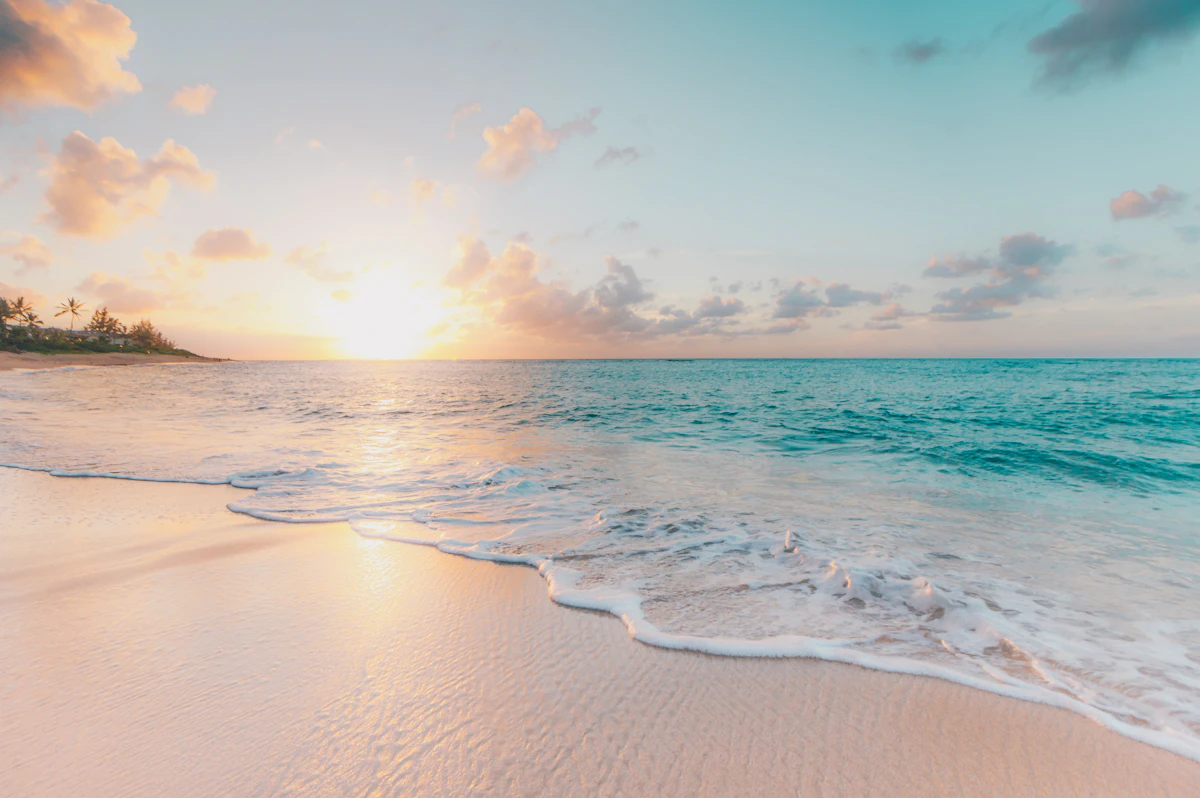 Credit: Unsplash
Aerial view of turquoise tropical bay
You wade into the shallows where the bottom drops away gradually, the water cool and slightly murky from suspended sediment. Small waves lap at your knees. Around you, families spread out on rented lounge chairs, grandparents watching toddlers splash in the foam while parents scroll through phones or doze in the shade. A group of teenagers plays volleyball near the water's edge, their shouts carrying over the ambient noise of conversation and pop music from a nearby speaker. The scene feels quintessentially Chinese summer—crowded, energetic, unabashedly recreational.
By late afternoon, the crowd thins slightly. You walk down the beach, past the main swimming area into quieter stretches where the sand shows more footprints than bodies. The water takes on better color here, reflecting the sky's pale blue. Fishing boats work the horizon line, small dark shapes against the lighter sea. You find a spot to sit and watch the light change, the white sand glowing pink briefly before dusk settles in and the beach lights flicker on one by one.


