
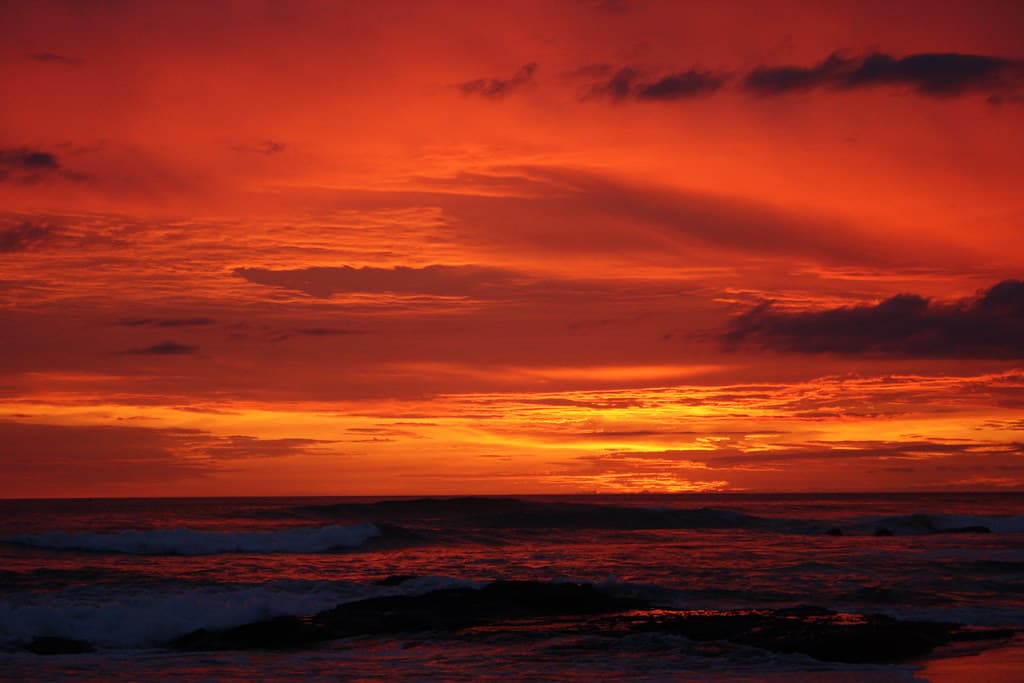
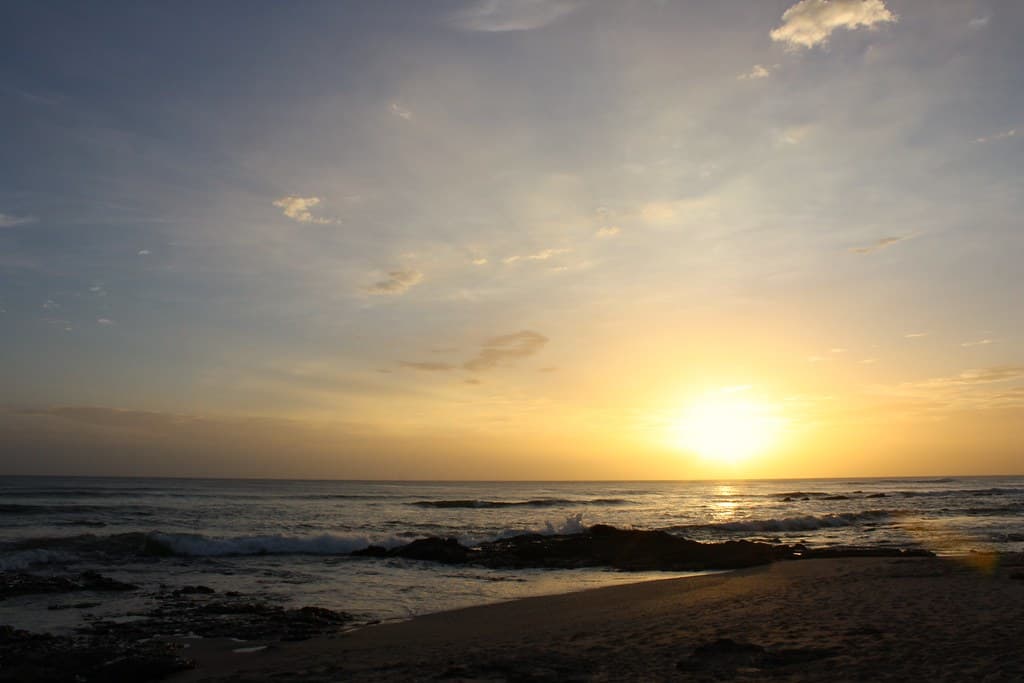
Volcanic boulders the size of compact cars crowd the small beach, their surfaces pocked and textured, dark gray fading to rust-orange where iron-rich minerals oxidize in the salt air. The sand exists in scattered pockets between the rocks rather than as a continuous strand, making this distinctly unsuitable for sunbathing or family beach days. But when the swell direction and tide align, waves wrap around the rocky point with surprising shape, creating lefts that peel across the inside reef.
“The most challenging access and least forgiving conditions along this coast, which keeps it the domain of committed wave hunters.”
 Credit: Flickr
Playa Róbalo — photo by Trevor.Huxham
Access requires navigating a rough track that deteriorates with each rainy season, then scrambling over rocks to reach the water. No facilities, no parking lot, no lifeguard tower—just a few locals who've been surfing this spot since before Avellanas became internationally known. You'll paddle out through channels between the boulders, timing your entry to avoid being pushed back onto the rocks by the shorebreak.
At low tide, the reef creates complex tide pools where anemones contract at your shadow's approach and small crabs skitter between coralline algae patches. Iguanas sun themselves on the largest boulders, barely acknowledging your presence. By late afternoon, the rocks radiate stored heat and the incoming swell catches the angled light, each wave face briefly illuminated before the water folds into itself and crashes in foam against the point.


