
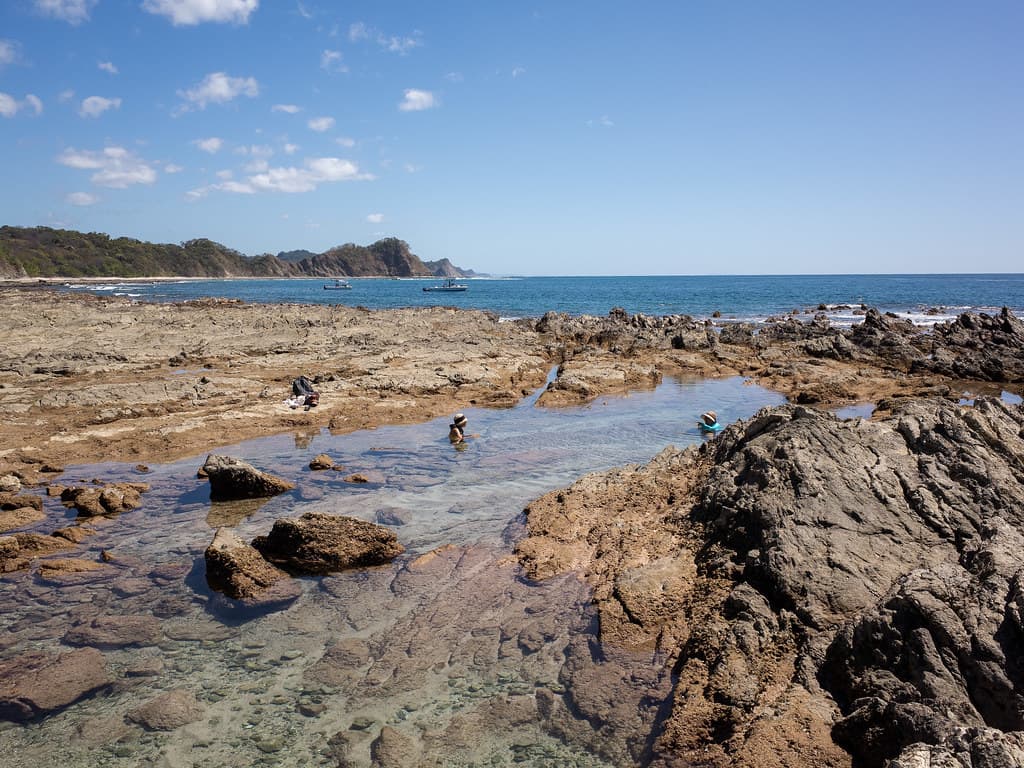
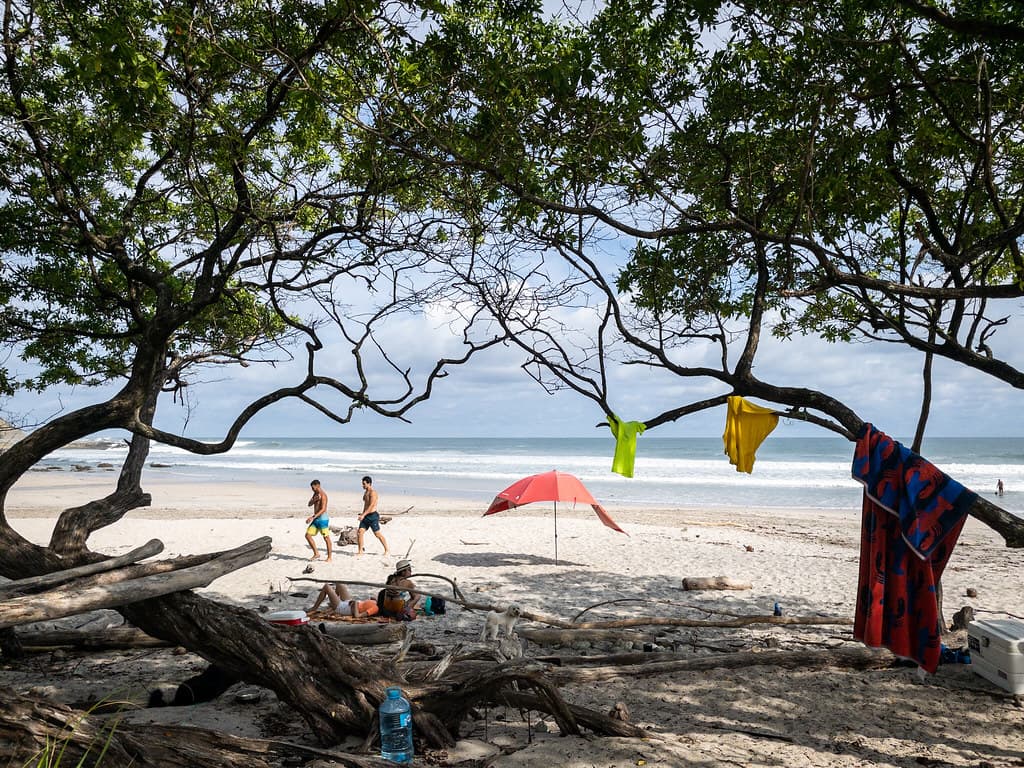
The sand here is finer than anywhere else on the Nosara coast—almost powdery underfoot, bleached nearly white by the equatorial sun. It stretches in a gentle arc between two forested headlands, each thick with strangler figs and almendro trees that lean seaward, their roots gripping the volcanic soil. At low tide the beach widens to sixty meters, revealing tidal flats where sanderlings sprint after retreating waves and tiny crabs emerge from their burrows to feed.
“The pale sand and protected aspect create a microclimate of calm that feels transplanted from the Caribbean, even as Pacific swells march past the outer point.”
 Credit: Flickr
Playa Barrigona — photo by guillermo.d
The water shifts through a spectrum of blues depending on the light and the cloud cover—turquoise over the sandbars close in, deepening to cobalt where the bottom drops beyond the break. The waves arrive in clean, long-interval sets, peeling left and right off the point with a lazy power that makes them rideable but never intimidating. Between sets, the surface goes glassy, and you can see schools of sardines flashing silver just beneath.
Behind the beach, a rough track leads to a handful of houses hidden in the trees—expat-built, solar-powered, visible only by their water tanks. No restaurants, no showers, no lifeguard tower. At sunset the whole cove glows apricot and rose, and the howlers begin their guttural chorus. If you're the only one here, and you often are, the silence between waves feels deliberate, almost ceremonial.


