
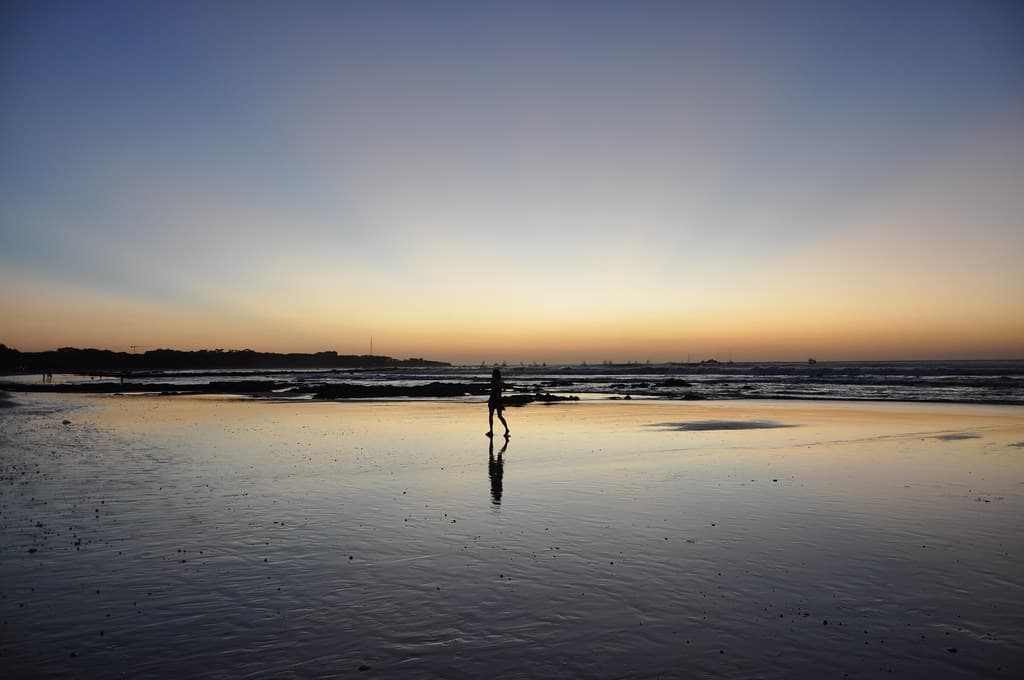
The trail from Hacienda Pinilla's groomed fairways ends abruptly at a jumble of black volcanic rock, polished smooth by centuries of swells. You navigate carefully—barnacles still cling to the higher stones—until the coastline opens into a cove where waves detonate against offshore reefs with the percussion of distant thunder. Tide pools trapped between boulders shimmer with sergeant majors and spotted blennies darting through anemone forests.
“This is Guanacaste's margin where resort development yields to volcanic geology and wave-reading becomes survival skill.”
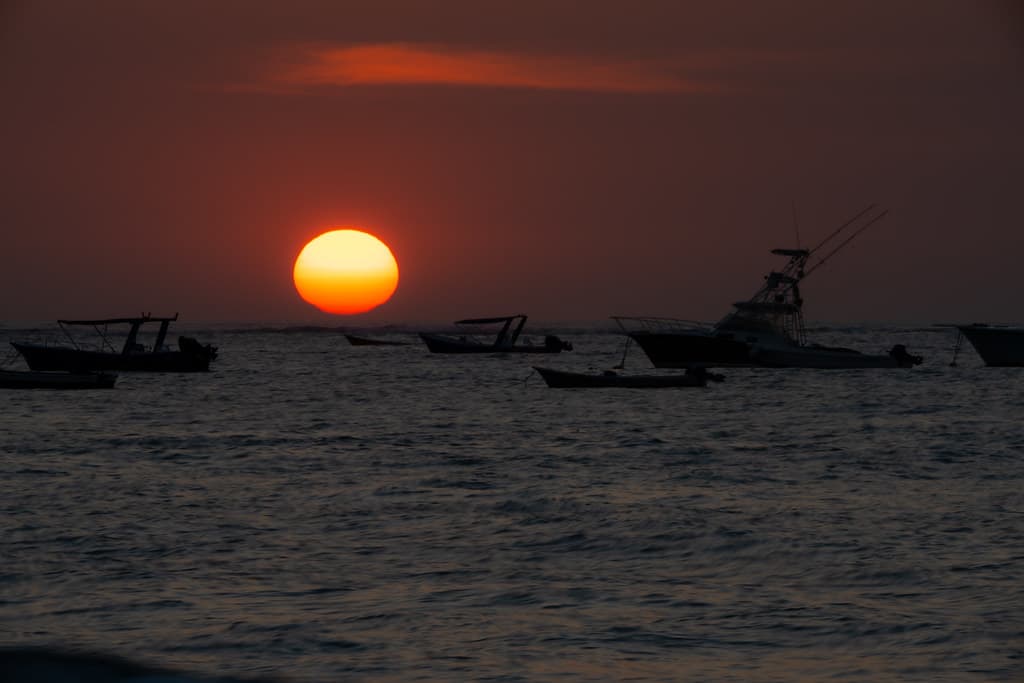 Credit: Flickr
Playa Roca Bruja Pinilla — photo by Jean Boris HAMON
Local surfers know the name Roca Bruja, but few resort guests venture this far south. The paddle-out demands respect: sharp reef below, shifting channels between sets, and a current that tugs persistently northward. When the sets align, barrels unzip across the inside section with enough hollow space to crouch through. Between waves, pelicans skim the lineup, their wingtips grazing the backs of swells.
As afternoon light slants westward, the cliff face behind you glows ochre while shadows pool in rock crevices. You'll hear howler monkeys in the canopy before you see them—their guttural calls competing with the white noise of surf. The walk back requires timing; high tide claims the rocky passage entirely, turning the beach into an island accessible only by those who read tide charts and carry headlamps.


