
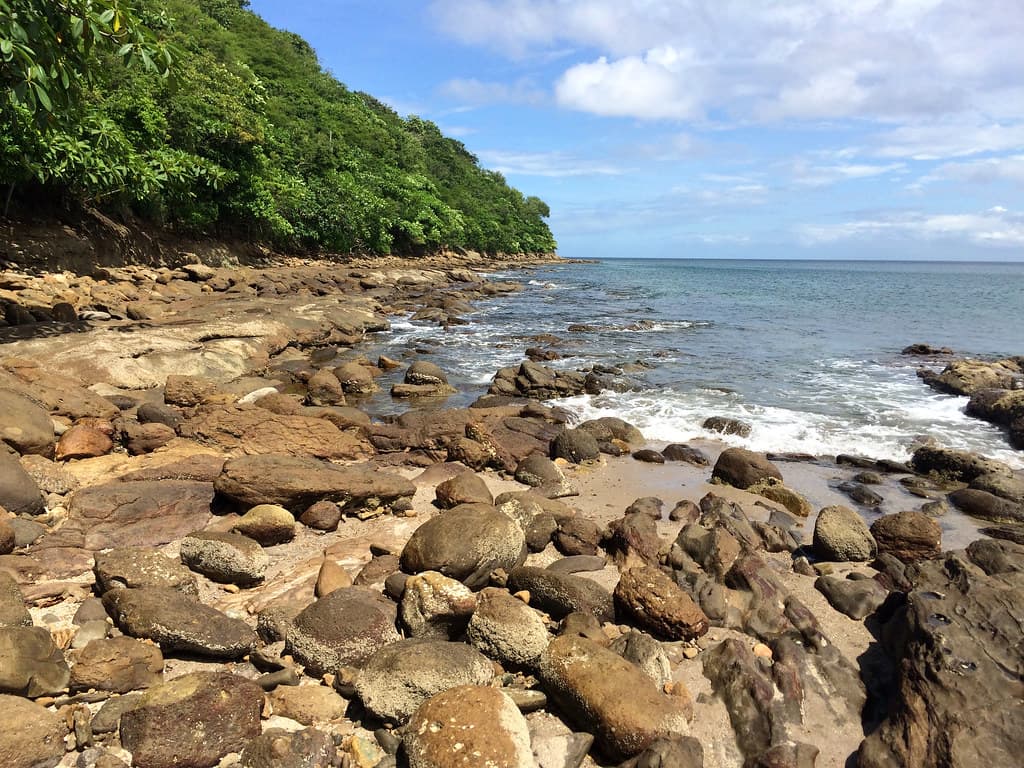
The bay stretches wide and shallow, bounded by headlands that glow amber when the sun drops behind the Papagayo Peninsula. You'll see the beach from the highway above La Cruz—a long arc of tan sand interrupted by wooden pangas resting on log rollers—but the descent takes you past fruit stands and a fútbol field before depositing you at a gravel parking area shaded by almond trees. Local families arrive early, claiming tables beneath thatch roofs where vendors later sell ceviche in Styrofoam cups.
“One of the northernmost Pacific beaches before the Nicaraguan border, where local rhythms dominate and tourist infrastructure remains refreshingly sparse.”
 Credit: Flickr
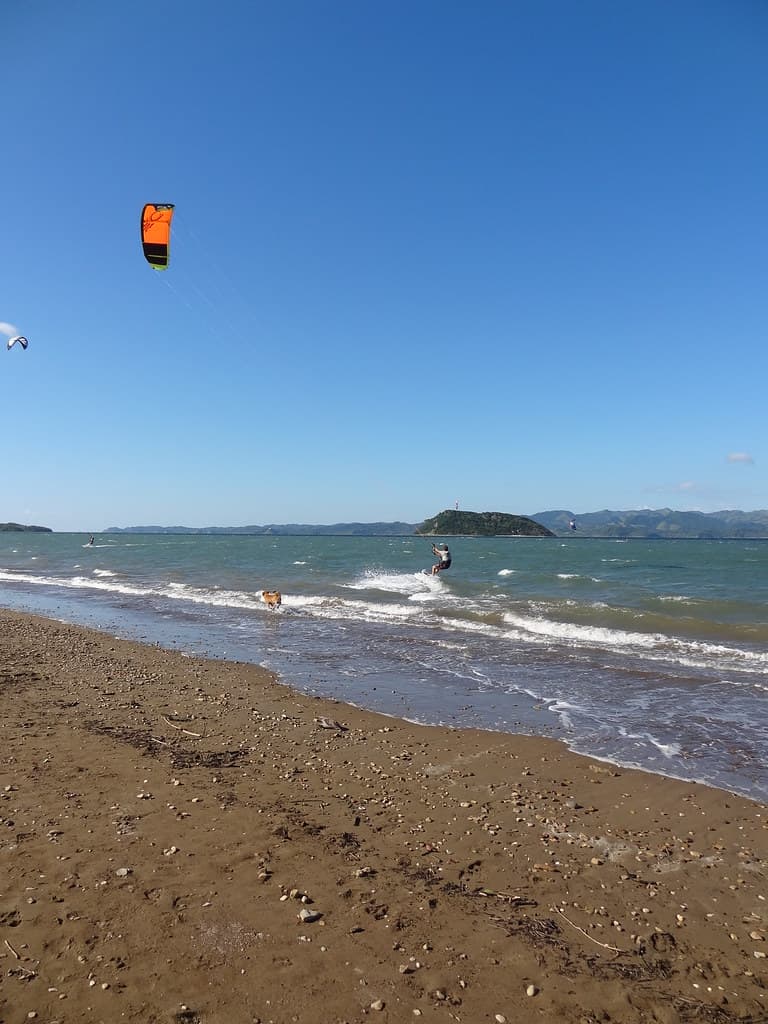
Playa Bolaños — photo by Dave Lonsdale
The water is warm year-round, the gradient so gentle that you can wade thirty meters before the surf reaches your waist. During dry season, northwest winds whip the bay into small, choppy waves—enthusiastic rather than powerful—that break close to shore and delight children practicing their boogie-board timing. Between sets, brown pelicans cruise the lineup, their wingtips nearly brushing the surface before they bank and climb again.
Sunset here is theater: the horizon becomes a gradient of tangerine, violet, and smoke-blue, with fishing boats motoring home silhouetted against the fading light. Couples walk the tideline collecting sand dollars; dogs chase retreating waves. It's the kind of beach where time is measured in empanada breaks and the slow retreat of shade across the sand.


