
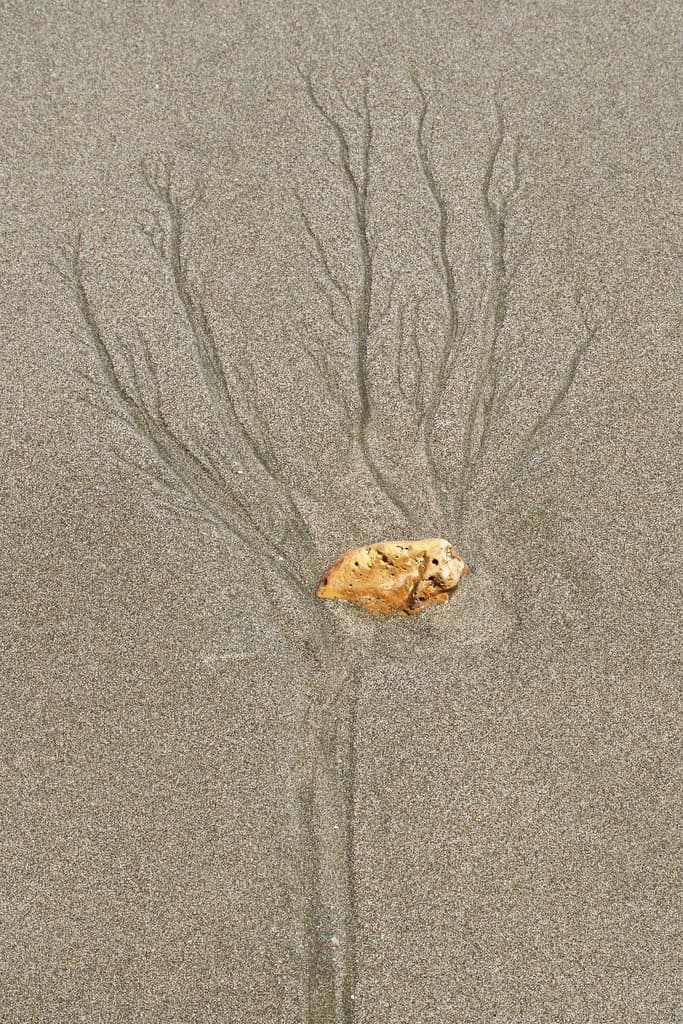
The path winds through chest-high grasses and over exposed roots, emerging onto sand the color of wet cardboard. To the north, a jumble of black boulders marks the boundary with the next cove; to the south, a low headland furred with greenery. In between, the shore curves gently, its surface dimpled with ghost-crab burrows and strewn with mahogany seedpods washed down from the estuary.
“It occupies the forgotten margin between two tourist economies, too far from Garza's pier to attract fishermen and too mellow for the surf-school crowd chasing Guiones' breaks.”
 Credit: Flickr
Playa Bote — photo by designwallah
The waves here are inconsistent—sometimes waist-high and peeling, more often ankle-slappers that fizzle out before they build. A handful of locals know it as a place to check when everywhere else is flat or blown out, but most mornings the only tracks in the sand are from night herons and the occasional horse. The water runs warm and murky close in, clearing to olive-green beyond the break. There's no reef, no dramatic drop-off, just a gradual slope of sand that shelves into deeper blue.
By late afternoon, when the sun slants low and the offshore breeze dies, the beach falls into shadow except for a golden strip near the waterline. Howler monkeys begin their evening chorus from the ridge behind you, and the air thickens with the smell of damp earth and flowering vines. If you stay through dusk, you'll watch the fishing boats from Garza motor past, their running lights blinking like slow-moving stars.


