
The approach tells you everything: ruts deep enough to scrape your undercarriage, river crossings that run axle-deep during the wet months, and enough dust in the dry season to coat your windshield opaque. When you finally reach the beach, the emptiness makes sense—most people turn back before they get this far. The sand stretches north in a gray-brown ribbon, bordered by scrub vegetation and the occasional cluster of palms. Volcanic boulders jut from the surf zone, dark and sharp-edged, forcing the swells to wrap and bend around the point.
“Playa Marbella delivers consistent, quality surf in near-total isolation for those willing to endure the brutal access road.”
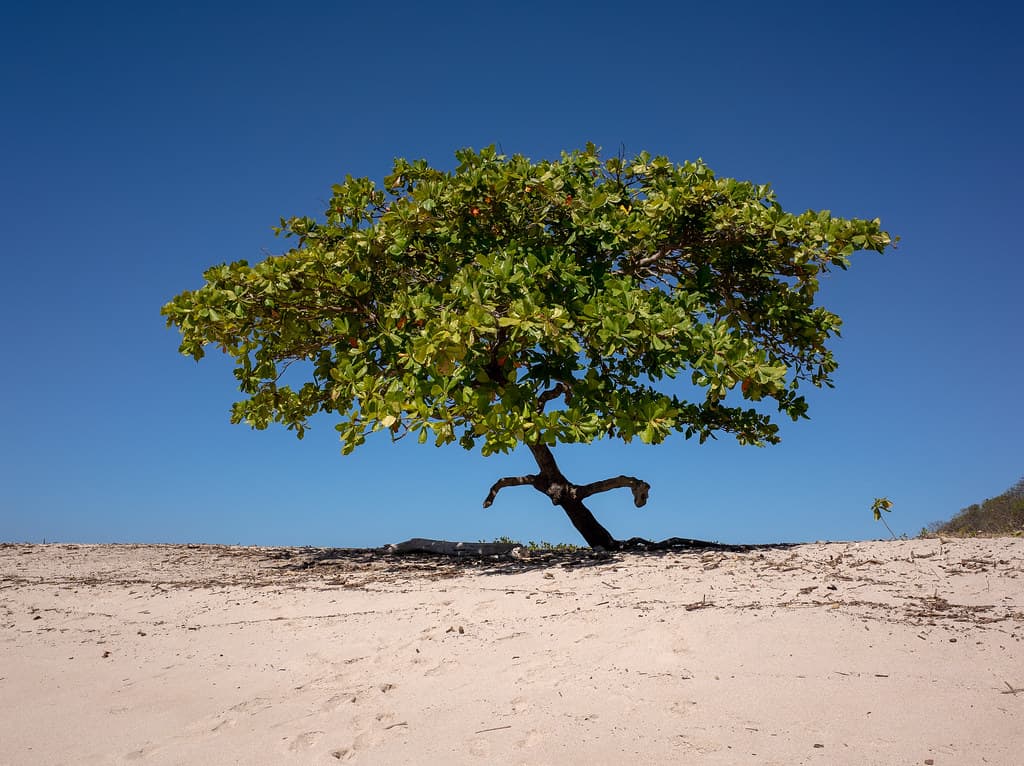 Credit: Flickr
Playa Marbella — photo by guillermo.d
The waves here break with more power than the mellow beach breaks farther south. When the swell direction is right—southwest to west—the point serves up long, hollow lefts that peel across the inside section before tapering into deep water. You'll surf it alone most days, or with one or two other travelers who heard about it from someone in Nosara and decided to investigate. The paddle out requires threading between rocks; the takeoff zone sits over a reef shelf that shows itself at low tide, barnacled and unforgiving.
Onshore, there's nothing—no palapa, no fresh water, no vendors. Bring what you need and expect to be self-sufficient. Howler monkeys bellow from the forest canopy between sets. Pelicans cruise the lineup, occasionally folding into kamikaze dives when baitfish move shallow. By mid-afternoon, if the wind hasn't blown out the surf, you'll have ridden more waves than you would in a week at the popular breaks, simply because there's no one to share them with.


