

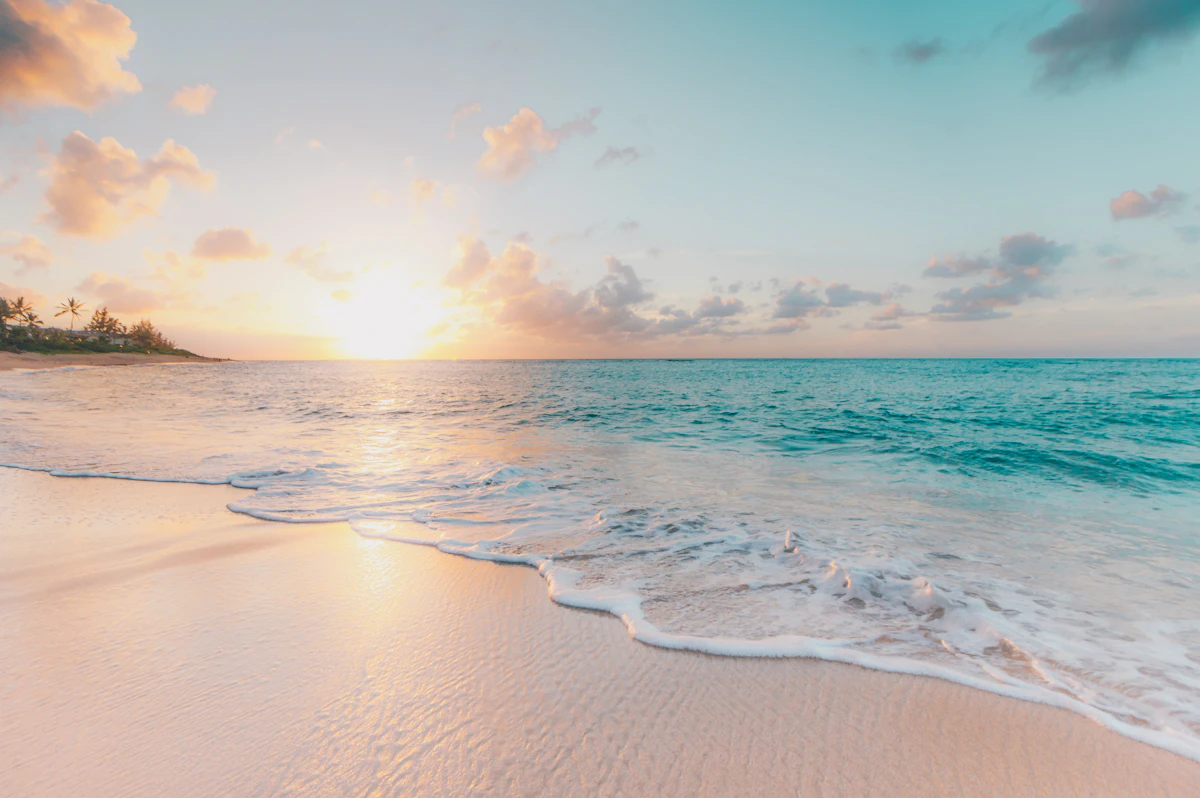
The black sand comes from the peninsula's volcanic origins, each grain a tiny fragment of ancient lava worn smooth by centuries of Pacific waves. In direct sun the beach surface shimmers with heat, but step into the shade where the jungle overhangs and the temperature drops ten degrees. The cove is small enough to feel private, large enough to stretch out without feeling cramped—maybe two hundred yards end to end, with granite boulders breaking the waterline at both points.
“The only significant dark-sand beach on the Papagayo Peninsula, its volcanic composition creating striking visual and thermal differences from nearby shores.”
 Credit: Unsplash
Aerial view of turquoise tropical bay
The water here shifts darker than neighboring beaches, the reflection of the sand beneath giving it a deep navy cast even in shallow water. Waves arrive with more punch than Playa Panamá, nothing dangerous but enough force to make bodysurfing worthwhile. A school of sergeant majors patrols the rocky north side, their yellow-striped bodies flickering between the submerged stones where green algae grows in fuzzy patches.
Access is controlled but not impossible—a trail winds down from the peninsula road, steep enough that you'll feel it in your calves on the way back up. Most days you'll share the sand with just a handful of others, maybe a couple who've hiked down from their resort villa, maybe a photographer working the late afternoon light. The dark sand creates dramatic contrasts in photos, especially at sunset when the last rays turn it bronze and the foam lines glow white against the charcoal backdrop.


