
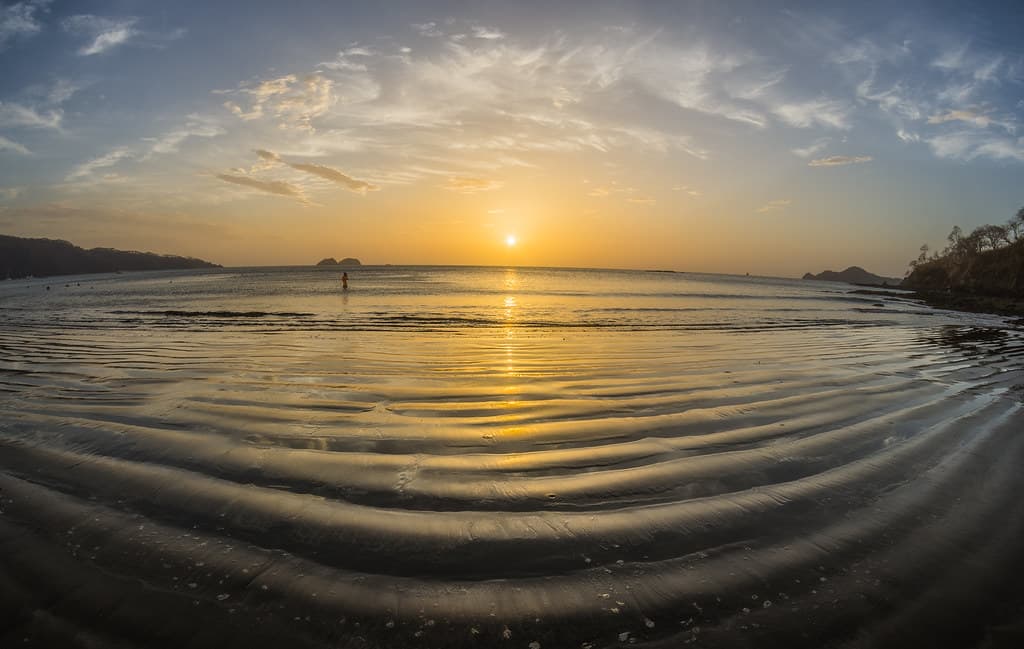
The bay opens wide and shallow, its crescent shape creating a natural breakwater that turns Pacific swells into harmless ripples by the time they reach shore. At low tide you can walk a hundred yards out and the water barely reaches your thighs, the sandy bottom firm and free of rocks or urchins. Pelicans work the morning shift, folding their wings and plunging like missiles into schools of sardines that flash silver just below the surface. By eight a.m., kids are already splashing in the shallows, building sandcastle moats that fill with lukewarm seawater.
“The longest consistently calm beach on the Papagayo Peninsula, making it the region's most reliable family-friendly swimming destination year-round.”
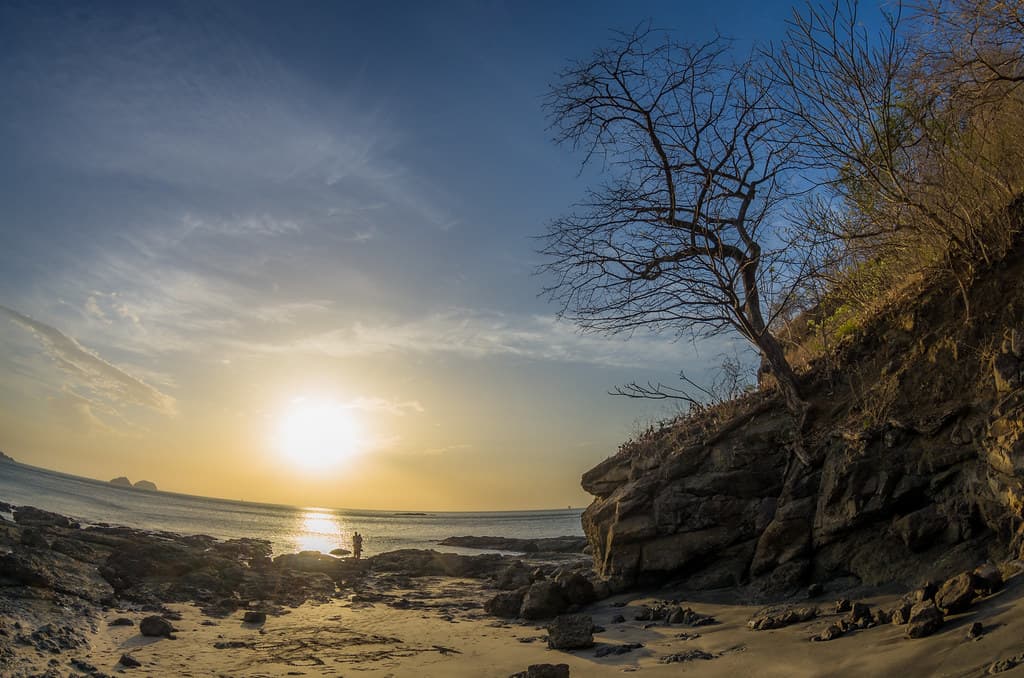 Credit: Flickr
Playa Panamá — photo by Kurayba
The beach stretches long enough that territories establish themselves naturally—fishing boats and nets clustered south near the village, resort zones in the middle with their organized rows of loungers, open public sand to the north where Tico families stake out weekend camps. Almond trees provide scattered shade along the upper beach, their broad leaves filtering the afternoon sun into dappled patterns. A few simple sodas operate behind the treeline, serving cold Pilsen and casados to sunburned tourists who've spent too long in the water.
Sunset here is a communal event, locals and visitors lining the wet sand to watch the sky cycle through its nightly show. The horizon stays unobstructed for miles, the sun dropping into the Pacific like a copper coin sliding into a slot. When darkness comes, the resort lights to the south glow warm against the hillsides, and the phosphorescence kicks in—every wave breaking in blue-green fire along the shoreline.


