
Access requires attention—the turnoff from the coastal track is unmarked, identifiable only by tire ruts and a gap in the fence line. The path descends through dry forest where spider monkeys crash through the canopy and land crabs scuttle into burrows. After ten minutes the trees open onto a pocket beach maybe two hundred meters across, hemmed in by dark stone cliffs that funnel wind and amplify the sound of breaking waves.
“A geological pocket where volcanic headlands create a microclimate and acoustic chamber that amplifies every sound of the Pacific.”
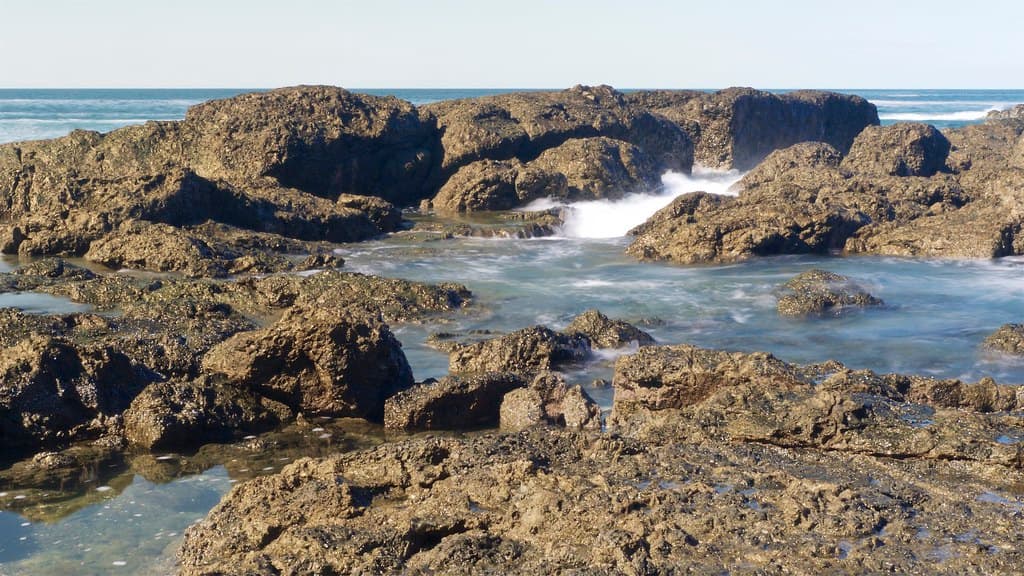 Credit: Flickr
Playa Coyolito — photo by designwallah
The sand here is volcanic black mixed with lighter granules, creating a marbled effect that shifts with each tide. Driftwood collects at the high-water line, bleached white by sun and salt, some pieces large enough to sit on while you watch the surf. The bay's geometry creates refraction patterns—waves bend around the headlands and meet in the middle, forming peaks that rise and collapse with metronomic precision.
Late afternoon brings a particular quality of light, the sun angling through the gap between cliffs and turning the water translucent green. You'll see the bottom clearly in the shallows: sand ripples, the occasional ray gliding past, schools of needlefish hovering just beneath the surface. By sunset the bay falls into shadow while the clifftops still glow orange, and the temperature drops enough to make the water feel warmer than the air.


