
You reach Playa Cocal by following a rutted track past corrugated-tin houses and a hand-painted pulpería, the kind of approach that keeps the selfie crowd at bay. The beach unfolds in a long, gentle arc, its sand the color of raw almonds, soft underfoot but firm enough to walk without sinking. Offshore, green swells fold into white foam, methodical and unhurried, while black vultures ride thermals above the tree line.
“The bay's twin-peak horizon and absence of commercial infrastructure make it feel like Guanacaste before the resorts arrived.”
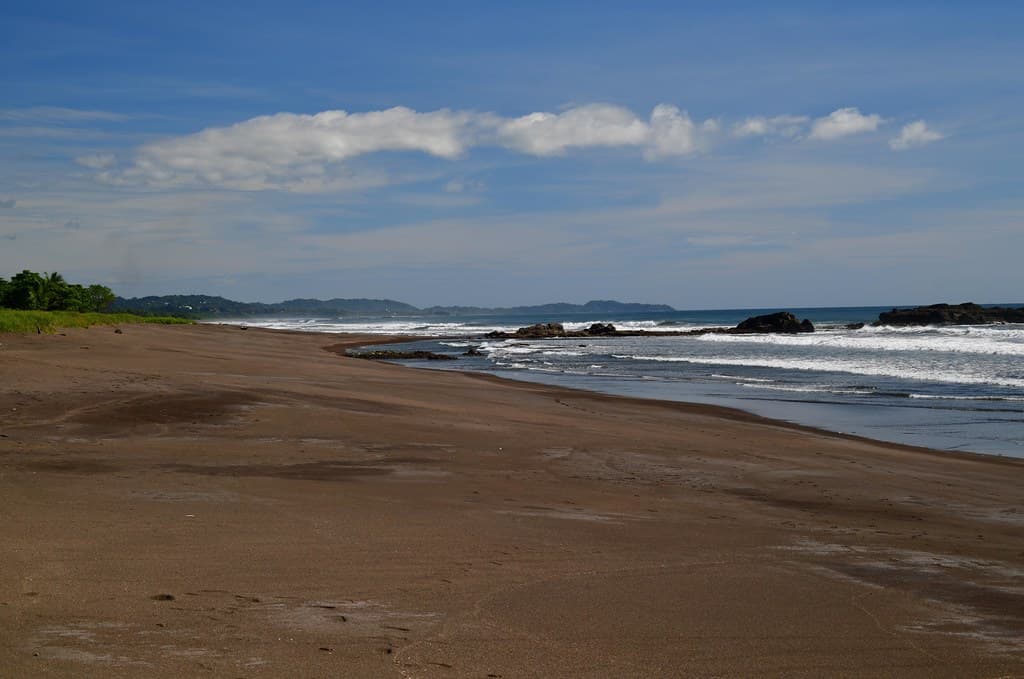 Credit: Flickr
Playa Cocal — photo by orientalizing
Mid-morning light turns the sand almost bronze, and the only movement comes from frigatebirds circling or a stray hermit crab dragging its shell toward driftwood. Families from San Juanillo arrive on Sundays, spreading towels under almond trees that drop shade in uneven patches. The water stays warm year-round, bathable but spirited, with enough pull to keep you honest.
By late afternoon the western sky ignites—burnt sienna bleeding into violet—and the beach empties except for a dog or two nosing through tide pools. There's no restaurant, no Wi-Fi password to hunt down, only the reliable metronome of surf and the occasional motorbike puttering along the access road. You leave with sand in your shoes and the sense that you've borrowed something the guidebooks haven't yet cataloged.


