
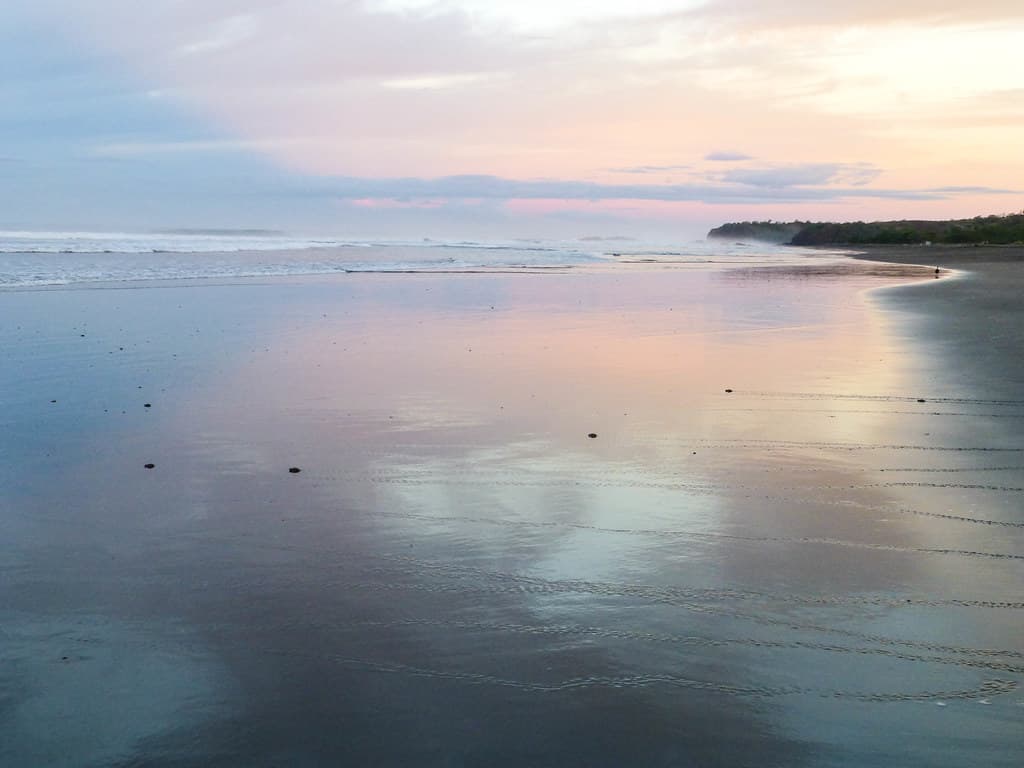
The beach runs straight for nearly a kilometer, wide enough that high tide never threatens the vegetation line. Fishing boats sit hauled up on the upper beach, their colors bright against the muted sand—turquoise, safety orange, sun-faded red. A few wooden tables cluster under palapas near the access point, where a woman might sell ceviche from a cooler on weekend afternoons, served in plastic cups with a sleeve of saltines.
“This is the beach where locals spend their Sundays, a working-community strand untouched by resort development.”
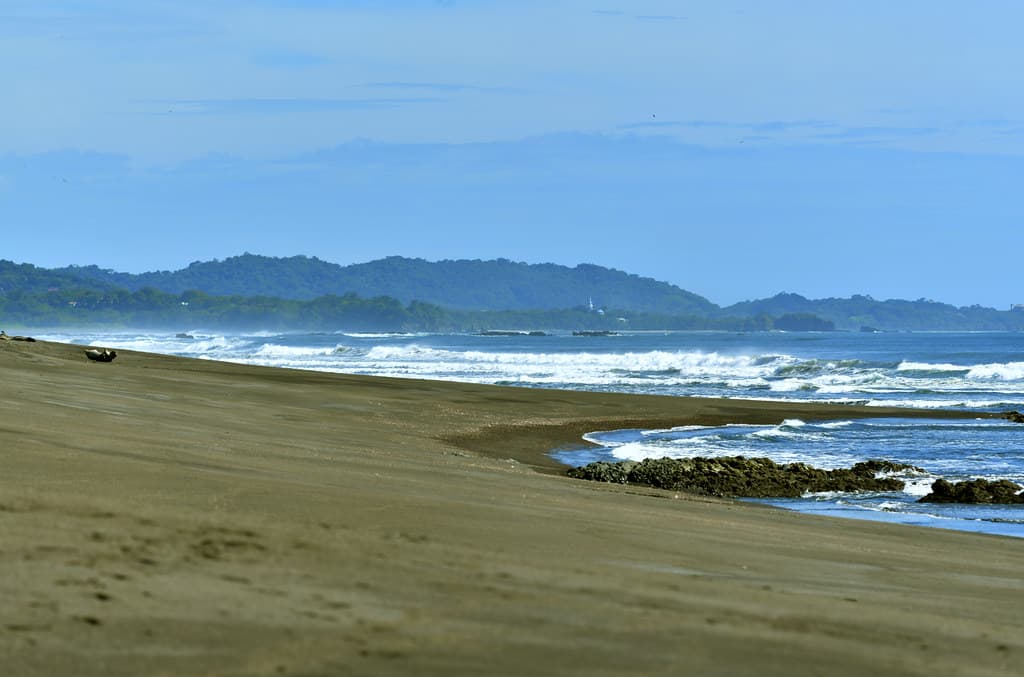 Credit: Flickr
Playa Cuajiniquil — photo by Panegyrics of Granovetter
The waves come in small and playful, breaking in knee-deep water over a sandy bottom that slopes gently toward deeper blue. Children wade and splash in the shore break while their parents sit in beach chairs they've carried from home. Dogs patrol the tideline, investigating strands of kelp and the occasional Portuguese man-o-war washed up overnight. Pelicans work the water in formation, diving when the baitfish school close to shore.
By four o'clock the light goes golden, stretching shadows from the palms across the sand. The families begin packing up—folding chairs, shaking out towels, gathering plastic toys. You can walk the length of the beach in fifteen minutes, meeting maybe a local jogger or a couple collecting shells. The sunset performs without fanfare, the sun dropping into the Pacific horizon in shades of copper and rose, no applause necessary.


