
The trail from the ranger station descends through deciduous forest that crackles with drought most of the year, opening finally onto a beach that sees more turtle flippers than human footprints. Nancite curves in a gentle arc, backed by vegetation so thick it forms a wall, fronted by Pacific swells that arrive unobstructed from deep water. This is one of the world's primary arribada beaches—synchronized mass nesting events when olive ridley turtles emerge by the thousands, transforming the sand into a living, breathing organism.
“One of Earth's most important olive ridley arribada sites, accessible only through strict permit protocols that prioritize conservation over tourism.”
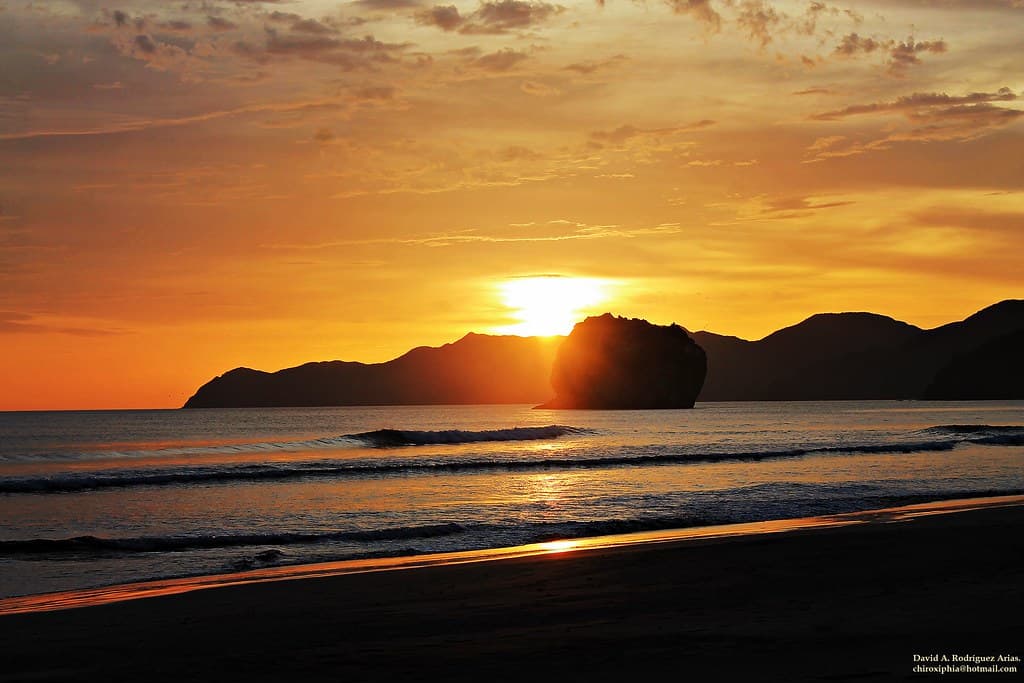 Credit: Flickr
Playa Nancite — photo by David Rodríguez Arias
Outside arribada season, the beach maintains an empty grandeur. Driftwood accumulates in the backshore, sorted by size through years of wave action. The sand shows yesterday's jaguar tracks if you know where to look and arrive early enough. Frigatebirds and magnificent frigatebirds work the surf line, occasionally folding into dives that send up white plumes. The forest behind the beach harbors spider monkeys and white-faced capuchins that vocalize without the presence of humans to moderate their volume.
During arribadas—concentrated between May and January—the beach becomes controlled chaos. Turtles dig nests atop previous nests, excavating and reburying each other's eggs in the frenzy to reproduce. Researchers move through the mayhem with headlamps and data sheets, tagging individuals and recording densities that approach one turtle per square meter. You watch from designated observation zones, if you've secured one of the rare research permits, understanding that your presence is tolerated only because conservation requires documentation. When the last turtle returns to the ocean and the sun rises over a beach cratered like a battlefield, you hike out carrying images that cameras can't adequately capture.


