
The panga pilot cuts the engine and tilts the outboard as you glide into water clear enough to count the stones below. Roble appears as a narrow bite in the coastline, its sand the color of wet clay, flanked by dark volcanic shelves that jut into the surf like broken teeth. You wade ashore through ankle-deep wavelets, feeling the temperature drop where freshwater seeps from the cliff base mix with salt.
“The only way in is by boat, ensuring near-complete solitude in a pocket-sized marine sanctuary.”
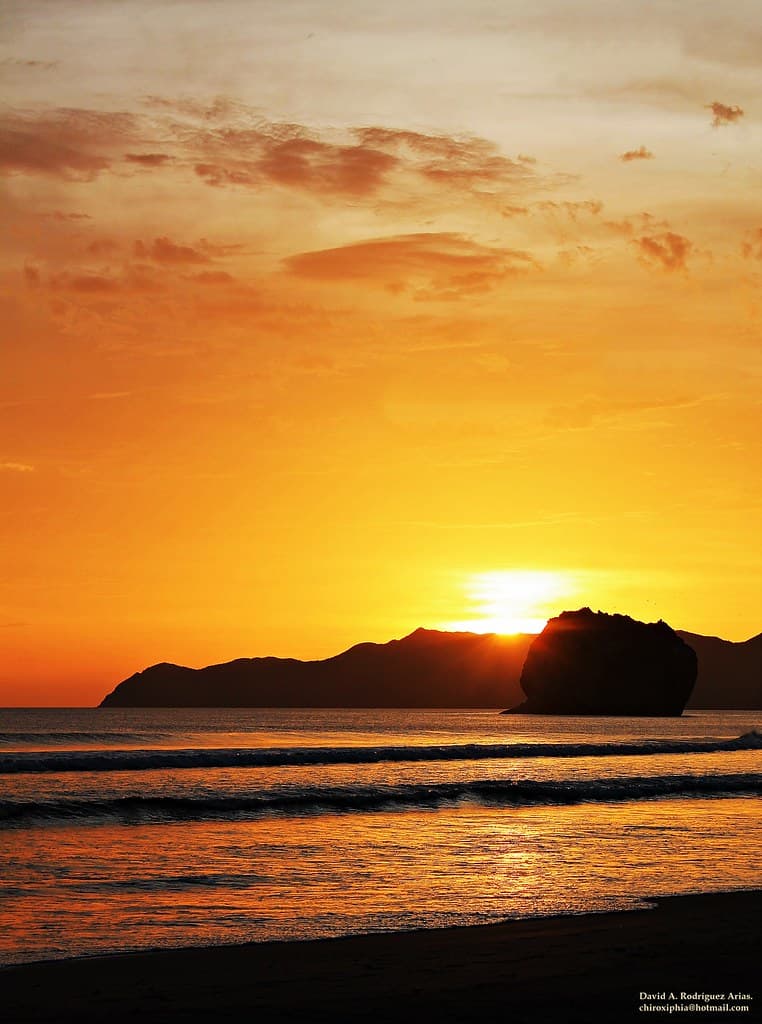 Credit: Flickr
Playa Roble — photo by David Rodríguez Arias
The cove measures barely two hundred meters end to end, enclosed by walls of stone covered in barnacles and orange lichen. At low tide, pools form in the pitted rock, each one a miniature ecosystem: sally lightfoot crabs scuttling sideways, anemones pulsing, schools of sergeant majors flashing their bars. The sand is coarse, mixed with fragments of shell and coral, and it squeaks underfoot when dry.
Above the beach, the forest presses close—a thicket of thornscrub and strangler fig where iguanas bask on sun-warmed boulders. The isolation is near-total; even the boat that brought you disappears around the point, leaving only the slap of small waves against rock and the occasional screech of a parrot. When the wind shifts onshore, you taste salt on your lips and smell the iodine richness of exposed tide pools baking under the equatorial sun.


