

Jalova represents Tortuguero National Park at its most protected and least visited—a beach sector where human presence is carefully managed and wildlife takes absolute priority. Your guide will cut the motor while still in the canal, drifting the final hundred meters to avoid disturbing birds feeding in the shallows. When you step onto the beach, the silence is startling: no village noise, no other boats, just waves and the rustle of palms in the onshore breeze.
“The only Tortuguero beach sector where ranger presence exceeds tourist traffic, offering supervised wilderness immersion.”
 Credit: Pexels
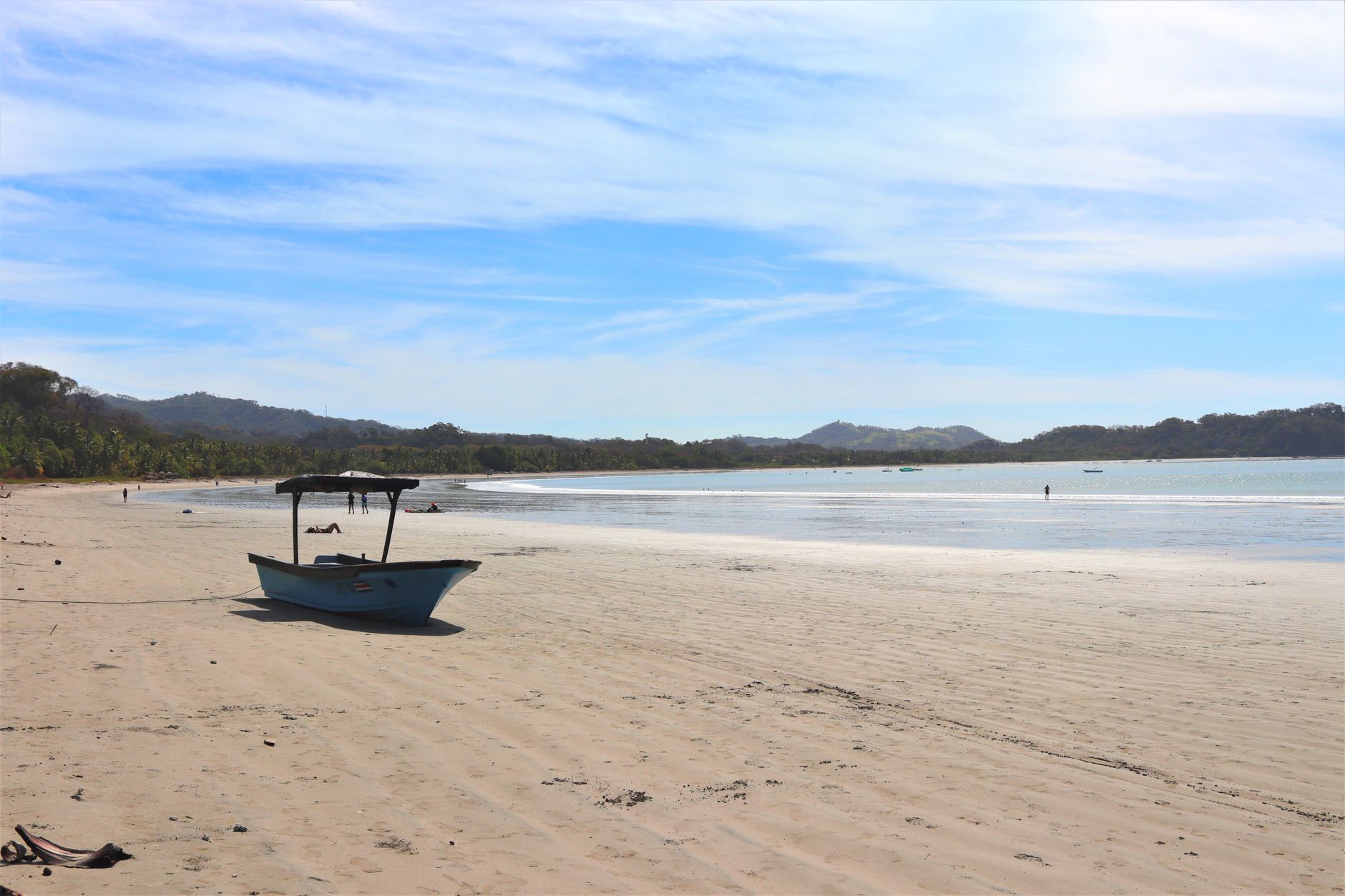
Tranquil beach scene at Sámara, Costa Rica, featuring a lone boat on sandy shores under a blue sky.
The sand stretches unbroken in both directions, dark and volcanic, marked by the refrigerator-sized excavations where green turtles dug nesting chambers the previous night. Park regulations mean you can't wander freely—guides keep groups small and movements deliberate to minimize impact. You'll see crab burrows clustered near the vegetation line, driftwood arranged by storms into sculptural piles, and occasionally the prints of jaguar or tapir that ventured from the forest to drink from tidal pools.
The ranger station operates on solar power and rainwater collection; rangers stationed here work weeks-long rotations in near-total isolation, their days structured around patrol schedules and data entry. When you visit, you're a guest in a landscape managed first for ecological integrity. The beach is humbling in its wildness—this is what protection looks like when enforcement is serious and access remains genuinely limited.


