

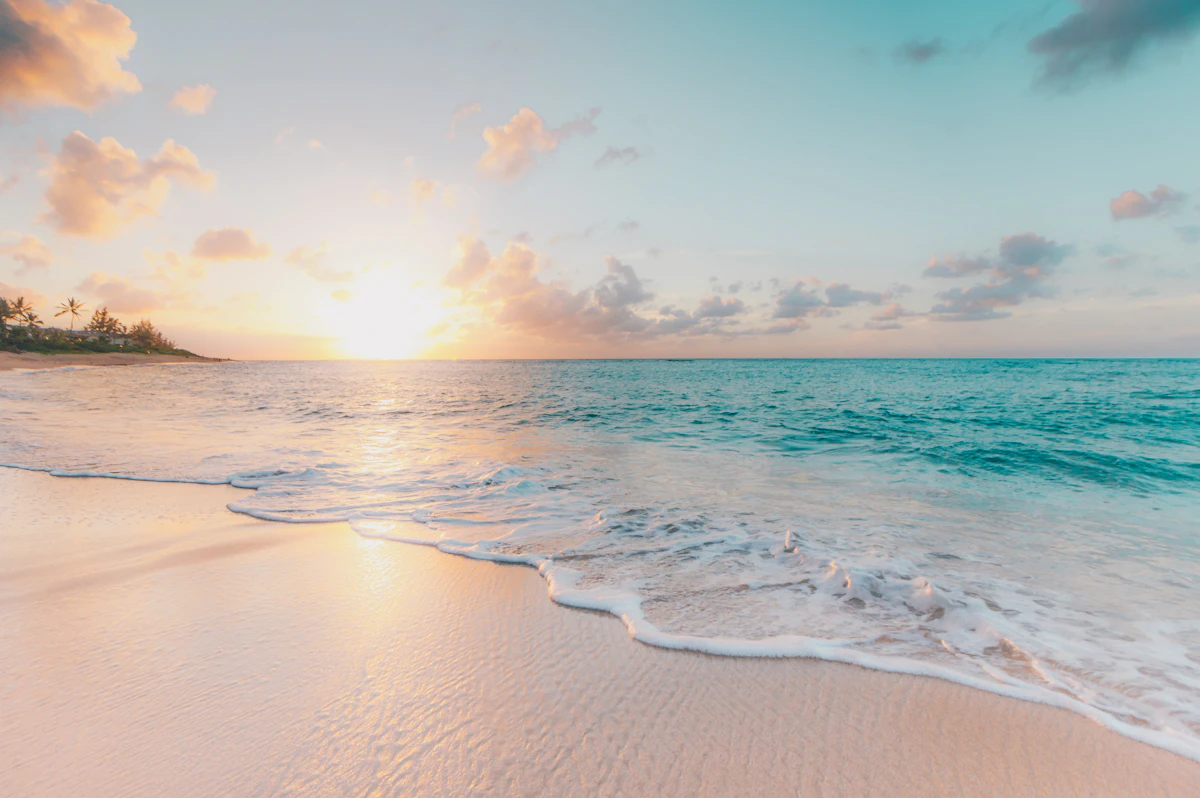
Playa Blanca announces itself gradually: first the forest thins, then you glimpse turquoise between the trunks, then the sand appears, so pale it forces you to squint even through sunglasses. The beach runs perhaps three hundred meters, hemmed between two rocky points that shelter it from the prevailing swells. At high tide, the sand nearly disappears; at low, it widens into a platform where sand dollars and olive shells collect in windrows.
“You'll find sand here that lives up to its name—genuinely white, genuinely quiet—at a latitude where the Caribbean is already dreaming of Panama.”
 Credit: Unsplash
Aerial view of turquoise tropical bay
You stake your claim beneath a leaning palm, its trunk inscribed with decades of initials and hearts. The water offshore shifts between jade and sapphire depending on the depth, the sandy bottom visible even a hundred feet out. You wade in slowly, feeling for the spine-covered sea urchins that colonize the rocks at the beach's edges. Once clear, you float on your back and study the canopy: toucans moving between cecropia crowns, their calls harsh and prehistoric.
A fishing cayuco rounds the southern point, its outboard coughing blue smoke. The captain waves; you wave back. By afternoon, clouds build over the Talamanca peaks and the wind swings onshore, ruffling the water's surface into gooseflesh. You retreat to the village for casado at a family-run restaurant—plantains fried dark, rice studded with red beans, grilled snapper caught that morning—and consider returning tomorrow, before the beach becomes anything other than what it is now: empty, bright, and perfect in its refusal to announce itself.


