
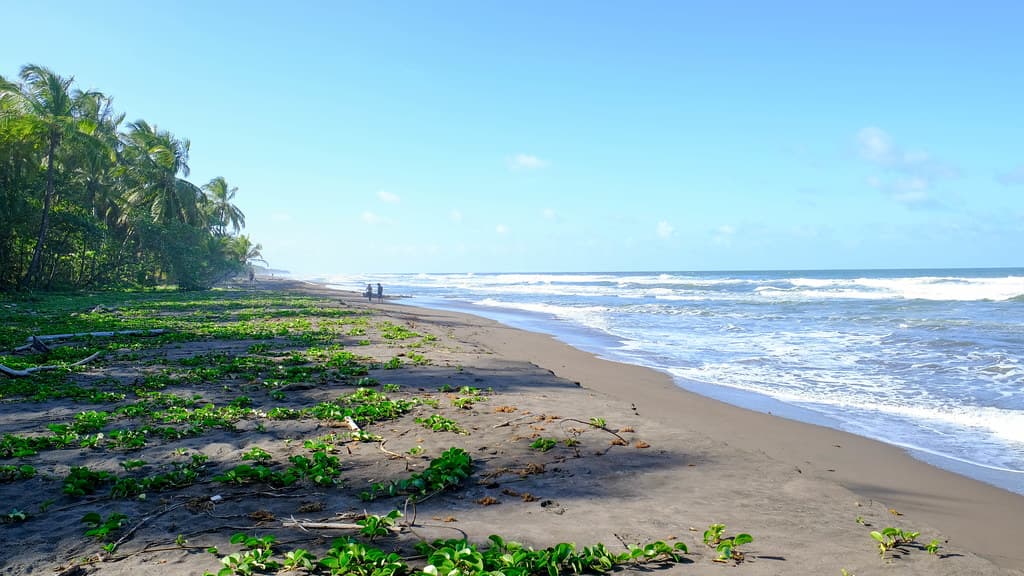
The transition is abrupt: one moment you're navigating day-trippers photographing iguanas near the village landing, the next you're alone on sand the color of gunmetal, your footprints the only marks between driftwood mountains and the surf. The beach runs north for miles, arrow-straight, backed by dense rainforest that exhales humid, green breath. Waves arrive in rhythmic sets, their foam the brightest white against charcoal sand.
“Tortuguero's ecological significance without the daytime canal-tour crowds—solitude within walking distance of infrastructure.”
 Credit: Flickr
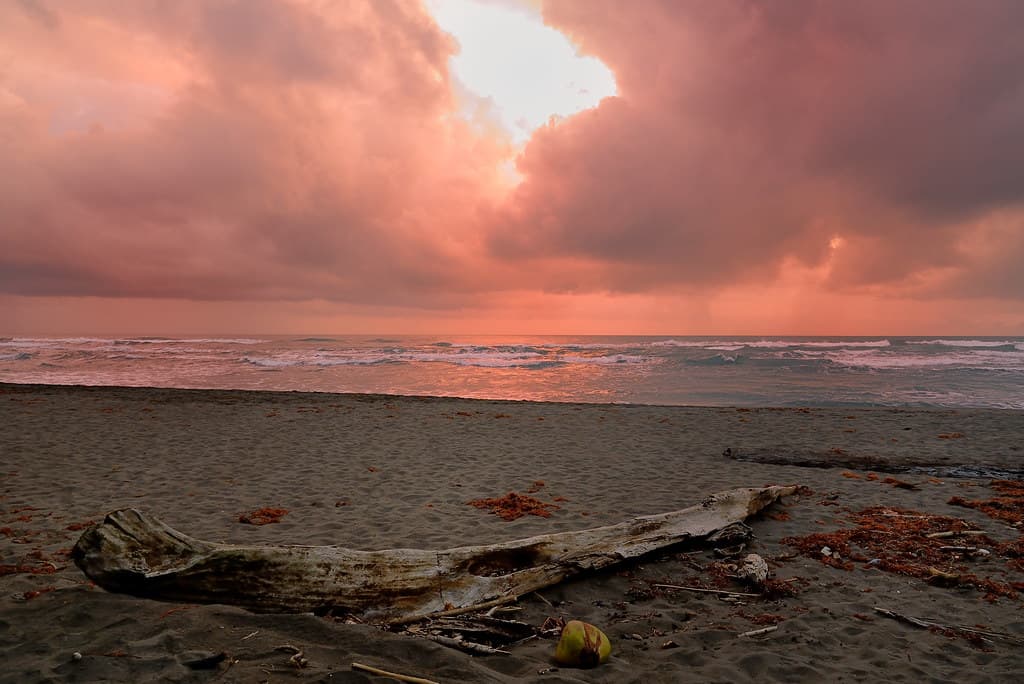
Playa Tortuguero Norte — photo by George Lamson
This northern extension sees perhaps a tenth of the village beach's traffic, because reaching it requires intention—a sweaty forty-minute walk or a boat drop-off with a prearranged pickup time. The sand is coarser here, embedded with fragments of volcanic rock and coral rubble that massage your bare feet. You'll spot crab burrows pocking the upper beach like miniature craters, and if you're quiet, basilisk lizards sprinting on hind legs into the undergrowth.
Come at dawn and you'll have the sunrise entirely to yourself, tangerine light spilling across water that's been rough-chopping since the wind started at four a.m. The almendro trees drop heavy, brown pods that crack open to reveal nuts parrots covet. In the distance, the village's tin roofs catch the light—a reminder of civilization that feels suddenly, wonderfully irrelevant.


