
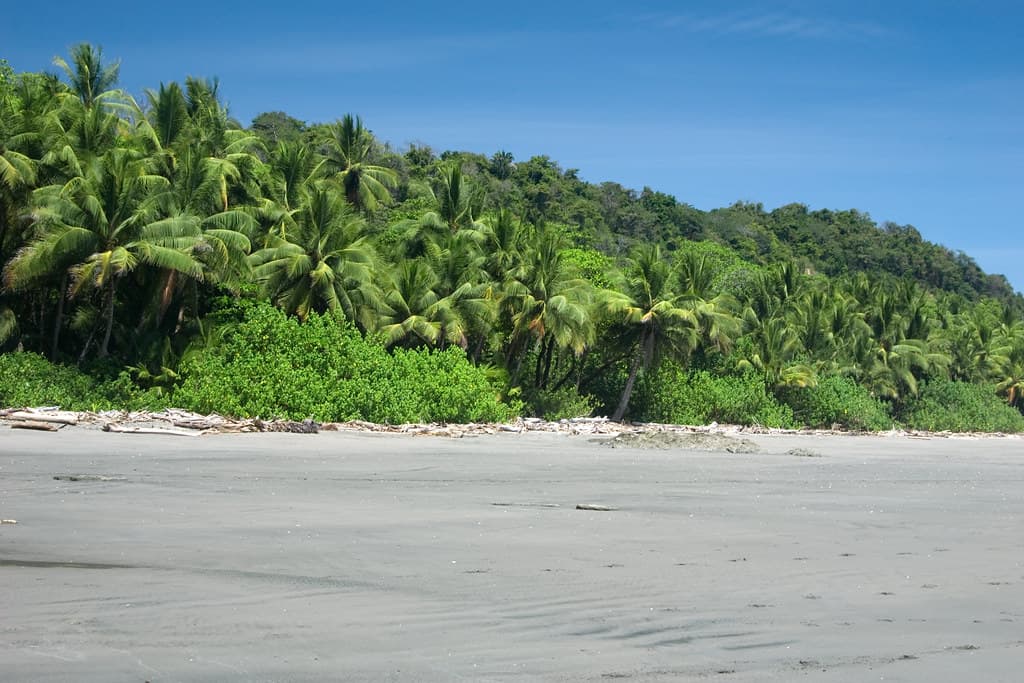
Playa Panica lacks a grand entrance or signage, which is precisely why it remains peaceful. The beach shares Bahía Ballena with its busier neighbor Tambor but occupies the southern curve, where the sand darkens slightly and the treeline creeps closer to the waterline. The bay's shelter keeps waves to a minimum—the gulf here is more lake than ocean, its surface dimpled by breeze but rarely chopped by serious wind.
“The quiet southern end of Bahía Ballena, offering all of Tambor's calm-water advantages without the beachfront development.”
 Credit: Flickr
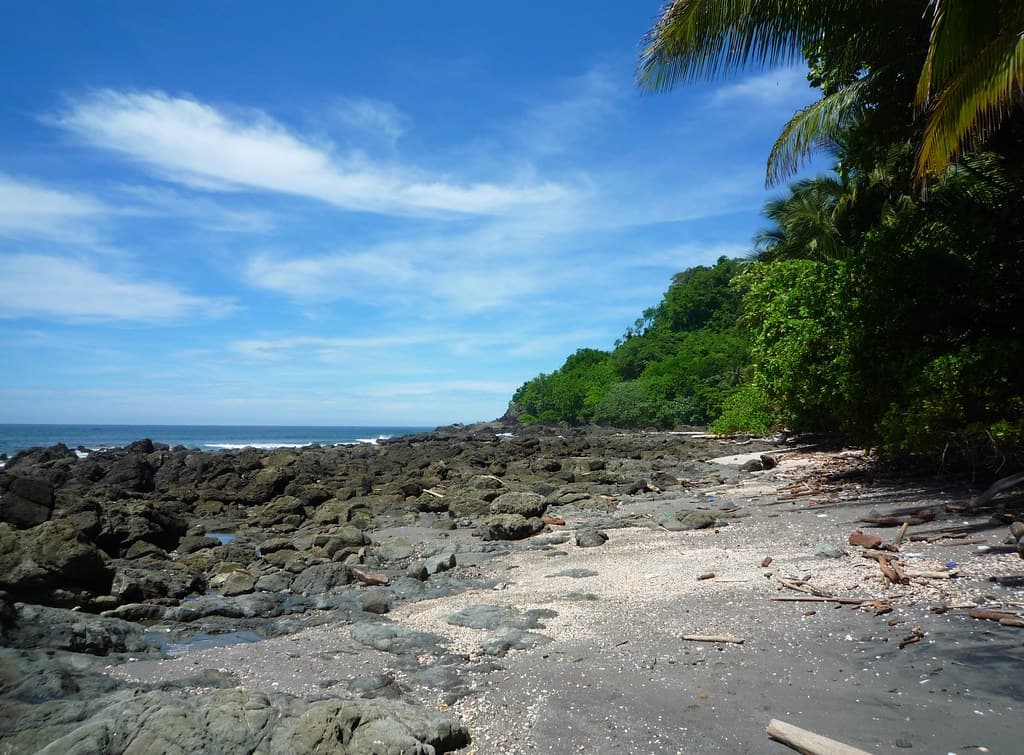
Playa Panica — photo by Nyall & Maryanne
The sand is coarse and gray-brown, packed firm near the water and softer under the shade of buttonwood and sea grape. At low tide, the beach widens dramatically, revealing tide pools and stranded driftwood bleached white by sun and salt. Great blue herons stalk the shallows, stabbing at fingerlings, while pelicans glide in formation offshore. A few simple houses and cabinas sit back from the beach, their laundry flapping on lines, their dogs nosing through tidewrack.
There are no beachfront hotels, no tour operators, no rental umbrellas. What amenities exist are found back toward Tambor village—a ten-minute walk along the sand or the inland road. The isolation is relative, not absolute, but enough to shift the atmosphere from tourist beach to neighborhood shore. By late afternoon, local families arrive to let children play in the shallows, and the setting sun turns the calm water into a sheet of hammered bronze.


