
The only footprints you'll find here belong to coatis that patrol the tide line at dawn. Playa Bajo Caletas curls between two forested headlands, a 200-metre crescent reachable solely by water. Your boat captain cuts the motor and drifts into knee-deep surf; you wade ashore into a stillness broken only by the rustle of coconut palms and the low boom of waves on offshore rocks.
“One of the last boat-only beaches on Drake Bay where the jungle still outnumbers the tourists.”
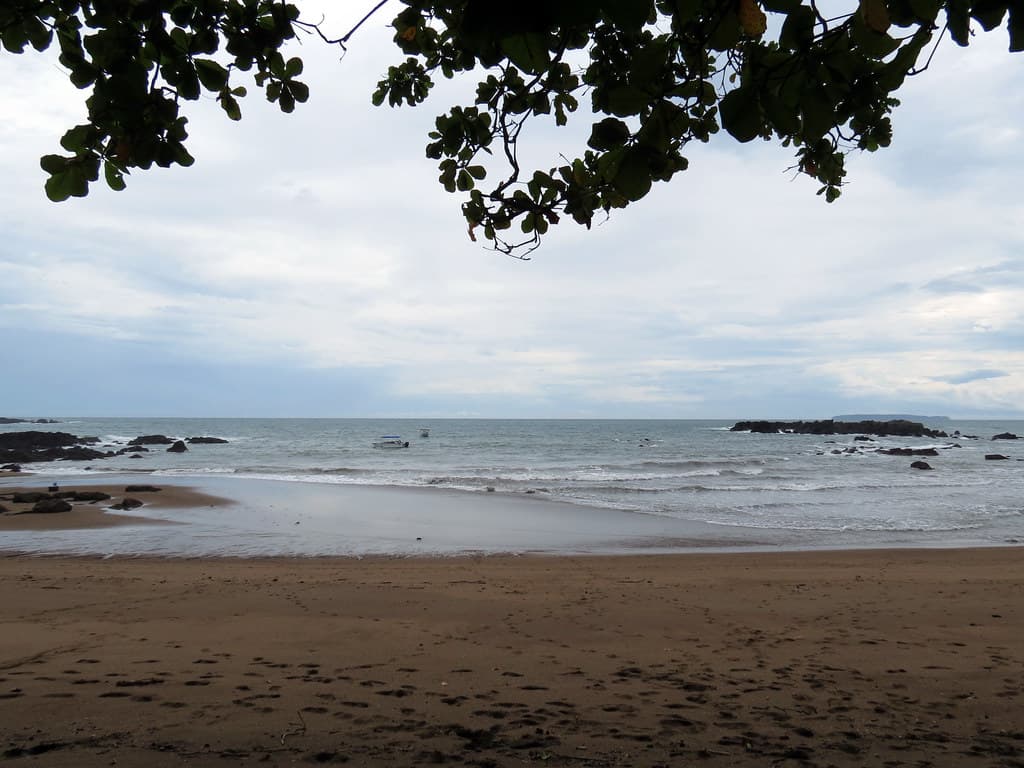 Credit: Flickr
Playa Bajo Caletas — photo by treegrow
The sand is tawny and coarse, studded with driftwood polished smooth by years of surge. Behind the beach, primary rainforest rises in a nearly vertical wall—cecropia, almendro, and wild cacao tangled with liana vines. Hermit crabs scuttle beneath the leaf litter, and you might catch the flash of a poison-dart frog threading through the undergrowth.
When the tide retreats, tide pools appear among the boulders on the southern point, each one a micro-world of anemones and juvenile snappers. Pelicans dive in formation just beyond the break, and frigatebirds hang motionless on thermals above the canopy. As the afternoon light softens, you realize you've shared this bay with no one but the wildlife—a vanishing privilege even on the Osa Peninsula.


