
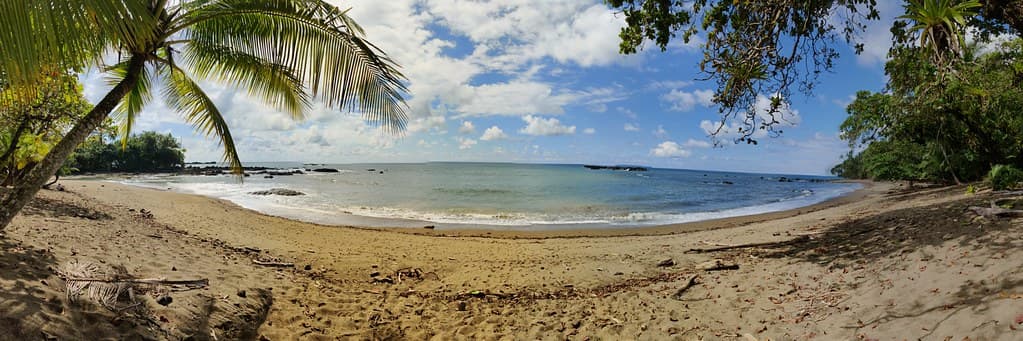
The trail descends steeply through a gully slick with leaf mold, then spits you onto sand so suddenly the light feels abrupt. Behind you, the forest rises like a green wall; ahead, the Pacific stretches to a horizon broken only by Caño Island's dark silhouette. The beach curves gently, bookended by rocky outcrops that shelter it from the prevailing swells. What waves do arrive collapse gently, more sigh than roar.
“Its brevity and trail-side placement make it the rare Osa beach experienced almost exclusively by hikers rather than boat traffic, creating an accidental wilderness intimacy.”
 Credit: Flickr
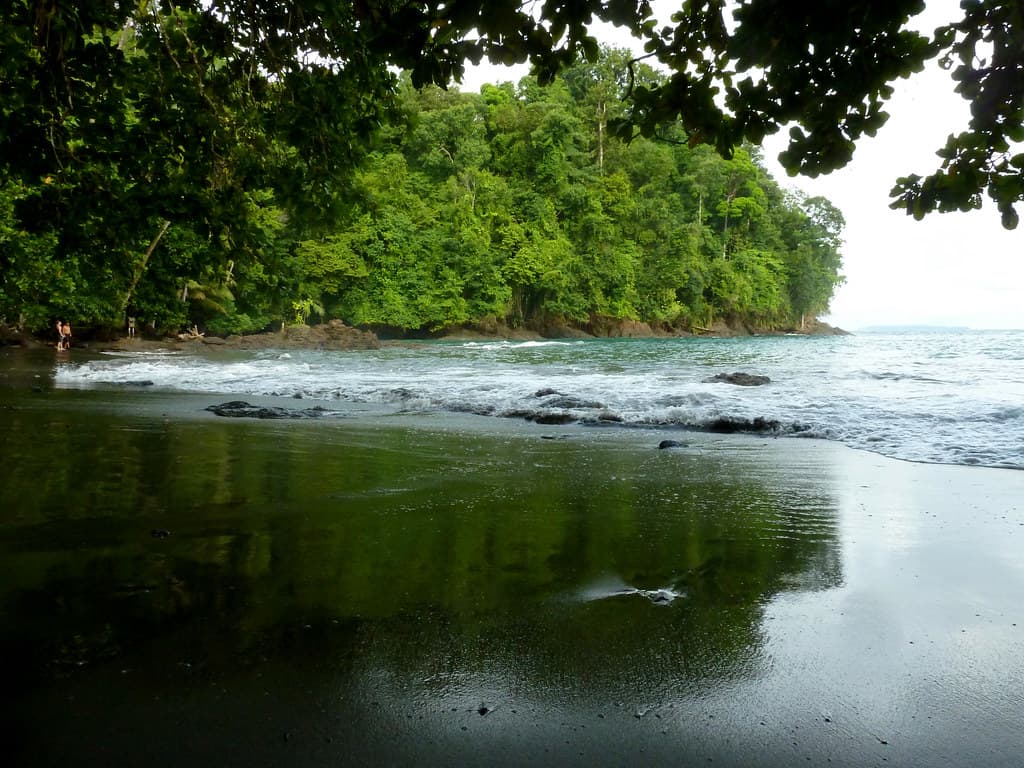
Playa El Bajo — photo by treegrow
Driftwood forms a natural bench at the vegetation line—salt-bleached trunks smoothed into sculptures by tide and time. The sand is coarse, more ground shell than silica, and it crunches underfoot. Hermit crabs patrol the wrack line in armies, clicking into borrowed homes whenever a shadow passes overhead. A seasonal creek seeps from the forest, carving a shallow trench to the water and leaving the sand dark and firm where it flows.
Seabirds largely ignore this pocket beach in favor of the offshore rocks, but you might see a lone heron working the shallows at dawn. The real action happens in the forest canopy—spider monkeys crashing through branches, toucans arguing over fruiting trees, the occasional scarlet macaw slicing overhead in pairs. By late afternoon, the headlands frame the sun perfectly, turning the bay into a theater of backlit spray and golden water.


