
You arrive on foot or horseback, following a rutted track that dissolves into sand just as the jungle thickens into true wilderness. Pejeperro stretches north and south in a muscular arc, backed by a wall of rainforest so dense that monkeys and sloths move through the canopy without ever touching ground. The sand crunches underfoot—a mix of quartz and pulverized shell—and the shorebreak pounds with a rhythm that drowns out thought.
“Pejeperro delivers the raw, unmediated wilderness that travelers imagine when they think "remote Costa Rican beach."”
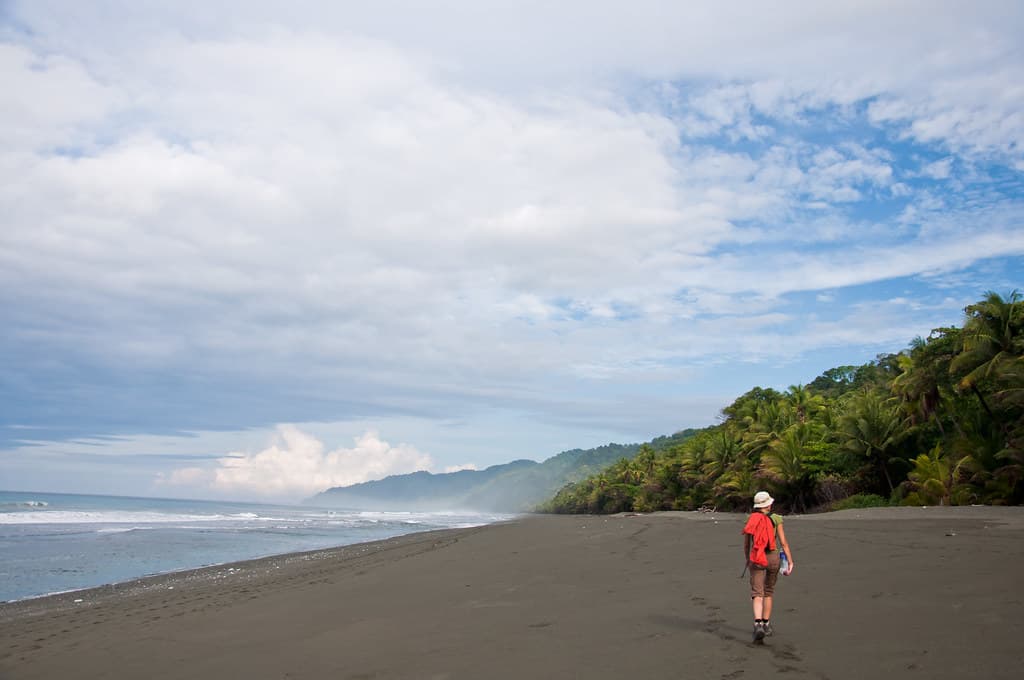 Credit: Flickr
Playa Pejeperro — photo by Pedro fait de la Photo
This is not a beach for swimming. Rip currents stripe the surf zone, and the undertow has a reputation among locals. Instead, you walk. Miles of uninterrupted strand, scanning the wrack line for nautilus shells, glass floats from distant fisheries, the occasional leatherback nest marked by conservationists. Vultures patrol the tide line; ghost crabs vanish into burrows as your shadow passes. In the distance, Corcovado's ridgeline rises green and impenetrable, a reminder that you're on the edge of something vast and indifferent.
Sunset here is a study in minimalism: tangerine light, black sand, the silhouette of a solitary frigatebird hanging motionless on an updraft. You build a small driftwood fire—permitted only below the high-tide mark—and watch sparks rise into the gathering dark. By the time you hike back, the forest has swallowed the last of the daylight, and the trail requires a headlamp and a steady nerve.


