
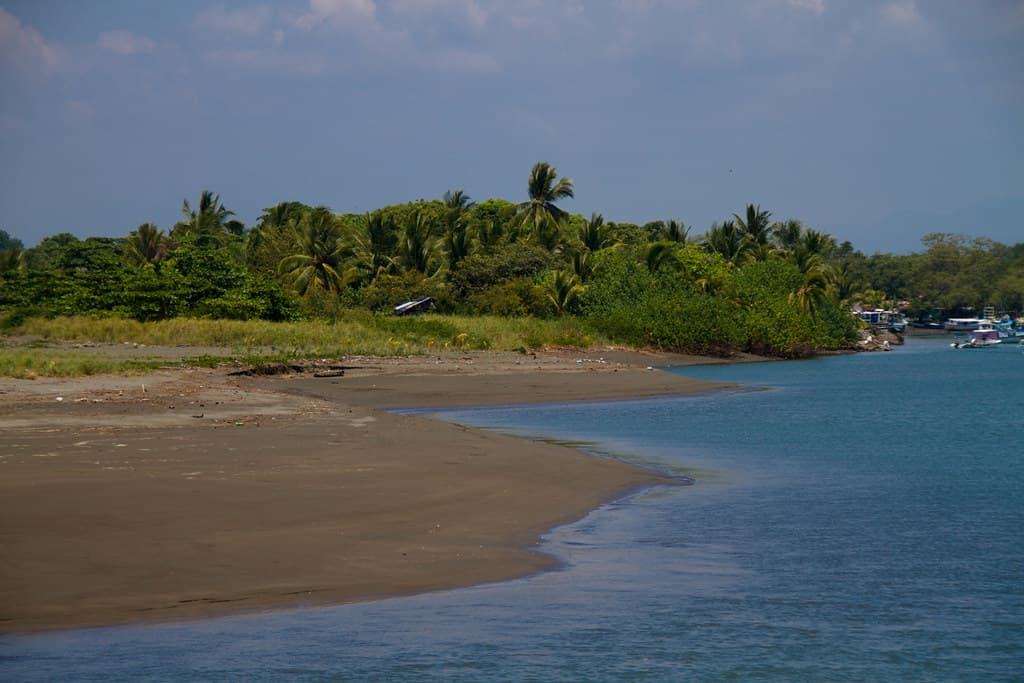
The journey to Playa Damas matters as much as the destination: twenty minutes threading through mangrove tunnels where roots arch overhead like cathedral vaults and herons flush from branches close enough to touch. Your boatman will cut the engine just before the channel opens to ocean, letting momentum carry you through the last hundred meters where mangrove gives way to beach grass and then to sand.
“Boat-only access and mangrove backing preserve a shoreline that remains genuinely wild and architecturally untouched.”
 Credit: Flickr
Playa Damas — photo by Ricardo Palacios
The beach itself occupies a barrier island, backed by mangrove forest and facing the full fetch of the Pacific. At low tide, the strand widens to sixty meters, firm and trackless except for ghost crab burrows and the occasional caiman print where the big reptiles haul out to warm themselves. The sand is coarse, studded with shell fragments and small stones polished by endless tumbling. Waves arrive with steady rhythm, neither huge nor flat, folding over in long lines that seem to originate somewhere past the horizon.
You'll see no buildings, no power lines, no evidence that humans have claimed this place for anything permanent. Frigatebirds soar overhead, their forked tails scissoring the air. The mangroves behind you rustle with unseen movement—monkeys, most likely, though sometimes it's just wind through the pneumatophores. When your boatman returns at the appointed hour, you'll load back into the panga reluctantly, glancing over your shoulder as the beach disappears behind a curtain of green.


