

Zancudo runs long and straight, a beach built for walking barefoot until your legs tire or the village peters out—whichever comes first. On one side, the Golfo Dulce laps with hardly a wave, its surface ruffled only by breeze and the occasional needlefish skipping across the meniscus. On the other, mangrove channels and tidal rivers snake inland toward the Conte-Burica mountains, their muddy banks alive with herons and the rustle of unseen caimans. The sand here packs firm and cool underfoot, dark from volcanic origins, scattered with the calligraphy of ghost crab tracks erased and rewritten twice daily.
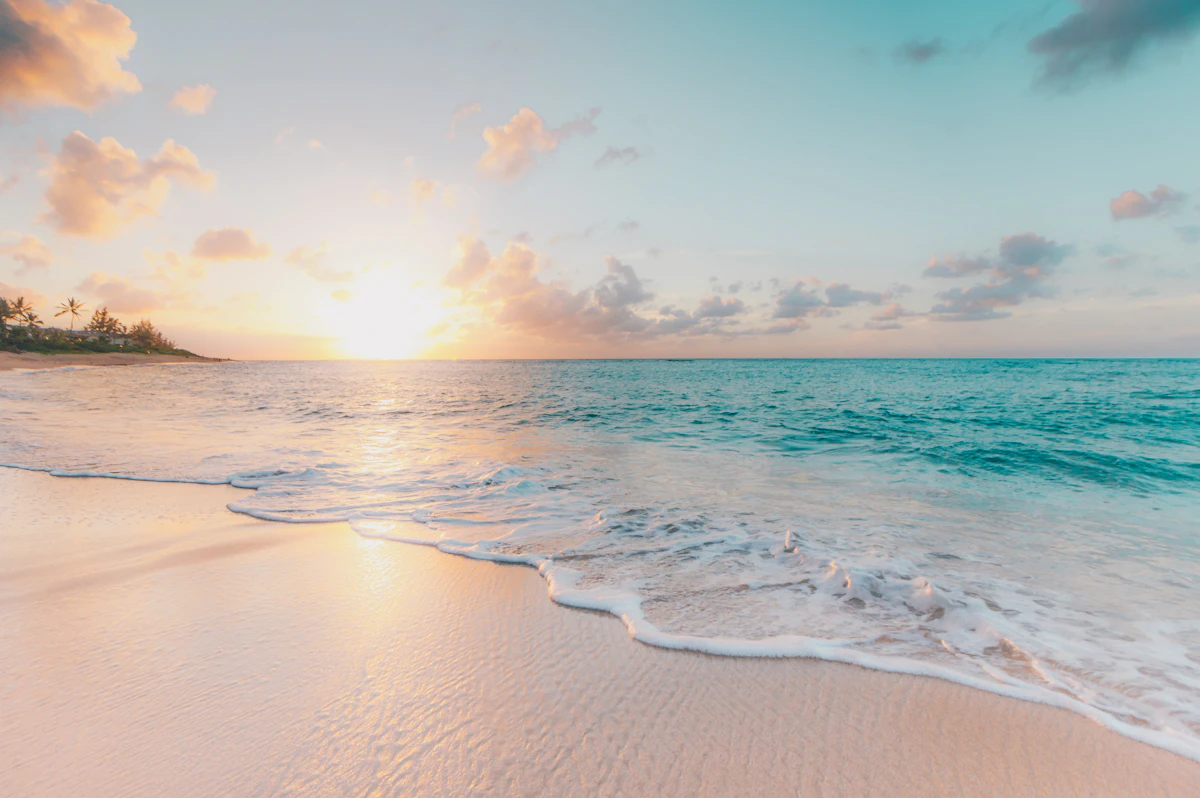
“Where the Golfo Dulce exhales into the Pacific, offering eight kilometers of solitude and some of the region's most reliable sunsets.”
 Credit: Unsplash
Aerial view of turquoise tropical bay
The village itself maintains a deliberate sleepiness: a handful of sportfishing lodges, some rental casitas painted optimistic tropical colors, a few open-air restaurants where the catch depends entirely on what the boats brought in. Coconut palms tilt at improbable angles, their trunks curved by decades of offshore wind, and most afternoons you'll find hammocks occupied beneath them, their inhabitants monitoring sunset's slow arrival with admirable dedication. When the light goes golden, the Osa Peninsula across the gulf turns indigo, and the water catches fire in shades of tangerine and rose.
This is a beach that rewards length of stay over frantic itinerary. Rent a bike and pedal the sandy main track. Wade into bathwater shallows where the bottom stays visible for a hundred meters. Watch the sportfishing boats return trailing frigatebirds, their captains shouting good-natured lies about the one that got away. Zancudo doesn't accelerate for anyone.


