
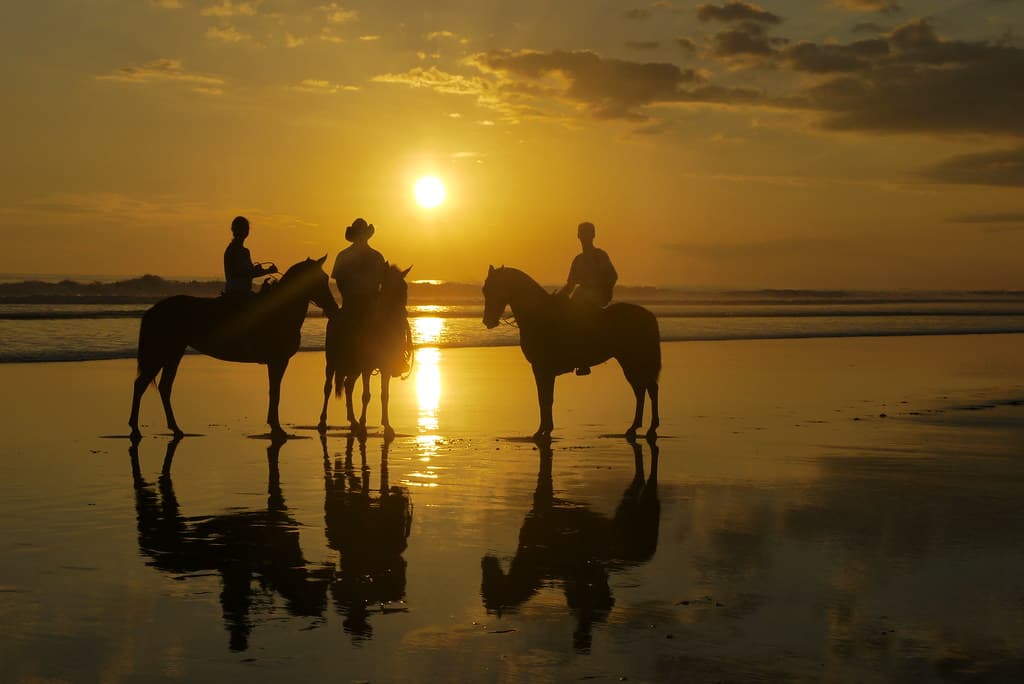
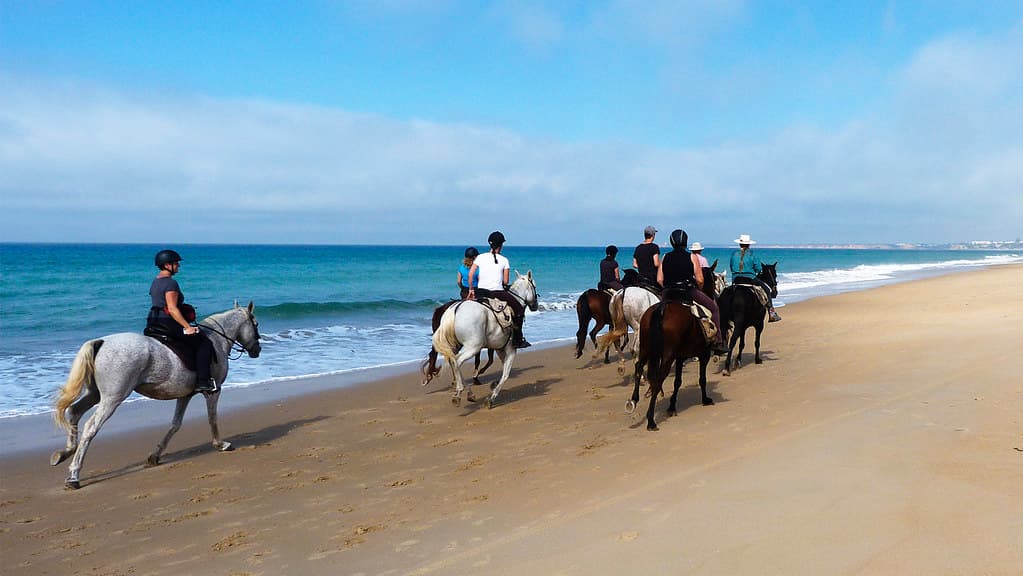
Playa Caballo runs for nearly half a kilometer along the island's western shore, a ribbon of tan sand that curves gently with the coastline. The beach slopes gradually into the gulf, creating a wide intertidal zone that shifts dramatically between high and low water. At full tide, the water laps at the palm roots; six hours later, you'll walk seventy meters across hard-packed sand to reach the gulf's edge, dodging the small crabs that emerge to feed on whatever the receding water left behind.
“The last beach in the Gulf of Nicoya where Tico families still maintain weekend traditions untouched by commercial tourism.”
 Credit: Flickr
CABALLOS PLAYA
The water itself behaves like a lake more than an ocean—calm, warm, and forgiving. You'll float rather than swim, letting the salt buoyancy hold you while you watch frigatebirds work the thermals overhead. The bottom is sand with occasional patches of rocky substrate where small fish congregate. There's enough beach that even on weekends when Puntarenas families make the crossing, you can always find solitude by walking five minutes in either direction.
The weekend houses built back in the palms are modest—concrete walls, zinc roofs, outdoor showers fed by gravity from roof-catchment tanks. Clotheslines string between trees, hammocks hang in shaded corners, and someone's always grilling something over charcoal. The vibe is profoundly un-commercial: nobody's trying to sell you anything, nobody's performing for visitors. This is just where certain families come to disconnect, and if you're here, you're welcome to share the space as long as you respect its essential quietness.


