

Playa Tamales occupies the kind of coastal real estate that developers haven't figured out how to monetize yet—a working waterfront where a handful of families still make their living from the gulf rather than from the people who visit it. The beach curves gently northward from the village, bordered by a mix of fishing shacks and modest homes, the sand compacted hard enough that you can walk it in flip-flops without sinking. At high tide the water reaches the vegetation line; at low tide it retreats to expose mudflats stippled with fiddler crab burrows.
“This is a functional fishing beach that tolerates visitors rather than courting them, preserving a rhythm that predates the Osa's tourism economy.”
 Credit: Unsplash
Aerial view of turquoise tropical bay
Swimming means accepting the gulf's particularities: warm water tinted brown by river tannins, visibility measured in inches rather than feet, and a bottom that alternates between sand and soft mud. What you lose in Caribbean-postcard aesthetics you gain in safety—no riptides, no pounding shore break, just gentle water that children can wade in while their parents watch from shore. Small snappers and needlefish arrow through the shallows, visible only when they break the surface.
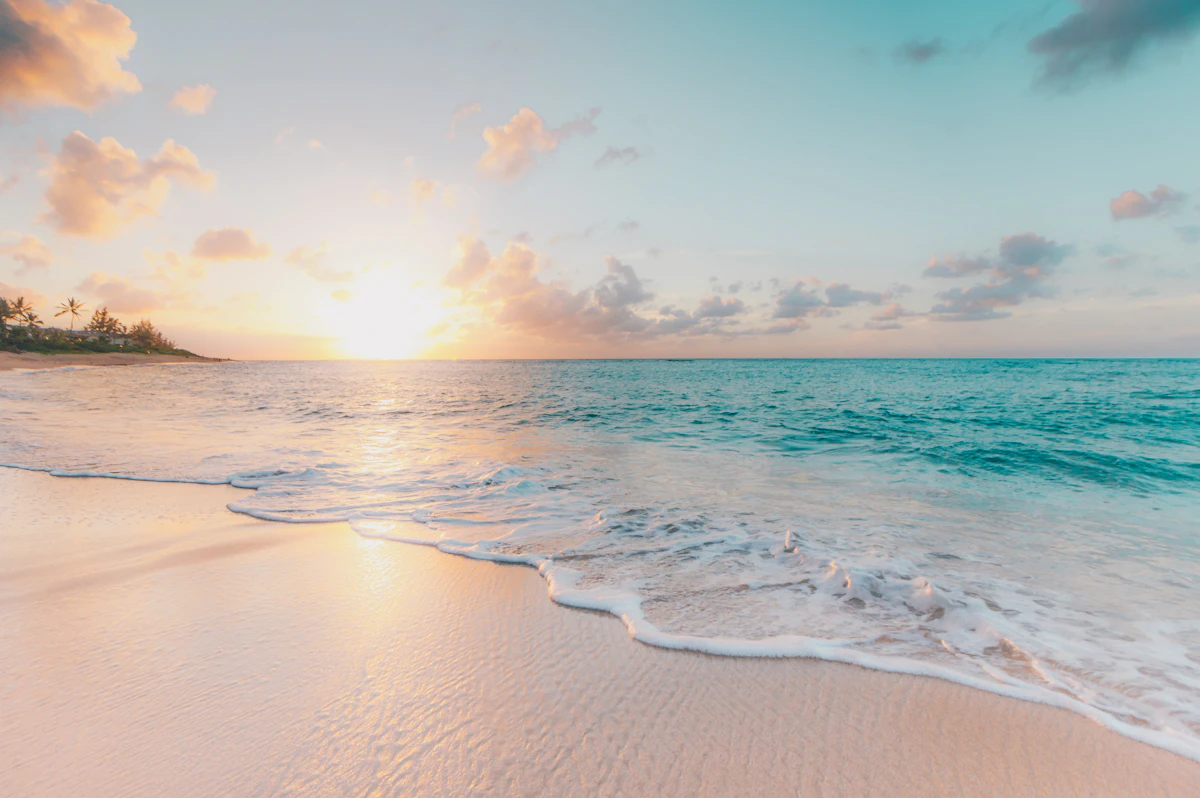
Sunset here is a study in horizontal color—the mountains across the Golfo Dulce go black while the sky above them cycles through peach, coral, and eventually a purple so deep it's nearly gray. Fishermen time their departures to the last light, motors coughing to life as they head toward nighttime fishing grounds. You can sit on the seawall and watch the gulf darken, the water turning from bronze to pewter to ink, and the only thing anyone expects from you is that you'll move when the tide comes in.


