

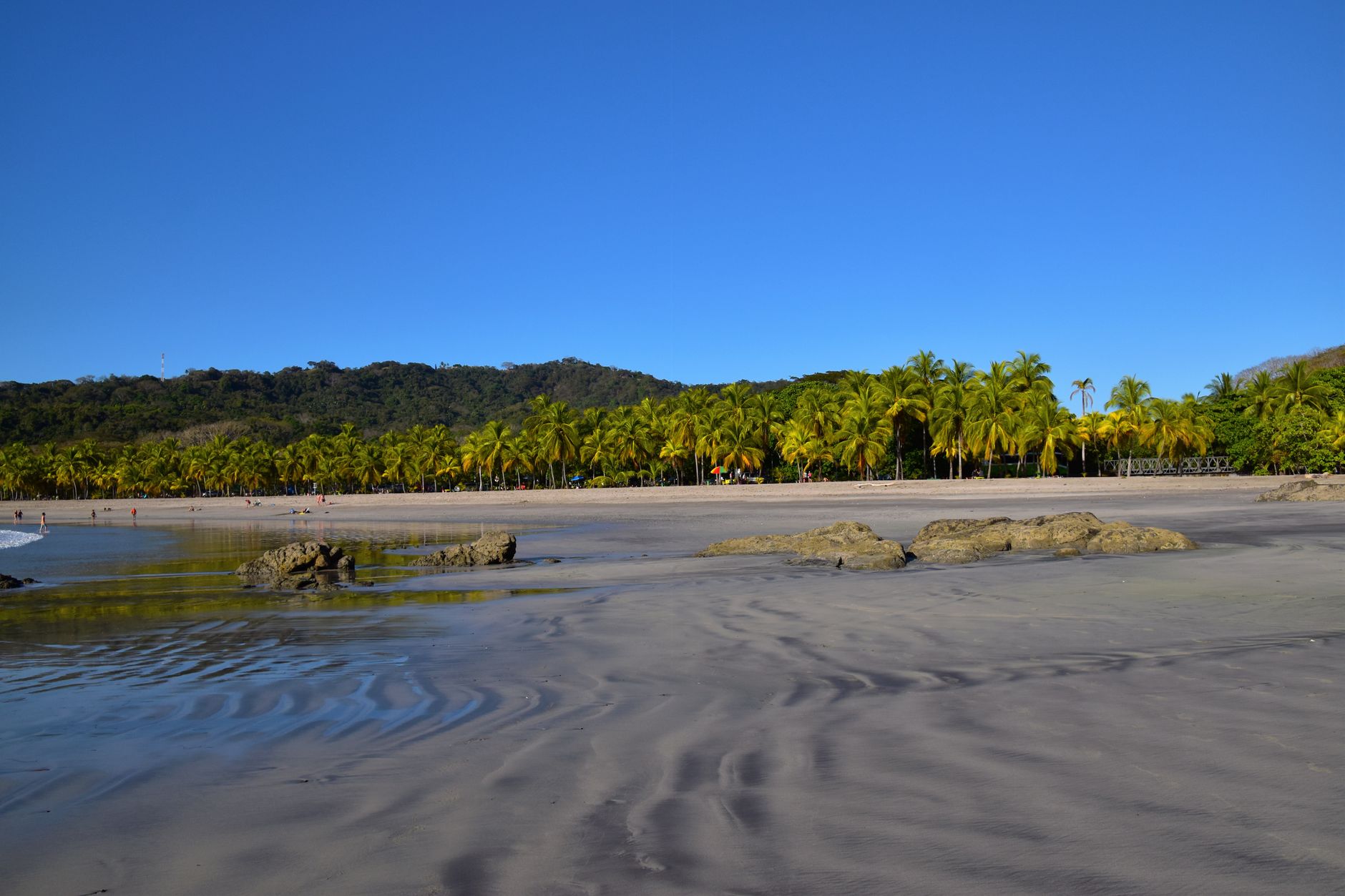
Tulemar's trio of beaches functions like a choose-your-own-adventure in calm water. The northernmost cove catches the most sun, its sand fine enough to squeak underfoot, its shallows extending fifteen metres before you lose your footing. Young kids patrol the tide line with plastic buckets, collecting moon snails and hermit crabs while parents float on their backs, face to sky.
“The rare resort beach where wildlife watching rivals the swimming as the primary draw.”
 Credit: Pexels
Playa Tulemar — photo by Jeffrey Eisen
The middle cove hides behind a tumble of grey boulders smoothed by centuries of surf. Thread between them and you'll find the smallest crescent, barely thirty metres wide, where morning shade lingers until nearly noon and a natural rock shelf creates a wading pool even toddlers can navigate. Snorkelers hover over this shelf, watching yellowtail damselfish defend territories the size of beach towels. Above the waterline, white-faced capuchins crash through the branches, occasionally pausing to study beachgoers with unsettling intensity.
The resort's design keeps Tulemar feeling uncrowded even at capacity—beach chairs scattered rather than regimented, no thatched bar blaring reggaeton, no attendants pressuring you toward paid activities. You'll encounter other guests, certainly, but the coves' natural divisions create pockets of privacy. High tide shrinks the sand to ribbons; low tide reveals cobbles and tidal pools where sergeant majors swirl in frantic schools.


