
Playa Tárcoles spreads wide and workmanlike at the mouth of the Río Tárcoles, its dark sand littered with the evidence of industry—coiled rope, net floats, wooden pangas hauled above the tide line and shaded under blue tarps. This is not a groomed resort beach. It's a functional space where men leave before sunrise to fish and return by mid-morning to clean the catch, where pelicans and frigatebirds loiter expectantly, where the smell of diesel and salt and fish guts mingles in the humid air.
“A rare Central Pacific beach where fishing economy and wildlife spectacle coexist with Carara National Park access nearby.”
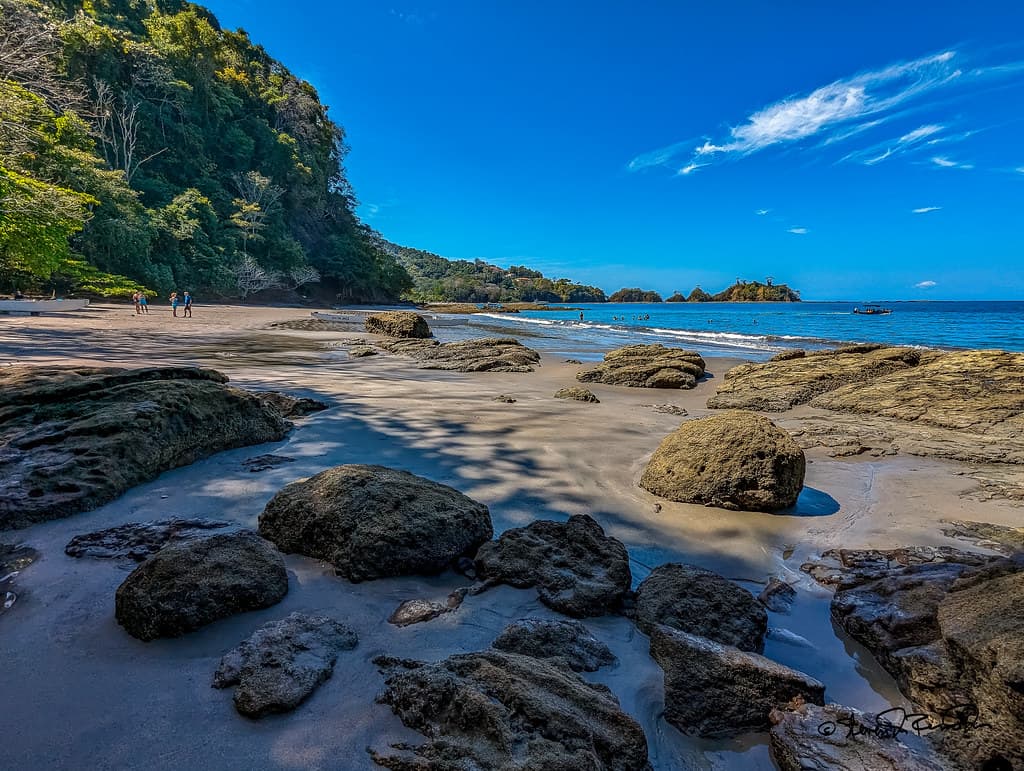 Credit: Flickr
Playa Tárcoles — photo by SdosRemedios
The river mouth creates a dynamic margin, freshwater stained red with highland sediment pushing into the Pacific's darker blue. This mixing zone attracts wildlife in absurd concentrations—crocodiles bask on sandbars visible from the bridge upstream; herons and egrets work the shallows; offshore, dolphins sometimes arc through the swells. The beach itself curves north toward Herradura, offering long walking stretches at low tide when the sand firms and the sun hasn't yet made it unbearable.
By evening, when the fishing boats are secured and the day's drama has settled, the beach transforms. The sun drops into the Pacific with the saturated drama Central Pacific sunsets deliver reliably, painting the sky in shades of mango and guava. Local families arrive with coolers and folding chairs, kids splashing in the shorebreak while adults share beer and conversation. It's unpolished, authentic, alive—the kind of beach that serves a community first and accommodates visitors as an afterthought.


