
The path to Playa Arco demands attention—loose stones, exposed roots, a rope bolted to the cliff face where the trail narrows. Below, the ocean churns against volcanic rock, foam hissing into crevices. Then the jungle opens and the beach appears: a strip of coarse sand pressed between the cliffs and the sea, dominated by the arch itself—a cathedral-sized window of stone carved by millennia of waves.
“You'll witness a beach that literally disappears and reappears with the tides, making timing essential and each visit genuinely ephemeral.”
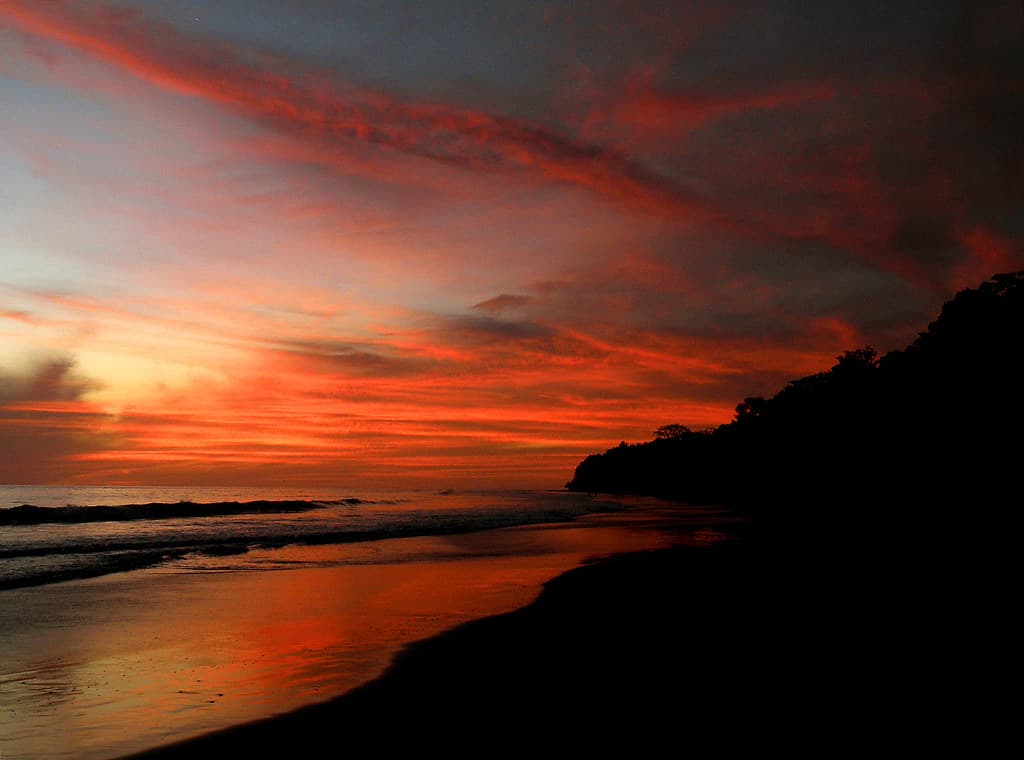 Credit: Flickr
Playa Arco — photo by Thomas Jundt + CV
The arch is the obvious attraction, but the details elevate the scene. Vines cascade from the opening's upper edge, backlit by the sky beyond. Tide pools form in the pocked rocks flanking the sand, each one a miniature aquarium of crabs, anemones, and trapped baitfish. The beach curves slightly, creating a sense of enclosure despite the open ocean just beyond the arch. The sand here is dark and littered with stones rounded smooth by the surf.
You'll share the space with other photographers, all chasing the same composition—the arch framing the Pacific, preferably with late-afternoon light raking across the stone. But the spectacle never feels cheapened by attention. The tide imposes its own discipline, clearing the beach twice daily regardless of who's visiting. As the water returns, it reclaims the strand methodically, first pooling around the arch's base, then covering the sand entirely. The beach un-becomes itself, waiting for the next low tide to exist again.


